Saint of the day
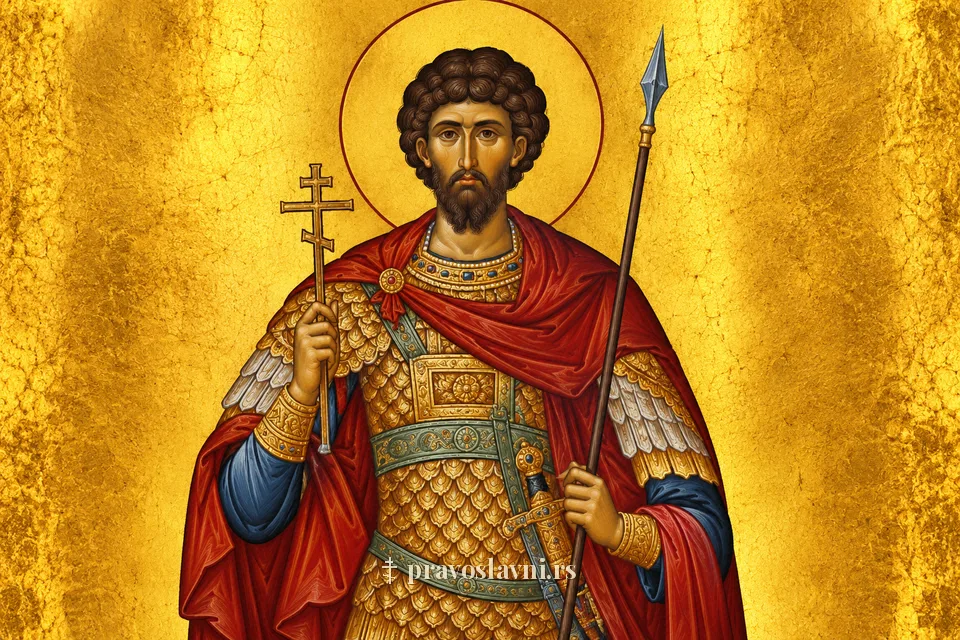
Great Martyr Theodore Stratelates
What happenedThe holy Great Martyr Theodore Stratelates left instructions that his body should rest in Euchaita, on his ancestral estate, and his relics were taken there.
Read the LifeOrthodox Calendar · 8 June according to the Julian calendar
Sunday, 21 June 20268 June (according to the Julian calendar)Save your slava — you'll get a reminder a week and a day before.
Send a greeting card →What happenedThe holy Great Martyr Theodore Stratelates left instructions that his body should rest in Euchaita, on his ancestral estate, and his relics were taken there.
Read the Life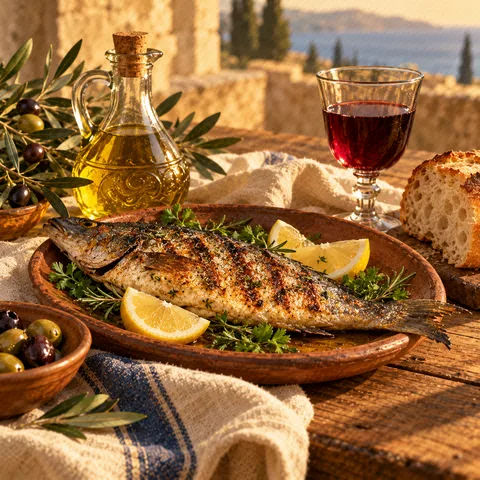
Fish, oil and wine are allowed — no meat, dairy products or eggs.
This is a recommendation — for your own fast, consult your priest or spiritual father.More about the fast →
Many families celebrate their Krsna slava (family patron saint's day) today
More about the feast →
“For whoever desires to save his life will lose it, but whoever loses his life for My sake and the gospel’s will save it.”
— Mk 8:35Before his suffering St Theodore Stratelates asked his servant to take his body to Euchaita and lay it on the estate of his ancestors. This is what the Church remembers on this day: according to the June Prologue and his Life, his relics were translated from Heraclea to Euchaita. The Prologue for 8 February (according to the Julian calendar), when the main commemoration is kept, also records a later translation, from Euchaita to Constantinople, to the church at Blachernae.
Theodore, according to that Prologue, was a commander and the governor of the city of Heraclea in the army of Emperor Licinius. He renounced his rank, his youth and the emperor's favour, smashed the gold and silver idols and gave out the pieces to the poor. He called on Licinius to believe in the one living God, and for this he was tortured, raised up on a cross and in the end beheaded in the year 319, glorifying God without ceasing. The Prologue preserves his words from the midst of his torments: “Glory to You, my God, glory to You!” Soldiers regard him as their protector.
St Anastasius of Sinai wrote down, as the Prologue and the Life relate, that in the church of St Theodore at Karsat near Damascus, in which Saracens had settled, one of them struck the image of the saint on the wall with an arrow. The image began to bleed, and not long afterwards not one of the newcomers was left alive. Anastasius says that he saw the traces of the blood with his own eyes.
St Theodore teaches that faithfulness to Christ is greater than every earthly honour.
St Theodore Stratelates was, according to the Prologue for 8 February, a Roman commander and the governor of the city of Heraclea in the army of Emperor Licinius. The Prologue says that for the sake of Christ he gave up youth, beauty, military rank and the Emperor's favour. He broke the silver and golden idols into pieces and gave the pieces away to the poor, he brought many to the faith, and he called upon Emperor Licinius himself to abandon idolatry and turn to the one living God.
Because of this he suffered greatly. According to the same Prologue, he was tortured, raised up on a cross and shot at with arrows, and in the end beheaded with the sword. Throughout all his torments he glorified God with the words: “Glory to You, my God, glory to You!” He suffered on 8 February in the year 319, at three o'clock in the afternoon. The Prologue adds that soldiers regard him as their protector and call upon him for help.
On this day the Church does not celebrate his suffering, because the main commemoration is on 8 February (according to the Julian calendar), but the translation of his relics. Before his suffering Theodore left his servant a testament: “My body,” he said, “lay in Euchaita, on the estate of my ancestors.”
According to the June Prologue and his Life, his relics were translated at that time from Heraclea to Euchaita. In this way the saint's wish was fulfilled, and Euchaita, the place of his ancestors, became the place of his tomb. The Prologue for 8 February (according to the Julian calendar) also records one later translation: the wonderworking relics were carried from Euchaita to Constantinople and placed in the church at Blachernae.
The June Prologue and the Life also hand down the testimony of St Anastasius of Sinai. In the village of Karsat near Damascus there was a church of St Theodore. After Damascus fell into the hands of the Saracens, several of their families moved into that church, with their wives and children. One of them shot an arrow at the fresco of the saint and struck the face. Blood at once began to flow from the painted face. Not much time passed, and all those settlers lost their lives right there, in the church. Anastasius testifies that he personally visited that church and looked upon the fresco with its traces of blood.
St Theodore had everything that the world has to offer: reputation, youth, power and the favour of the Emperor. All of this he left for the sake of Christ, and he remained faithful to the end, glorifying God even in his torments.


