Saint of the day
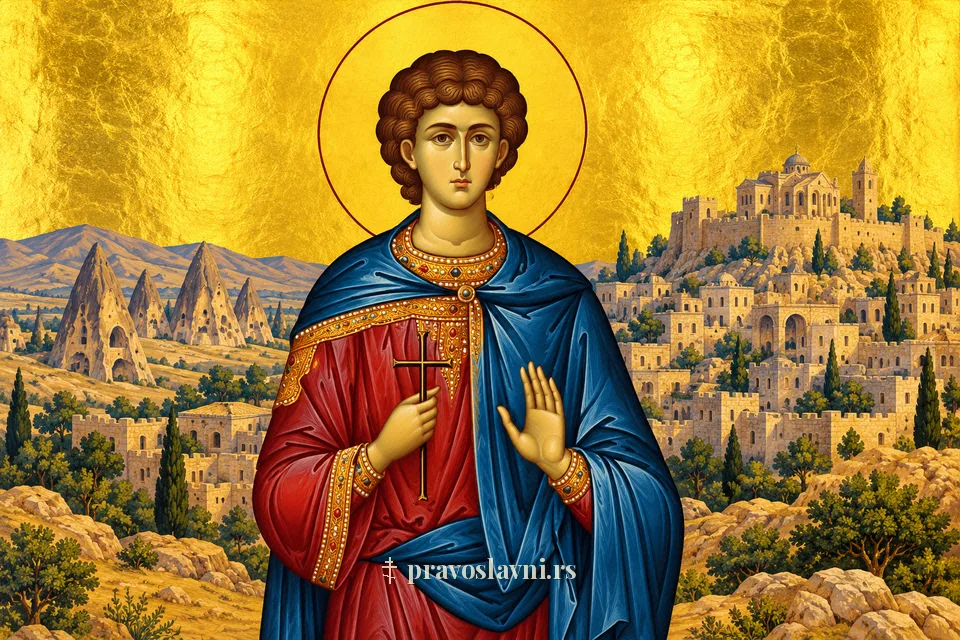
Holy Martyr Eupsychius
What happenedOn his wedding day Eupsychius of Caesarea in Cappadocia destroyed the temple of the idol Fortuna, and for this laid down his life for Christ.
Read the LifeOrthodox Calendar · 9 April according to the Julian calendar
Thursday, 22 April 20279 April (according to the Julian calendar)What happenedOn his wedding day Eupsychius of Caesarea in Cappadocia destroyed the temple of the idol Fortuna, and for this laid down his life for Christ.
Read the Life
No meat, dairy products, eggs, fish or oil — food cooked in water.
This is a recommendation — for your own fast, consult your priest or spiritual father.Prayer of St Ephraim the Syrian →More about the fast →
Today the Church keeps the commemoration of a saint · Sixth week of Great Lent.
More about the feast →
“Therefore, my beloved, flee from idolatry.”
— 1 Cor 10:14Eupsychius turned his wedding day into a day of confessing the faith. On that day the pagans in Caesarea in Cappadocia were celebrating the feast of the idol Fortune and offering sacrifice to it. The bridegroom, of noble birth and brought up in piety, together with his companions smashed the idols and destroyed the temple.
This was in the time of Emperor Julian the Apostate, who, according to the Life, himself offered sacrifices in the temple of Fortune whenever he stayed in Caesarea. His Life says that he prepared for suffering of his own free will: he gave his property to the poor, and sought strength from God through fasting and prayer. According to his Life, while he was in fetters he was offered pardon several times if he would bow down to the idols, but he remained faithful to Christ. His Life says that an angel strengthened him in his heavy torments. In the end he was beheaded in the year 362. From the wound, according to his Life, there flowed not blood but milk and water, and the Christians buried him with honour.
The Emperor punished the whole city. The Christians paid a heavy tax, many were forced into the army, and they had to rebuild the temple of Fortune at their own expense. His Life adds that he also confiscated the property of all the churches of Caesarea. He took away the name of Caesarea and gave it back its old name, Mazaca.
The Church in Caesarea was then governed, as the Prologue and the Life say, by Basil the Great. When Julian was passing through on his campaign against Persia, Basil offered him three barley loaves. The Emperor gave him hay in return. When Basil rebuked him with the words “you are mocking us, O Emperor”, as the Prologue records, Julian answered with a threat: “know that I shall feed you with that hay when I return from Persia!” He did not return alive. The Prologue says that a deserved death overtook him there, and the Life that he was slain by the Great Martyr Mercurius.
After that the people of Caesarea raised a beautiful church over the tomb of Eupsychius, and his relics, as his Life says, gave healings.
St Eupsychius placed zeal for Christ above the joy of his own wedding and above his property, and in his torments he remained steadfast.
The Prologue and the Life say that Eupsychius came from a noble house in Caesarea of Cappadocia and was brought up in piety. The Life praises his wisdom and his pure Christian life. He married a maiden of good family at the time when Julian the Apostate ruled the empire and, as both sources say, Basil the Great governed the Church in Caesarea. The Life notes that they had not even begun their life together.
The wedding coincided with a pagan festival, when sacrifice was offered to the idol of Fortuna. According to the Life, Julian himself also sacrificed in that temple whenever he came to Caesarea. The Life says that the sight of the pagans with their gifts for the idol moved him to stand up for Christ. Together with his companions he pulled down the idols and the temple.
According to the Life, the punishment did not find him unprepared: he gave his property to those who had nothing, and fasting and prayer were his preparation for martyrdom. Shut up in chains, he was, according to the Life, brought before the torturers more than once. They offered him a pardon if he would bow down to the idols, but he refused.
The Prologue says that they tied him to a tree, and the Life that he was hung upon a tree and cruelly tortured, and that an angel strengthened him in his torments. He ended his life under the sword, in the year 362. From the wound, according to the Life, there flowed not blood but milk and water. The Life adds that the Christians took care of his body and that the burial was worthy of a martyr.
Julian's revenge fell upon the whole of Caesarea. He condemned the instigators to death, and among the prominent citizens, according to the Life, some lost their lives, some their freedom and some their property. The churches in the city were left, the Life says, without their possessions. He burdened the Christians with a heavy tax and sent many — according to the Life, the clergy — into the army.
The Christians also had to rebuild the temple of Fortuna with their own money. According to the Life, Julian promised that the city would have no peace until the temple was restored by the “Galileans” — that was what he called the Christians. He also took from the city the name which, according to the Prologue, the Emperor Claudius had given it, so that Caesarea was once again called Mazaca. According to the Life, it was no longer even a city, but a village.
When Julian set out to war against Persia — the Life says that he was then threatening to lay Caesarea waste — Basil the Great received him with honour and presented him with three barley loaves. It was, according to the Life, the same bread on which he himself lived: “We have offered you, O Emperor, that with which we feed ourselves.”
The Emperor repaid him with hay. The Prologue says that he gave him a handful of hay, and the Life that he did so with mockery, as though hay were the fitting return for barley. Basil said to him: “you are mocking us, O Emperor,” the Prologue records. The Life also ascribes to him the warning that fodder for cattle cannot become food for a man. The Emperor answered with a threat: “know that I shall feed you with that hay when I return from Persia!” According to the Life, he also threatened to plough up the city itself, so that grain should grow in it instead of people, because the people, listening to Basil, had pulled down the temple of Fortuna.
Julian did not return from Persia. The Prologue says that there he met the end he deserved, and that it was not by a natural death. The Life, referring to the Life of Basil the Great, says that the Great Martyr Mercurius slew him. After that, according to the Life, the people of Caesarea raised a beautiful church to the martyr on the spot where he was buried, and his relics healed the sick.
Eupsychius set zeal for Christ above his own rejoicing and his possessions, and in his torments he remained steadfast. The threats of the emperor who persecuted him and his city remained unfulfilled.


