Saint of the day
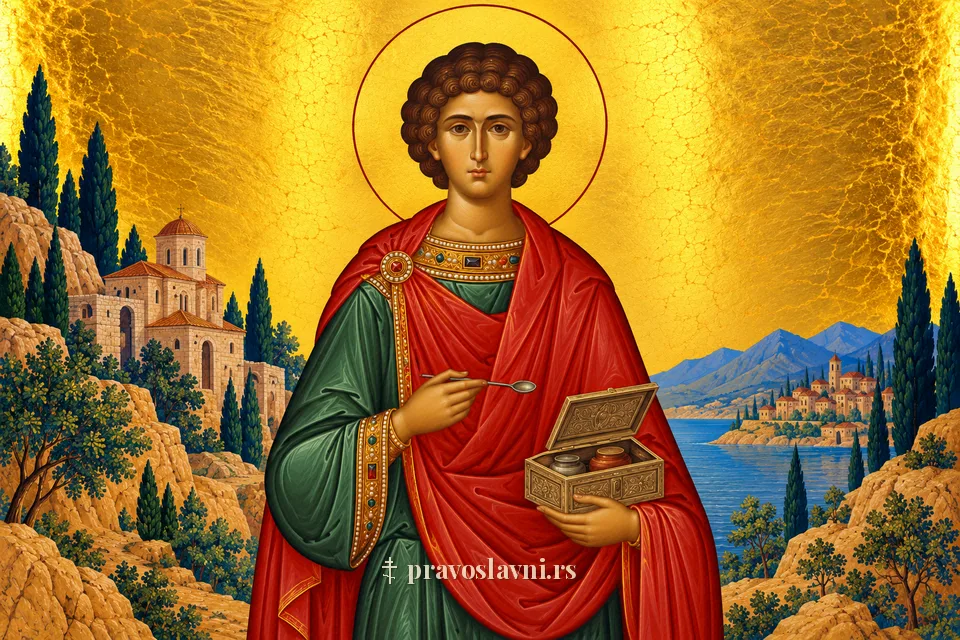
Great Martyr Panteleimon
What happenedThe holy Great Martyr Panteleimon, a physician from Nicomedia, healed free of charge in the name of Christ and suffered for the faith while still young.
Read the LifeOrthodox Calendar · 27 July according to the Julian calendar
Monday, 9 August 202727 July (according to the Julian calendar)Save your slava — you'll get a reminder a week and a day before.
Send a greeting card →What happenedThe holy Great Martyr Panteleimon, a physician from Nicomedia, healed free of charge in the name of Christ and suffered for the faith while still young.
Read the Life
You may eat meat, eggs, milk and dairy products, as well as any other food — but try to be moderate.
More about the fast →
Many families celebrate their Krsna slava (family patron saint's day) today
More about the feast →
“And Peter said to him, ”Aeneas, Jesus the Christ heals you. Arise and make your bed.” Then he arose immediately.“
— Acts 9:34Sung at the Slava (family patron saint's feast) and on the saint's feast day.
O holy Endurer of Pain, and Healer, Panteleimon, beseech thou the merciful God that he will grant remission of sins unto our souls.
St Panteleimon is a Great Martyr and healer, and his name means “all-merciful”. According to his Life, he was at first called Pantoleon, and he received the name Panteleimon because he healed the sick without payment and helped the poor. By folk custom, St Panteleimon is celebrated as a Krsna slava (family patron saint's day).
When water is blessed and when Holy Unction is served, the Church calls upon him in the prayers among the holy Unmercenaries, together with his teacher Hermolaus. On the Holy Mountain there is a church dedicated to him, according to the Prologue the most beautiful of all that bear his name.
St Panteleimon was a physician who did not charge for his healing. According to his Life, after his father's death he set the slaves free, gave away his property to the poor, visited prisoners and healed everyone in the name of Christ. According to his Life, that is why from Pantoleon, the name given him at birth, he became Panteleimon, which means all-merciful.
He was born in Nicomedia. His mother Eubula was a Christian, and his father Eustorgius a pagan. While still young he became a physician, and he learned about Christ from the priest Hermolaus, from whom he also received baptism. According to his Life, even before his baptism he prayed in the name of Christ over a child whom a snake had killed, and the child got up. After his baptism he healed a blind man for whom the physicians had known no cure; the man who was healed was baptised, and according to his Life Panteleimon's father was baptised with him.
The other physicians envied him and denounced him as a Christian. Before the Emperor Maximian he did not hide his faith, and he healed a man who had long been paralysed, whom, according to his Life, the pagan priests had not been able to raise, and so many pagans came to believe. To the Emperor, according to his Life, he said: “My sorcery is Christ, whose almighty power does all things.” The Prologue says: “And he stood before the earthly king in body, but in mind he was standing before the heavenly King.” He was tortured, but the Lord appeared to him and guarded him, and according to his Life many who watched this came to believe. Sts Hermolaus, Hermippus and Hermocrates also suffered, whom his Life commemorates on 26 July (according to the Julian calendar).
At the place of execution he knelt down in prayer, and the sword did him no harm. Only at the saint's own word did the executioner carry out the order. According to his Life, a voice from heaven confirmed his new name to him. He suffered young, according to the Prologue on 27 July 304 (according to the Julian calendar), and the olive tree beside which he was put to death afterwards bore abundant fruit.
His relics became a source of healings. His name, according to the Prologue, is mentioned by the Church at the blessing of water and at Holy Unction, and among the churches dedicated to him it singles out as the most beautiful the one on the Holy Mountain (Mount Athos).
Panteleimon was born in Nicomedia. His mother Eubula was a Christian, and his father Eustorgius a pagan; his Life says that his father was rich and distinguished. According to his Life, at birth he was given the name Pantoleon. His mother taught him about Christ in his childhood, but she died early, and so his father led him into idolatry.
As a young man he studied the art of medicine. His Life says that his teacher was the physician Euphrosynus and that Emperor Maximian wished to prepare him for service at court.
The faith of Christ was revealed to him by the priest Hermolaus, according to his Life an aged presbyter who was in hiding with a few Christians. According to his Life, even before his baptism Pantoleon came upon a child who had been killed by a snake. He prayed in the name of Christ, and the child rose up, while the snake burst asunder. Hermolaus instructed him in the faith and baptised him.
In the name of Christ he healed a blind man whom other physicians had been unable to help. According to his Life, he said: “In the name of my Lord Jesus Christ, who enlightens the blind, receive your sight!” The man who was healed was baptised. His Life adds that Panteleimon's father also believed then, and was baptised together with the man who had been healed, and that they smashed the idols in the house.
According to his Life, after his father's death he set the slaves free, gave away his property to the poor, visited prisoners and treated everyone free of charge, in the name of Christ. He was merciful to all, and for that reason he was named Panteleimon, which means all-merciful.
The other physicians grew envious of him. They denounced him as a Christian, and so he came before Emperor Maximian. Before the emperor he confessed himself a Christian. He healed a man who had long been paralysed, whom, according to his Life, the pagan priests had been unable to heal, and many pagans believed then. The Prologue says of this: “And he stood before the earthly king in body, but in mind he was standing before the heavenly King.” To the emperor, according to his Life, he said: “My sorcery is Christ, whose almighty power does all things.”
Then they tortured him, but the Lord appeared to him several times and kept him unharmed; his Life says that Christ appeared to him in the form of Hermolaus. According to his Life, he miraculously remained alive both in molten lead and in the sea, into which he was thrown with a stone; wild beasts grew tame before him, and the wheel broke. Many, seeing this, believed, and Maximian put many of them to death. Sts Hermolaus, Hermippus and Hermocrates also suffered; his Life says that they were beheaded and that they are commemorated on 26 July (according to the Julian calendar).
At his execution Panteleimon knelt down to pray. The sword in the executioner's hand became like wax. The executioner was powerless right up to the end of the prayer, and then the saint himself told him to carry out the order. According to his Life, a voice from heaven confirmed his new name, Panteleimon. The place of his suffering was an olive tree; his Life says that they tied him to it. After his death that tree bore abundant fruit. His Life says further that the body was then thrown into a fire, but was found unharmed in the ashes and was buried on the estate of the scholar Adamantius. The Prologue records that he suffered young, on 27 July 304 (according to the Julian calendar).
His relics became a source of healings. According to the Prologue, his name, together with St Hermolaus and the other Unmercenaries, is commemorated when water is blessed and when Holy Unction is served. Among the churches dedicated to him, the Prologue singles out as the most beautiful the one on the Holy Mountain (Mount Athos). His Life, as it says itself, was written by members of his household who followed his sufferings.
St Panteleimon was a physician who healed free of charge, in the name of Christ, and by his mercy towards all he earned his name. In body he stood before the earthly king, but in mind before the heavenly King.
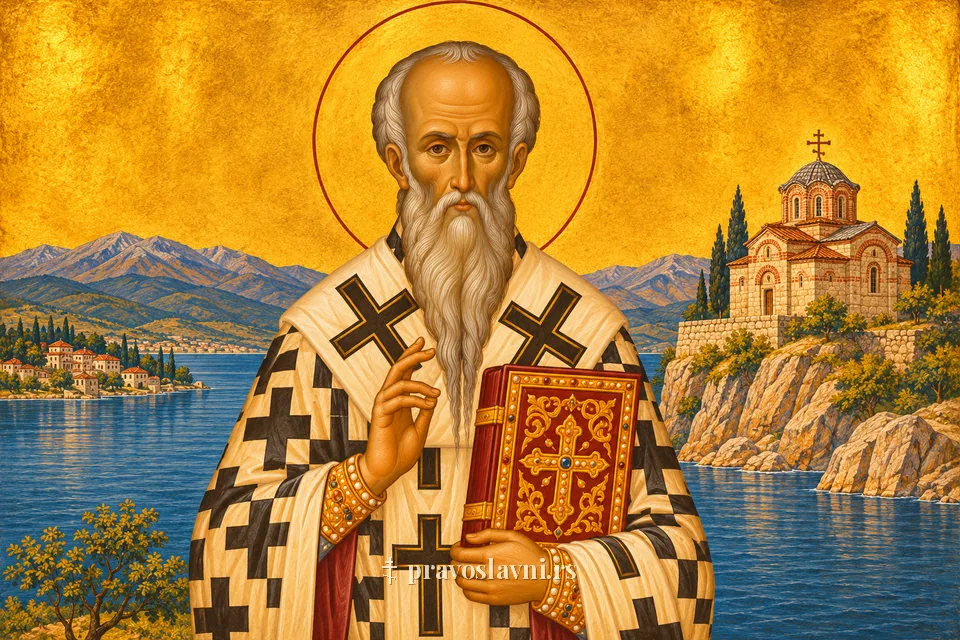
St Clement was a disciple of Sts Cyril and Methodius; according to his Life, he translated the service books with them from Greek into Slavonic, travelled to Venice and Rome and was ordained a priest. He had to leave Moravia when Methodius died and the opponents of the Slavic disciples prevailed. Boris Michael received him, and he came to the region of Ohrid. According to his Life, Boris sent him to teach in Kutmichevitsa, and he taught the people in the language of the people; in the whole of his work he had about three and a half thousand disciples. His Life says that Tsar Simeon made him a bishop in the year 893. The Prologue records that he built the church of St Panteleimon in Ohrid, while his Life speaks of a monastery which he built there. According to the Prologue, a great number of disciples gathered around him who copied Slavonic books, and St Naum helped him most of all. According to his Life, he wrote homilies for the feasts in simple language, hymns, canons, prayers and Lives, cared for the poor, widows and orphans, and grafted fruit trees brought from Greece. When he asked to be allowed to retire, Tsar Simeon would not let him go, and Clement submitted; on his deathbed he translated the Flowery Triodion (Pentecostarion) into Slavonic. He reposed peacefully in Ohrid in the year 916, according to his Life on 27 July (according to the Julian calendar). He worked miracles during his lifetime as well, and healings also took place at his tomb. The Prologue says that his relics are kept in a church which was originally dedicated to the Most Holy Theotokos and later received his name.