“Now the multitude of those who believed were of one heart and one soul; neither did anyone say that any of the things he possessed was his own, but they had all things in common.”
— Acts 4:32
Life
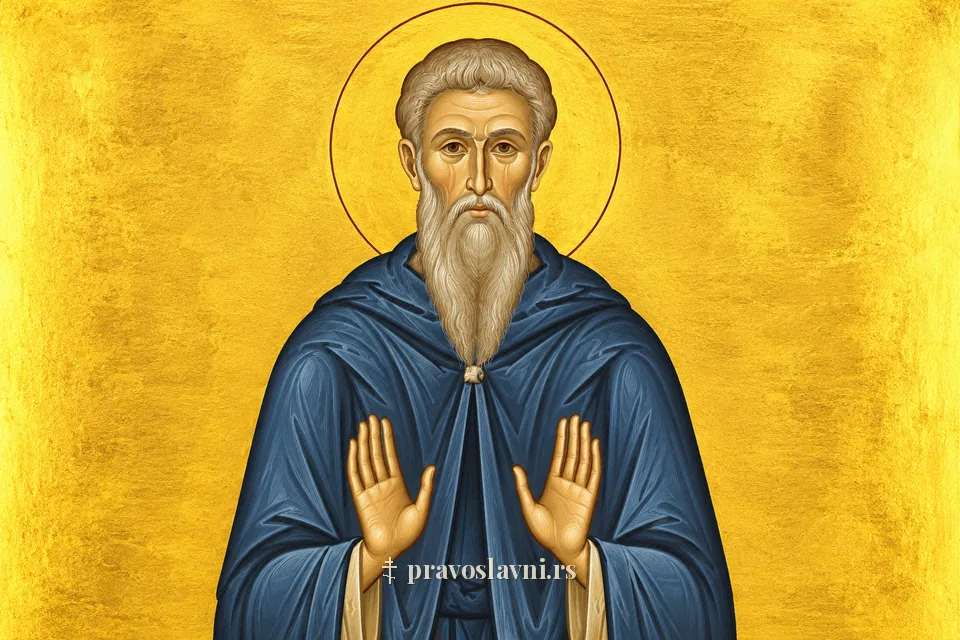
St Theodosius the Great is one of the fathers of the common monastic life, in which people of different nations live as one brotherhood. He reposed in peace in the year 529, at the age of one hundred and five.
He was a Cappadocian, from the village of Mogariassos, the son of devout parents, and as an educated young man he read the holy books to the people in church. While still in those years he visited St Symeon the Stylite and went away from him with a blessing and a prophecy about the path that awaited him. In Jerusalem he chose the coenobitic life, learned under the elder Longinus and lived for some time by the church of the Theotokos which the widow Glyceria had built, and when he became well known, he withdrew into a cave.
Disciples nevertheless gathered around him. Where the monastery would stand was decided, according to both sources, by a sign with the censer that Theodosius was carrying: the fire appeared in it of itself on that very spot. The brethren spoke Greek, Armenian, Georgian and other languages; each community served in its own church, and Holy Communion united them all in the main church. Nothing belonged to anyone, and his Life also mentions guest-houses and hospitals and records that there were 693 monks.
According to both sources, bread multiplied in his hands, the future was not hidden from him, wild beasts obeyed him, and he hastened to the help of the sick and of those who were far away. His Life remembers how in a time of famine the bread did not run out, how the sick recovered and how a lion drew back at the mention of his name.
He did not accept heresy even when the Emperor Anastasius, according to his Life, tried to win him over with gold: he stood by the four Ecumenical Councils, and since he rose up publicly against the emperor's orders, he went into exile and returned only after the emperor's death. The Prologue remembers him as a man who prayed without ceasing. Patriarch Peter of Jerusalem came to his burial, and he was laid in the cave in which he had begun his ascetic struggle.
St Theodosius teaches us labour, prayer and love for the poor, the sick and strangers, and trust in the providence of God.
Full Life
Father of the Common Life
Venerable Theodosius the Great is remembered as one of the fathers of the common monastic life. He reposed in peace in the year 529, at the age of one hundred and five — the Life says even somewhat more — and he left behind him a monastery in which people of different nations lived as one brotherhood.
By birth he was from Cappadocia, from a village that the Prologue calls Mogariassus, and the Life Magarissus. The Life states that his parents, the devout Proaeresius and Eulogia, gave him a good education, so that in church he was entrusted with reading the sacred books before the people.
The Road to Jerusalem
Theodosius had his meeting with St Simeon the Stylite while still in his youth. The Life says that the ascetic greeted him by name from his pillar: “Welcome, Theodosius, man of God!” Simeon's blessing and his words about the great spiritual glory that awaited the young man are remembered both by the Prologue and by the Life, and the Life adds that Theodosius would lead many and protect them.
He arrived in Jerusalem, according to the Life, in the days of the Emperor Marcian, at the time of the Council of Chalcedon. There, under Patriarch Juvenal, he chose the common life and passed through the school of the elder Longinus beside the Tower of David. When he became well known in the monastery attached to the church of the Theotokos called the Old Seat, which had been built by the widow Glyceria, he withdrew to a cave of which, according to the Life, it was said that the wise men from the east had stayed in it on their way back.
A Monastery of Many Tongues
The first disciples, according to the Life, dug a grave so that death might be before their eyes, and Theodosius said to them: “Behold, children, the grave is ready.” The first to be laid in it was the priest Basil, who had asked for this himself, and on the fortieth day after the burial the brethren, the Life says, saw him among them. The Life also remembers a Pascha without bread, when a certain benefactor delivered food and wine on two mules.
The great monastery arose, according to both sources, on the spot that was pointed out by Theodosius' censer: the charcoal in it was cold, with incense upon it, and it caught fire without anyone's flame precisely there where the brethren were meant to live. The brethren spoke Greek, Armenian, Georgian and other languages. Each one glorified God in his own language, in a church built for his own community, and Holy Communion united them all in the main church, at the Greek service. The Prologue stresses the complete sharing of life: no one had anything of his own, and want too was shared, which at times meant hunger as well. The Life adds guest-houses and hospitals and records that there were 693 monks, and that some of them later led monasteries themselves.
Gifts and Miracles
The Prologue and the Life also remember the gifts that he received from God. In his hands bread and grain were multiplied, the future was not hidden from him, and the wild beasts obeyed him; he healed the sick, even those whom he himself could not reach. The Life follows these gifts through a series of events. In the famine the bread did not run out; a boy was saved in a well; a sick woman recovered by touching his garment, and a barren woman bore a son; the locusts withdrew; a lion drew back at the mention of his name. When, in the monastery of Abbot Marcian near Bethlehem, he multiplied grain from a single kernel, he ascribed the credit to Marcian.
Steadfast in the Faith
Not even the imperial gold, thirty litrae according to the Life, which Anastasius sent him in order to win him over to the Monophysites, could shake him: he answered the Emperor in writing that he remained with the four Ecumenical Councils. Since he then publicly rose up in Jerusalem against the Emperor's orders, he was sent into exile and returned only after the death of Anastasius. The Life also relates his prophecies about the earthquake in Antioch and about the destruction of the heretical monastery in Bostra by the Hagarenes.
The Prologue remembers him as a man who prayed without ceasing. Patriarch Peter of Jerusalem came to his burial, and the Life records that Stephen of Alexandria, whose mind had long been clouded, recovered when he touched his body. He was laid in the cave in which he had begun his ascetic struggle.
St Theodosius the Great has remained a father of the common monastic life. He is a teacher of labour and prayer, of vigil and fasting, and of love for strangers, the sick and the poor; he was unyielding before heresies, and in all things he placed his trust in the providence of God.
Other saints of the day
Venerable Michael of Klopsk
St Michael was a Fool-for-Christ; the Prologue says that he came from a Russian princely family and that, fleeing from the praise of men, he hid himself behind a pretended madness. His Life records that he arrived at the Klopsk Monastery of the Holy Trinity, near Novgorod the Great, on 23 June 1408, and that no one knew who he was or where he came from. They saw him for the first time in a locked cell, where by candlelight he was copying out the Acts of the Apostles; when Abbot Theodosius asked whether he was a man or a spirit, he answered only by repeating his words. He read the Epistle at the Liturgy so movingly that he became the reader in the church and in the refectory. Prince Konstantin Dmitrievich recognised him as the son of Maxim, but Michael answered him that only the Creator knows who he is. According to his Life, he kept his body in a strict fast — one meal of bread and water a week — he slept on the bare ground and owned nothing. According to his Life, in a year without rain, the third in a row, Michael's prayer brought water to the monastery: a spring burst forth from the earth. His Life also records that the monastery's stores remained untouched even though, on Michael's advice, all who came were fed in the time of famine. He spent forty-four years of his life in the Klopsk Monastery and there he ended his days — according to the Prologue in the year 1453, and according to his Life in 1452. His tomb is beside the main church, to the right of it, and both sources say that the faithful who come to his relics find healing to this day. St Michael teaches that virtue hidden from people is not lost, for God sees it and values it.