Monday17May 20274 May (according to the Julian calendar)
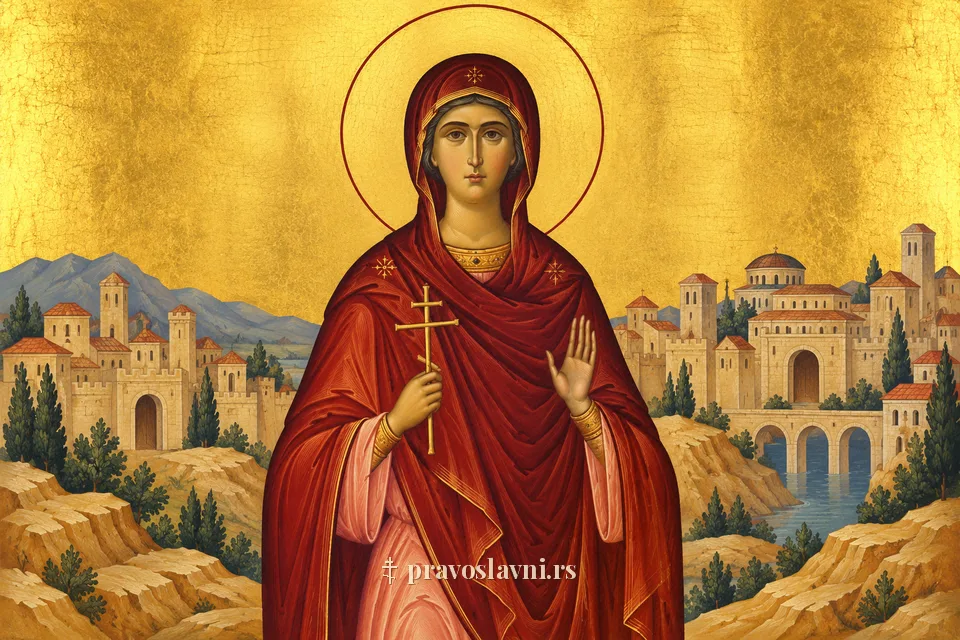
Illustration
Saint of the day
Holy Martyr Pelagia of Tarsus
What happenedPelagia of Tarsus refused the hand of the emperor's son, and then of the emperor himself, because she was already betrothed to Christ, and for this she was burned.
“For I am jealous for you with godly jealousy. For I have betrothed you to one husband, that I may present you as a chaste virgin to Christ.”
— 2 Cor 11:2
Life
When the Emperor offered her marriage, a crown and a share in his power, Pelagia, according to her Life, answered that three crowns were waiting for her in heaven: those of faith, of virginity and of martyrdom. With that answer she refused the most that the world could give her.
She was born in Tarsus, in a distinguished and wealthy pagan family. She heard about Christ from Christians and came to believe, but she hid her faith from her mother. When the Emperor Diocletian was staying in Tarsus at the time of the persecution, the Emperor's son wished to take her as his wife. Her mother was glad of this, but Pelagia refused, saying that she was already betrothed to Christ.
In secret she sought out Bishop Clinon, who instructed her and baptised her. Her Life says that the bishop was then hiding in the mountains from the persecution, and that he was recognised by the servant Longinus, a secret Christian. It also tells that the Lord appeared to her in a dream in the likeness of the bishop, and that at her baptism a spring flowed out of the earth, while two angels brought a white garment. Pelagia gave away her wealth. The Life adds that she restored the sight of her servants with the sign of the cross, and so they too asked for baptism.
Her mother denounced her to the Emperor. The rejected son of the Emperor, in despair, took his own life with a sword, and the mother handed her daughter over to the Emperor. The Emperor, who was himself drawn by her beauty, offered her marriage, but she remained faithful to her Bridegroom. Then he ordered her to be burnt in a red-hot bronze bull. Pelagia made the sign of the cross, prayed, and went inside of her own accord. The Prologue records that she suffered in the year 287, and the Life says that a sweet fragrance spread from her body and filled the city.
Bishop Clinon gathered her bones and buried them on a hill; the Life adds that until then four lions had guarded them. A church was later built over that place.
Pelagia teaches undivided love for Christ. Neither wealth, nor beauty, nor an imperial crown, nor even family ties could separate her from Him. A soul betrothed to Christ does not sell itself for earthly promises.
Full Life
The bride who was already betrothed
Pelagia was born in Tarsus, into a distinguished and wealthy family. The Prologue says that her parents were pagans, and the Life that her mother was an idol-worshipper and that Pelagia was known for her beauty and purity. She heard of Christ from Christians and believed — the Life says that she vowed her virginity to the Heavenly Bridegroom — but she kept her faith hidden from her mother.
At the time of the persecution the Emperor Diocletian was staying in Tarsus. Pelagia caught the eye of the emperor's son, who decided to marry her. Her mother, who did not know of her faith, gladly accepted the proposal, but Pelagia refused, sending word, according to the Life: “I am already betrothed to the Son of God, the Immortal King.”
The secret journey to the bishop
The Life records that Clinon, the Bishop of Tarsus, was hiding in the mountains from Diocletian's persecution. Pelagia obtained permission to visit her nurse outside the city and set out in royal purple and jewels, but her true aim was to find the bishop. The Lord appeared to her in a dream in the likeness of Clinon, and Christians from the prison confirmed to her eunuchs what the bishop looked like. The servant Longinus, a secret Christian, recognised the bishop; Pelagia dismissed her pagan servants and went to him on foot. She begged him: “Have mercy on me, master, and give me this gift!”
Bishop Clinon instructed her and baptised her. The Life tells that at his prayer a spring flowed out of the ground, that two angels appeared with a white garment and that the bishop gave her Holy Communion. Pelagia gave away her wealth — according to the Life, she gave her jewels and purple to the bishop to share among those in need, for one cannot serve God and mammon. The Life adds that with the sign of the Cross she restored sight to her servants, whom the devil had blinded, and so they too believed and asked for baptism.
The mother, the emperor's son and the emperor
Her mother denounced her to the emperor. The Life says that she first asked soldiers to seize the bishop, but Pelagia and her servants crossed the river Cydnus and the soldiers did not see them, so the pursuit was left empty-handed. When she returned home, Pelagia called on her mother to come to know the true God, but her mother refused and informed the emperor's son. When he realised that he would never have her, the emperor's son took his own life with a sword. Then the mother handed her daughter over to the emperor — according to the Life, out of fear of his vengeance; the emperor gave her a hundred talents and kept Pelagia in the palace.
The emperor, who was himself drawn by her beauty, offered her marriage, and the Life says a crown and a share in his power as well. Pelagia refused, saying, according to the Life, that three crowns awaited her in heaven: of faith, of virginity and of martyrdom.
Martyrdom and a grave on the hill
The emperor ordered that she be burned in a bronze bull made red-hot in the fire. She made the sign of the Cross, prayed and went into it of her own accord, and her body, as both sources record, melted at once; the Life says that a fragrance spread from it and filled the city. The Prologue records that she suffered in the year 287.
According to the Life, her remains were thrown outside the city and carried to Mount Linaton, where four lions guarded them. Bishop Clinon gathered her bones and buried them under a stone on the hill; the Life says that God revealed the place to him, that the lions bowed down and went away and that he wrote an inscription on the highest peak. Later a church was built over that place.
Pelagia teaches undivided devotion to Christ — above wealth, beauty, an earthly crown, and even family ties. Neither the emperor's offer nor her mother's will could shake her. A soul that has betrothed itself to Christ cannot be bought by any earthly promise.