Sunday, 22 August 2027fast with oil · Sunday — a festive day · 9 August (according to the Julian calendar)
Sunday22August 20279 August (according to the Julian calendar)
Illustration
Saint of the day
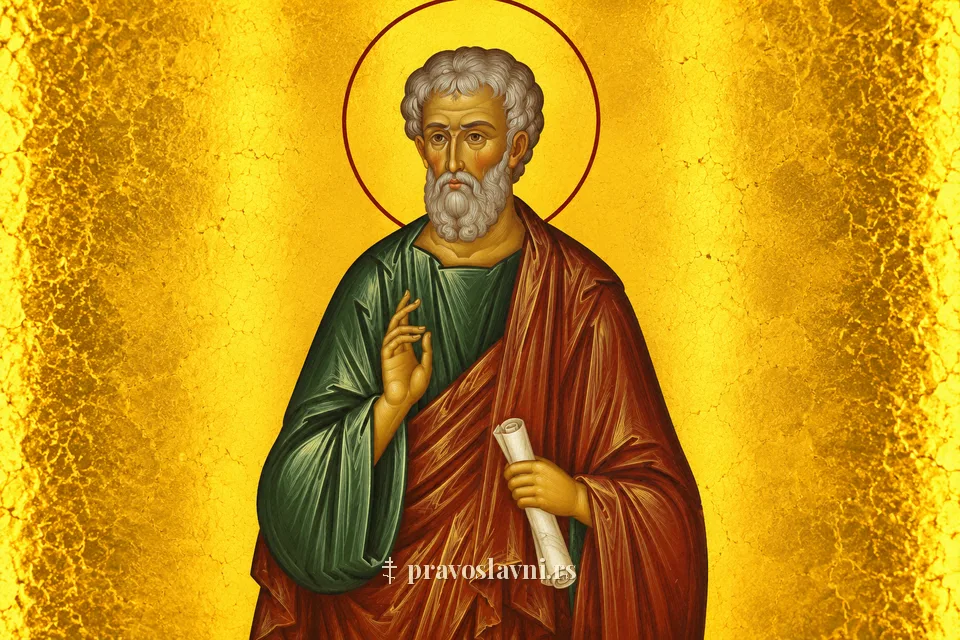
Holy Apostle Matthias
What happenedThe Holy Apostle Matthias, one of the Seventy, was chosen by lot to take the place of Judas among the Twelve, and he bore witness to Christ until his death as a martyr.
“And they cast their lots, and the lot fell on Matthias. And he was numbered with the eleven apostles.”
— Acts 1:26
Life
The Holy Apostle Matthias took among the Twelve the place which Judas had abandoned. According to the Life, Peter sought someone who had been with the Lord from the beginning of His ministry. Of the two who were put forward, Joseph called Barsabas and Matthias, after prayer the lot fell on Matthias.
Matthias fulfilled that condition. He had followed Christ from the beginning of His preaching and was one of the Seventy. He was a native of Bethlehem, of the tribe of Judah, and he learned the law of God in Jerusalem from St Symeon the God-receiver. Together with the other apostles he received the Holy Spirit.
He preached first in Judea, and according to tradition also in Ethiopia, where he suffered much. The Prologue mentions the opinion that he was in Macedonia as well. There, according to the Life, they tried to blind him with a poisonous drink, but it did him no harm, and so he restored sight to those whom the drink had already blinded. For three days the persecutors were unable to see him, and the Lord Himself led him out of prison, appearing to him in light. The Life adds that the earth swallowed those who tried to kill him, and that the rest came to believe. According to the Life, in Judea he healed the blind, lepers, the lame, the deaf and the possessed.
According to the Life, he taught that Moses and the prophets had foretold Christ. When he was seized and brought before the high priest Ananus, the one who had put the Apostle James to death, Matthias bore the same witness before the court too; the Life says that he called the name of Christian his glory and that he showed Christ from the Old Testament.
He was condemned to be stoned, according to the Life at a place called Bethlaskila, which means the house of the stoned. According to the Life, he asked that the first stones thrown at him by the two witnesses be laid in his grave as a testimony, and he breathed his last in prayer. In order to present him as an opponent of Roman rule, the persecutors cut off the head of the dead body. The faithful, according to the Life, buried him with honour.
Called from the beginning and chosen by lot, Matthias remained a witness to the end.
Full Life
Chosen to be a witness
When, after the falling away of Judas, the number of the Twelve had to be filled up, the apostles did not make the choice themselves. According to the Life, Peter sought a man who had been with the Lord from the beginning of His ministry, so that he could bear witness to everything. Between two such men, Joseph called Barsabas and Matthias, the decision was made by a lot cast after prayer, and it fell on Matthias. Thus, after prayer and the casting of the lot, the choice was left to God; the Acts of the Apostles speak of this election.
Matthias fulfilled that condition. From the first days of Christ's preaching he followed Him with love, as a witness of all that the Lord said and did. Before that he had been one of the Seventy, whom the Life mentions with reference to the Gospel according to Luke. Nor was Scripture unknown to him: a native of Bethlehem and of the tribe of Judah, he studied the law of God in Jerusalem with St Simeon the God-receiver, according to the Life while still a child. Together with the other apostles he received the Holy Spirit.
A preacher in many places
The first field of his preaching was Judea, which, as the Life says, fell to him by lot, and he went through it from place to place. Tradition also takes him to Ethiopia, where he suffered much for Christ, and according to the Life he bore it with joy. That he also preached in Macedonia the Prologue presents as an opinion that is held, and the Life as the account of some.
The miracles which the Life connects with Macedonia all speak of God's protection. The pagans wanted to blind him: the Prologue says this briefly, while the Life tells of a drink that takes away the sight. Matthias, having called on the name of Christ, drank it without any harm, and then restored sight to the people whom that drink had already blinded, more than two hundred and fifty of them. When the persecutors were looking for him, for three days they could not see him. From prison he was led out by the Lord Himself: He appeared to him bathed in light and encouraged him, and according to the Life He took off his chains and opened the doors. The Life also records that the earth swallowed those who rushed at him, and that the rest accepted baptism. And after his return to Judea, according to the Life, he healed the blind, lepers, the lame, the deaf and the possessed.
Christ in the Old Testament
According to the Life, in his preaching he stressed that Moses and the prophets had foretold Christ. He was seized, according to the Life while he was preaching in the synagogues of Galilee, and brought before the high priest Ananus, the very one who had put to death the Apostle James, according to the Life the brother of the Lord. Before him Matthias did not defend himself, but bore witness. The Life states that, relying on the Prophet Isaiah, he called the Christian name his glory. Then he pointed out Christ in the pages of the Old Testament: in the bush that burns and is not consumed, in Emmanuel, in the prophet such as Moses foretold, in the fifty-third chapter of Isaiah and in the sign of the Prophet Jonah.
His end
Ananus condemned him to be stoned. The Life calls the place of execution Bethlaskila and translates that name as the house of those who are stoned. According to the Life, Matthias asked that the first stones thrown at him by the two witnesses be buried with him, as a testimony, and he died praying, with his hands raised to heaven. In order to present him to the Romans as an opponent of Roman rule and to win their favour, the persecutors cut off the head of the dead body, according to the Roman custom. The faithful, as is written in the Life, buried his body with reverence.
The Prologue's homily for this day speaks of a love that goes so far that a man takes another's guilt upon himself as his own. The Prologue calls such love a kind of martyrdom and gives the examples of Ammon, Macarius, Simeon the Fool-for-Christ and Theodora.
Other saints of the day
Holy Martyr Anthony
The martyr Anthony was from Alexandria and, as his Life says, he lived as a true Christian. When they brought him before the pagan governor, he did not hide his faith, but openly and fearlessly confessed Christ. Not even tortures could force him to deny Him, and so he was condemned to the fire. Even in the fire he did not keep silent. He addressed the people who had gathered as his brethren and, according to the Prologue, said: “my beloved brethren, do not be slaves to the body, but take more care for the soul”. According to his Life, he explained to them that the soul was given by God and that by its nature it is close to God. He died in the flames, preaching until his last breath. According to his Life, when they found his body in the fire it was untouched, and not even his hair had been singed.