Monday27April 202614 April (according to the Julian calendar)
Illustration
Saint of the day
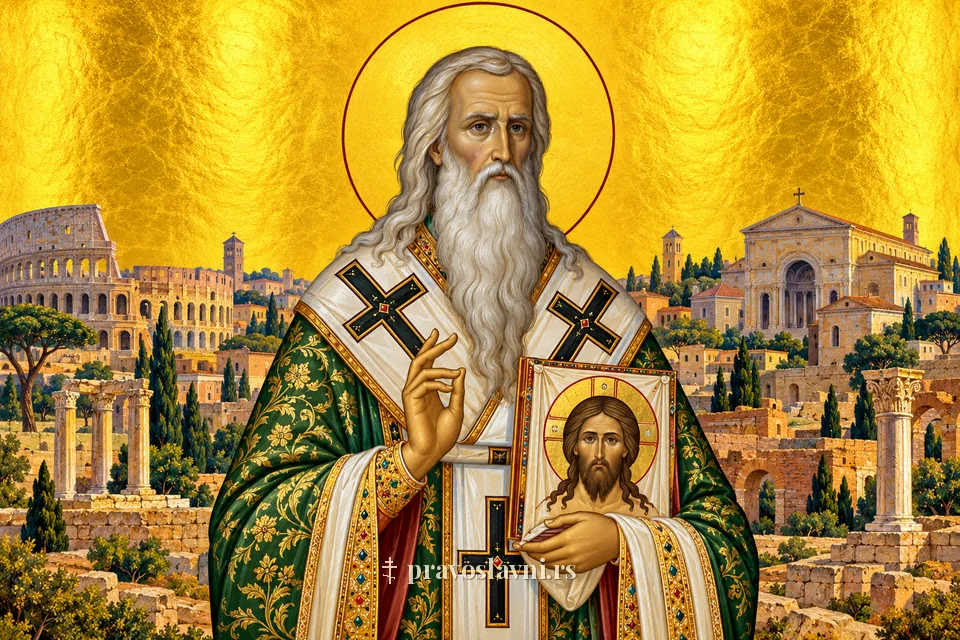
St Martin the Confessor, Pope of Rome
What happenedPope Martin of Rome rejected an imperial decree that favoured the Monothelite heretics, and so, slandered and exiled to Cherson, he ended his life there.
“He humbled Himself and became obedient to the point of death, even the death of the cross.”
— Phil 2:8
Life
“Even if the whole world were to accept this teaching, which is contrary to the right faith, I will not accept it” — with these words, as his Life records, Pope Martin of Rome rejected the Typos, the decree of Emperor Constans II which favoured the Monothelite heretics. The Monothelites claimed that Christ has only one will, and his Life says that this teaching was also held by Paul, Patriarch of Constantinople.
Martin became pope on 5 July 649. He wrote to Paul and begged him to keep the Orthodox faith and to turn the Emperor away from error, and because of this both the Patriarch and the Emperor turned against him. Then he summoned a council of one hundred and five bishops, which condemned both the heresy and the Typos; his Life says that this was in Rome, on the advice of Maximus the Confessor.
The Emperor sent a commander to bring the pope in fetters. The first commander wanted to get rid of the pope secretly, by the hands of a soldier whom he had persuaded, in the middle of the church; but, as the Prologue and his Life record, the man with the hidden sword lost his sight, and by the providence of God Martin remained alive. The second commander, Theodore, came with slanders that the pope was conspiring with the Saracens and that he did not honour the Most Pure Theotokos. Martin refuted everything, but he was arrested all the same.
He was held for a long time in prison in Constantinople, in hunger and hardship. His Life records that he was tried on the basis of false testimonies, that he could not defend himself properly because he did not know Greek, and that he wished to die for the faith. And Patriarch Paul, as he lay dying, confessed in tears that he had wronged Martin and begged the Emperor to spare him further torments.
Martin was exiled to Cherson, where he lived for about two years in hunger and hardship and reposed, according to the Prologue, in the year 655. According to his Life, he was buried in the church of the Most Holy Theotokos of Blachernae outside Cherson, and at his tomb many of the sick received healing.
The life of Martin teaches that it is better to suffer in the body than to renounce the true faith in Christ, God and Man, which the Fathers handed down.
Full Life
A Heresy That Divided the Faith
In Martin's time the heresy of the Monothelites, according to which Christ has only one will, was spreading through the Church. On the imperial throne was Constans II, the grandson of Heraclius, and on the patriarchal throne of Constantinople was Paul. The Life sees the roots of this error in Patriarch Sergius, who had the support of Heraclius, and after him the Patriarchs Pyrrhus and Paul held to it as well. The Emperor issued an edict called the Typos, which played into the hands of the heretics.
Martin became Pope of Rome on 5 July 649; the Life says that he was elected unanimously, after the death of Pope Theodore. The Life preserves his words: “Even if the whole world were to adopt this teaching, which is contrary to the true faith, I will not adopt it” — and adds that he would not do so even if he were handed over to death.
The Council and the Letters to Constantinople
Martin wrote to Patriarch Paul — according to the Life, he sent envoys to him — and begged him to keep the Orthodox faith and to turn the Emperor away from the heresy. By this he drew upon himself the anger of both Paul and Constans, and the Life records that Paul imprisoned the envoys and banished them. The Pope then summoned a council of one hundred and five bishops — according to the Life, in Rome in the year 649, on the advice of Maximus the Confessor, who was staying in Rome at the time — and the council condemned both the heresy and the Typos.
God's Protection and Slander
The Emperor sent a general to bring Martin in chains. Since he did not dare to raise his hand openly against the Pope, the general persuaded one of the soldiers to kill him in church. The Prologue and the Life record what happened then: the assassin who was hiding the sword lost his sight, and by God's providence Martin remained alive. That general afterwards went to Sicily to wage war against the Saracens and died there.
The Emperor then sent another general, Theodore — the Life calls him Theodore Calliopas — with false accusations that Martin was conspiring with the Saracens and that he did not honour the Most Pure Theotokos; the Life adds an accusation of false teaching as well. Martin refuted it all, but he was arrested nevertheless. To those who came for him he said, as the Life records: “Behold, I am in your hands; do with me what you will, since God allows you.”
Prison, Trial and Exile
The Life says that they arrested him at night in the year 653 and took him by ship to the Cyclades, where he spent a whole year on one of the islands in hunger and want, and the islanders who brought him food were punished. Then he was brought to Constantinople and kept for a long time in prison, in hunger and distress. According to the Life, he arrived in Constantinople gravely ill, he endured insults, and for ninety-three days they kept him in a dark cell, in complete solitude. They tried him before the senators on the basis of false testimonies, and since he did not know Greek, he could not defend himself properly. The Life relates that he was brought out before the people so that they might curse him, that he was dragged through the city in chains and thrown into prison, where he fell gravely ill. The wife of one of the gaolers secretly nursed him and dressed his wounds, and he sighed, for he longed to die for the faith. To the Emperor's men he said, according to the Life: “The Lord knows, you will do me a great kindness if you put me to death as soon as possible, by whatever death it may be.”
Lying on his deathbed, Patriarch Paul confessed in tears that he had gravely wronged Martin and begged the Emperor to spare the Pope further torments; the Prologue says that he asked him to set him free and that he turned his face to the wall. Paul, according to the Prologue, died two years before Martin. After his death, according to the Life, imperial envoys visited Martin, but he did not give way and said that he would not be in communion with the Church of Constantinople as long as it held to the heresy.
At last he was banished to Cherson, where he lived for about two years in hunger and hardship and where, according to the Prologue, he reposed in the year 655. The Life says that he was buried outside Cherson, in the church of the Most Holy Theotokos of Blachernae, and that many sick people received healing at his tomb through his prayers.
What He Defended
Martin chose rather to suffer in the body than to renounce the true faith handed down by the Fathers: that Christ is God and Man, with two natures and two wills in one person. His life teaches that the truth is not to be abandoned even when the whole world abandons it.