“For they themselves declare concerning us what manner of entry we had to you, and how you turned to God from idols to serve the living and true God.”
— 1 Thess 1:9
Life
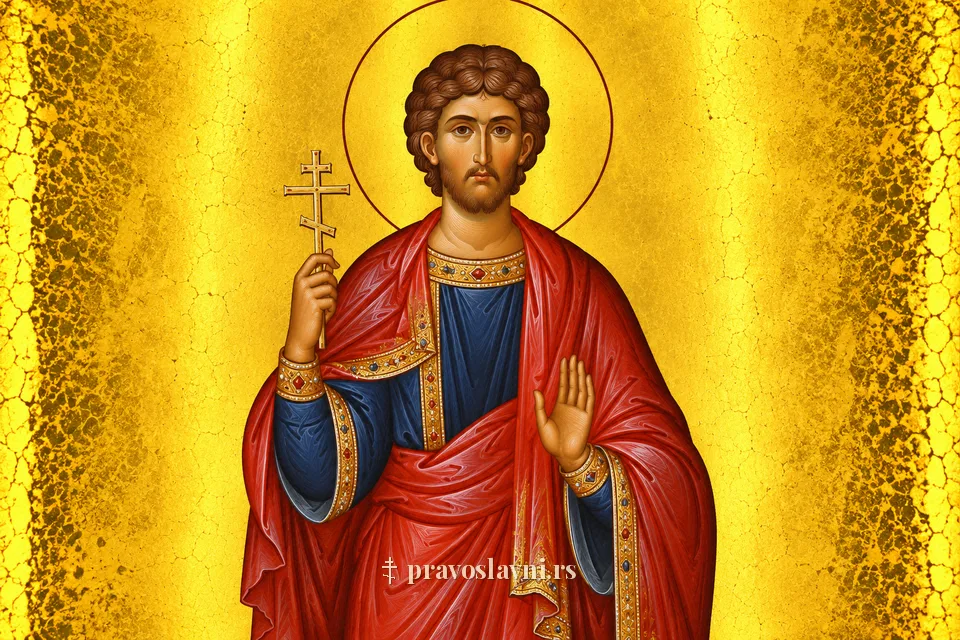
Agathonicus lived in Nicomedia in the time of Emperor Maximian and was a preacher whose word changed people: because of it many Hellenes abandoned the idols. The Life states that Princeps too was converted by his teaching.
The persecution was led by the imperial governor, according to the Life Eutolmius. When Zoticus, seized in Carpin, was brought to Nicomedia, Agathonicus, Princeps, Theoprepius, Acindynus, Severian and some other Christians were arrested there.
The prisoners were led in chains towards Byzantium and Thrace. Zoticus, Theoprepius and Acindynus died on the way, and Severian was put to death near Chalcedon. Agathonicus and the others were brought to Selymbria in Thrace, where they endured their torments before the eyes of the Emperor himself and ended their lives under the sword. His Life records that a church was later built in his honour in Constantinople.
The teacher who had led others to Christ did not leave them even on the last road, but received the martyr's crown together with them.
Full Life
A teacher in Nicomedia
Agathonicus lived in Nicomedia in the time of Emperor Maximian. He was a preacher whose word changed people: because of it many Hellenes abandoned the idols and became Christians. The Life states that Princeps, who would later share his fate, was also converted by his teaching.
The persecution reaches the city
The persecution was led by the imperial governor, according to the Life Eutolmius, who had been sent to the region of Pontus, and he did not spare the Christians. In Carpin he seized Zoticus and crucified his disciples. Then they brought Zoticus to Nicomedia. There Agathonicus, Princeps, Theoprepius, Acindynus, Severian and some other Christians were arrested. The Prologue also names Zeno among them, and it calls Theoprepius Bogolep as well.
The road in chains
The prisoners were led in chains towards Byzantium and Thrace. According to the Life, the Emperor himself was waiting for them in person in Thrace. Zoticus, Theoprepius and Acindynus died on the way. Severian lost his life near Chalcedon; according to the Life, he was put to death by the sword for his faith.
The end in Selymbria
Agathonicus and the others were brought to Selymbria in Thrace — the Life says, to Ammus near Selymbria, where Maximian was at that time. They endured their torments before the eyes of the Emperor himself, and they ended their lives under the sword. The teacher who had led others to Christ did not leave them even on the last road, but received the martyr's crown together with them.
A commemoration that endures
His Life records that a church was later built in Constantinople in honour of Agathonicus.
Agathonicus taught by word, and he confirmed his teaching with his life. His companions did not all reach the same place, but each one completed his road where that road found him — faithfully, to the end.
Other saints of the day
Hieromartyr Gorazd, Bishop of Bohemia
St Gorazd was born on 26 May 1879. He completed his theological studies in Olomouc in 1902 and became a Roman Catholic priest. He joined the movement of Czechs who were returning to Orthodoxy and asked the Holy Synod of the Serbian Orthodox Church to receive him under its protection. In the Krušedol Monastery he was tonsured a monk on 21 September 1921 and received the name Gorazd, and on 25 September of the same year the Serbian Patriarch Dimitrije consecrated him a bishop. After that he led the Orthodox Church in the Czech lands, whose cathedral church in Prague is dedicated to Sts Cyril and Methodius. He suffered in 1942, in the time of the war, when he was shot at Kobylisy near Prague. He was a shepherd who laid down his life for his flock. His life is a lasting bond between the Orthodox Czechs and the Serbian Church, which received him and consecrated him.