“Jesus Christ is the same yesterday, today, and forever.”
— Heb 13:8
Life
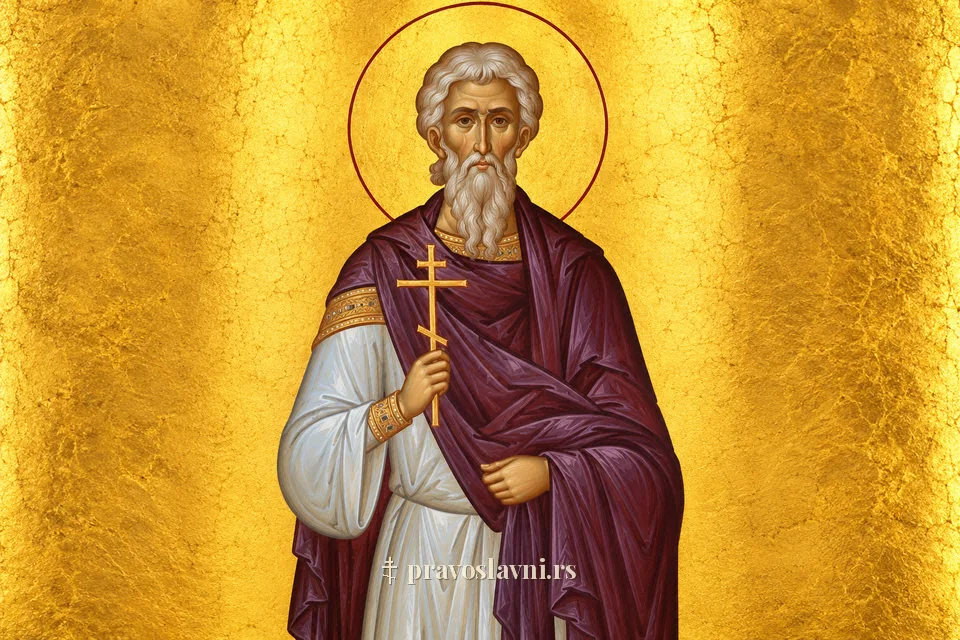
Two men who were quarrelling in the street asked the aged Eusignius to judge between them, because he had served for a long time in the army. He judged justly, and the one who was in the wrong denounced him to Emperor Julian the Apostate as a Christian.
Before the emperor the old man did not keep silent. He rebuked Julian for having fallen away from the faith and pointed him to Constantine the Great; according to the Life, he reminded him of Constantine's vision of the Cross, of the rejection of the idols and of his baptism. Julian ordered him to be put to death. He suffered in deep old age — according to the Prologue in the year 362, and according to the Life in his one hundred and tenth year.
Eusignius had served under Constantine. A native of Antioch, he spent a full sixty years in the army, under Maximian and then under Constantine and his sons. The sign of the Cross that appeared to the emperor he saw with his own eyes; according to the Life, it was a cross of stars in the sky. He was also a witness of the martyrdom of St Basiliscus, when he saw angels taking the martyr's soul. Only in deep old age did he leave the army and return to Antioch, where he spent his days praying and doing good; according to the Life, he went to church regularly.
St Eusignius remained righteous and faithful to Christ throughout his whole life as a soldier and to his last day.
Full Life
Sixty years in the army
Eusignius was a native of Antioch. He served as a soldier under Emperor Maximian — the Life also mentions Diocletian — and then under Constantine the Great and his sons. He spent a full sixty years in the army.
A witness of two signs
His long service made him a witness of great events. He was present at the martyrdom of St Basiliscus and saw how the angels took the martyr's soul and how the Lord received it. Serving under Constantine, he also saw the sign of the Cross which appeared to the Emperor; the Life says that it was a cross of stars in the sky.
Old age in Antioch
In the time of Constantine's sons — the Life mentions Constantius — Eusignius, by then very old, left the army and settled in Antioch. He lived in a way pleasing to God, in prayer and good works; the Life says that he went to church regularly.
Judgement in the street and judgement before the Emperor
During the reign of Julian the Apostate, two men who were quarrelling met him in the street; according to the Life, this was while he was on his way to church, and the two of them were pagans. They asked him to judge between them, saying: “We know, honourable man, that you were in the army for a long time.” He judged justly, and the one who was in the wrong denounced him to the Emperor as a Christian.
Before Julian, Eusignius did not keep silent. He rebuked the Emperor for his apostasy and set before him the example of Constantine the Great; according to the Life, he reminded him of Constantine's vision of the Cross, of the casting away of the idols and of his baptism. Julian ordered that his head be cut off. He suffered in deep old age — according to the Prologue in the year 362, and according to the Life in the hundred and tenth year of his life.
Eusignius spent his whole life in the army, and yet remained righteous and faithful to the end. A witness of the martyrdom of St Basiliscus and of the sign of the Cross, in his old age he too laid down his life for Christ.