Friday, 20 August 2027strict fast (no oil) · 7 August (according to the Julian calendar)
Friday20August 20277 August (according to the Julian calendar)
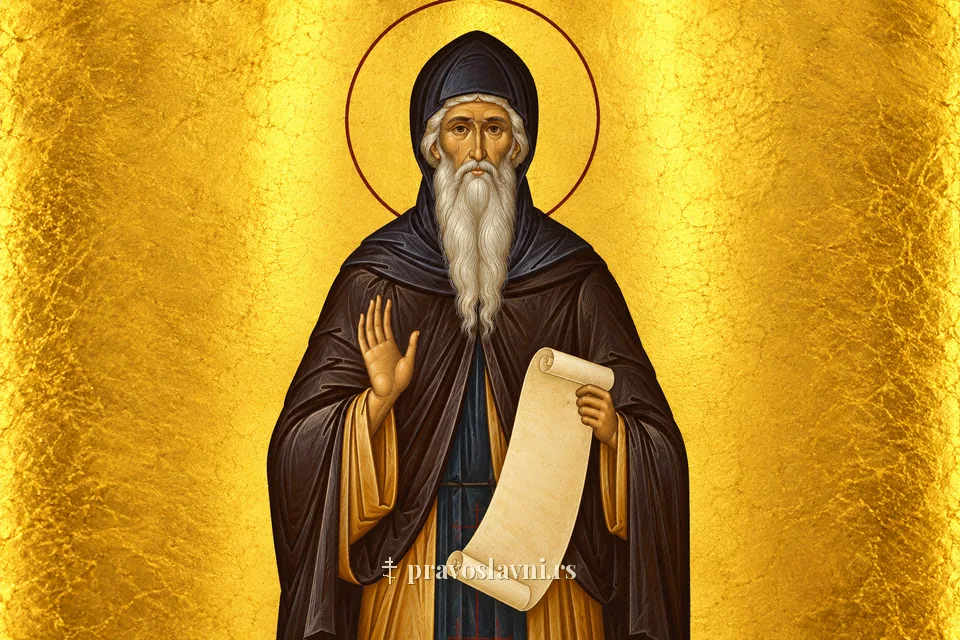
Illustration
Saint of the day
Venerable Martyr Dometius
What happenedThe Venerable Martyr Dometius, a Persian who had embraced Christianity, fled from the rank of priest into the desert and suffered for Christ under Julian the Apostate.
“Therefore let those who suffer according to the will of God commit their souls to Him in doing good, as to a faithful Creator.”
— 1 Pet 4:19
Life
St Dometius was a Persian, born a pagan in the days of Emperor Constantine the Great. In his youth he came to believe in Christ and was baptised. The Life says that the faith was revealed to him by a Christian named Abarus and that for its sake he left his kinsfolk.
Humility runs through the whole of his life. Even in the monastery near Nisibis, where he became a monk, he did not escape human malice: according to the Life, slanders led him to move to the monastery of the holy martyrs Sergius and Bacchus in Theodosiopolis. There he was the disciple of a strict archimandrite, whom the Prologue calls Nurvel and the Life Uvrel, and who for sixty years had not tasted cooked food. That elder made him a deacon, but when he wished to raise him to the priesthood, Dometius preferred to go away into the desert.
The desert became the arena of his ascetic struggle. Living in a cave, in prayer and strict abstinence, he attained great holiness, so that the sick came to him and went away healthy. According to the Life, many of those who came to him abandoned the idols and accepted the faith.
Yet the fame of his holiness reached Emperor Julian the Apostate, who sent men against him. Dometius suffered as a martyr together with two of his disciples, according to the Prologue in the year 363. In its teaching for the day the Prologue reminds us that the wicked are not to be envied, for persecutors like Julian come to a shameful end.
Full Life
The monk who fled from honour
The life of Dometius was marked by one flight. The archimandrite under whose guidance he lived ordained him a deacon, and when he intended to raise him to the rank of priest as well, Dometius withdrew to a deserted mountain.
He had an example of strictness before his eyes. His archimandrite, called Nurvel in the Prologue and Uvrel in the Life, did not taste cooked food for sixty years. The Life, with the cautious remark that this is how the story is told, adds that this elder slept little and did not lie down even to sleep, but would only doze leaning on his staff.
The road from Persia
Dometius was a Persian, born into a pagan family in the days of Emperor Constantine the Great. He accepted Christianity in his youth and was baptised; the Life says that the faith was handed on to him by a Christian named Abar and that because of it he parted from his kin. He became a monk in a monastery near Nisibis, where, according to the Life, he was both baptised and tonsured.
Even in the monastery there was no peace. According to the Life, some of the monks turned against him because of slanders, behind which the Life sees the envy of the demons. For this reason he moved to the monastery of the holy martyrs Sergius and Bacchus in Theodosiopolis.
A hermit in a cave
The Life says that on the mountain he endured all the harshness of both summer and winter, before he took shelter in a cave. Prayer, fasting, night vigil and meditation on God filled his days, and in this way he attained great holiness. The sick found healing with him. The Life does not describe individual miracles, but it records that he worked them by calling on the name of Christ and that many of those who visited him abandoned the idols and accepted the faith.
The martyr
When Emperor Julian the Apostate heard of him, he sent men against him. Dometius suffered for Christ, and with him two of his disciples; according to the Prologue, this was in the year 363. The Life numbers all three among the martyrs whom God has crowned.
In its homily for the day the Prologue reminds us that the wicked are not to be envied: persecutors such as Julian came to a shameful end, for he who sows evil also reaps evil. Dometius, on the contrary, fled from honour, but accepted suffering for Christ.
Other saints of the day
Venerable Or
Venerable Or was a desert-dweller in the Thebaid of Egypt. According to his Life, he lived alone for a long time in the far desert and fed on wild plants and sweet roots, and in deep old age an angel promised him in a dream that many would be entrusted to him who would be saved through him. He built several monasteries, and the monks had in him a spiritual father and teacher; according to his Life, about three thousand brethren gathered around him. His Life also says that on a bare spot he himself planted a forest, so that the brethren might have firewood. According to his Life, he washed the monks' feet, interpreted the Scriptures for them and taught them the Orthodox faith, and although at first he could not read, according to his Life he knew the Scriptures by heart through the grace of God. Rufinus, who visited him, found him in his ninetieth year, with a long, completely white beard and a bright face; the Prologue quotes his words: “in his clothing he looked like an angel of God”. According to the Prologue, angels often appeared to him, and he took the greatest care of all over the truthfulness of his word. His Life also tells how he exposed a certain monk who had hidden his robe and then asked for clothing; from that time on, no untruth was heard in Or's presence. He received Holy Communion every day. His Life also records his story of a monk to whom the demons appeared as a glorious king in a chariot of fire and demanded to be worshipped, and he answered them: “I have my own King, Whom I worship unceasingly, and you are not my king”; the brethren knew that he was speaking of himself. He reposed in deep old age, according to the Prologue around the year 390.