Saturday16January 20273 January (according to the Julian calendar)
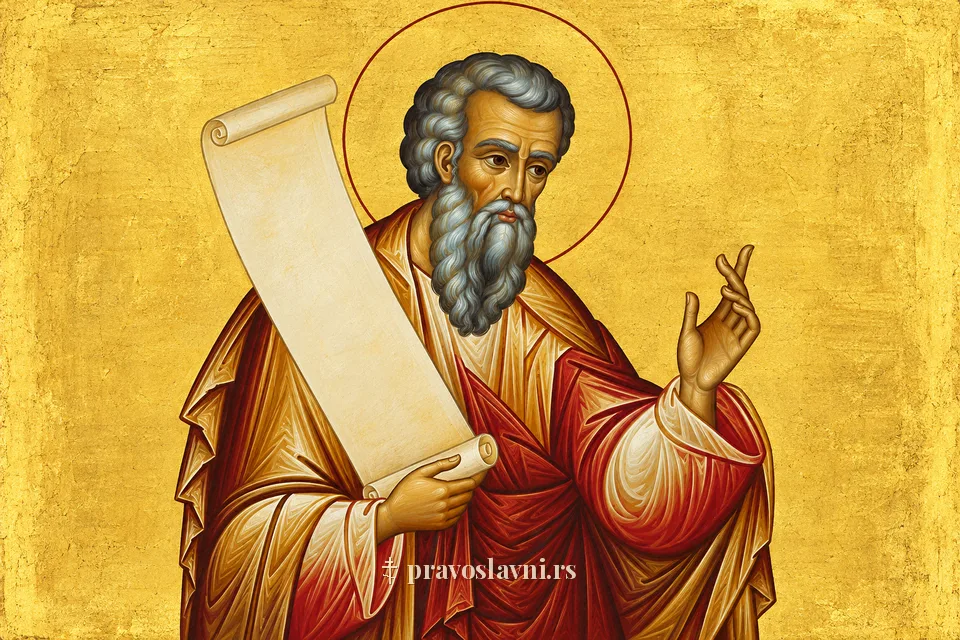
Illustration
Saint of the day
Holy Prophet Malachi
What happenedThe Prophet Malachi, the last of the prophets, often spoke with an angel face to face and foretold the coming of the Lord and the Last Judgement.
“But to you who fear My name The Sun of Righteousness shall arise With healing in His wings; And you shall go out And grow fat like stall-fed calves.”
— Mal 4:2
Life
Malachi is, according to the Prologue and his Life, the last prophet of the Old Testament. He lived at a time when the Babylonian captivity of the Jews was already a thing of the past. According to his Life, he came from Sopha, from the tribe of Zebulun, and from his earliest years he lived without stain; the Prologue records that while still a youth he dedicated himself to God.
His Life explains that his name means angel, and the Prologue, referring to tradition, says that this is also what people called him. The sources do not give a single reason: both mention the holiness of his life and the angel of God who was near him, and the Prologue also the beauty of his face. “He often spoke with an angel face to face,” the Prologue records. In this way he learned of God's purposes and of future events, and then made them known to the people as prophecy.
According to the Prologue, his word was stern: he did not pass over in silence the ingratitude of the people and the lawlessness of the priests. His prophecies looked towards the coming of the Lord and the last judgement, and so he is remembered above all as the prophet of the Dread Judgement. His Life also attributes to him the prophecy of a new sacrifice and of the Law of Moses, which would give way to a more perfect one. The Prologue adds that five centuries in advance he described John the Baptist. With Malachi the line of the prophets of Israel comes to an end; the next one was John himself. His earthly life, according to his Life, was short; he was given a grave among his forefathers.
The Prologue and his Life stress in him above all his angelic purity and his holiness from the days of his youth.
Full Life
The last in the line
Malachi was born when the Jews had already returned from the Babylonian captivity. The Prologue and his Life place him at the very end of the line of the Old Testament prophets. According to his Life, he came from Sopha, from the tribe of Zebulun, and he spent his childhood and youth without a stain. The Prologue adds that while still a young man he entrusted his life to God.
A name that means angel
“His name Malachi means angel,” says his Life. The Prologue, referring to tradition, records that the people around him also called him so. The sources do not give a single reason for that name. Both mention the holiness of his life and the angel of God who was close to him, and the Prologue also the beauty of his face.
The friend of an angel
The Prologue and his Life agree on this: the prophet used to see an angel and converse with him. “He often spoke with an angel face to face,” says the Prologue. From him, according to the sources, he would learn God's purposes and what was going to happen, and whatever he heard he passed on to the people as prophecy. The sources stress this as his particular privilege: the angel's face, according to them, was not revealed to any other man.
A voice before the silence
According to the Prologue, his word was stern: he did not pass over in silence the ingratitude of the people and the lawlessness of the priests. His prophecies looked far ahead, towards the coming of the Lord and towards the last judgement, and so the Prologue and his Life see in him above all the prophet of the Dread Judgement. His Life also mentions that he foretold a new sacrifice and a law better than that of Moses.
According to the Prologue, five centuries before it was to happen, Malachi described in advance John the Baptist and his ministry. Both sources stress that after him the prophetic voice in Israel fell silent and that only John broke that silence.
A short life
His earthly span, according to his Life, was short; he was given a grave among his forefathers.
The Prologue and his Life do not draw any particular lesson from his life. Nevertheless, in both sources the same thing is stressed: purity and holiness from his young days, closeness to the angel of God, and the place of the last prophet, who foretold the coming of the Lord, the Dread Judgement and John the Baptist.
Other saints of the day
Holy Martyr Gordius
St Gordius was born in Caesarea in Cappadocia, and his Life records that his parents were Christians and that he grew up in the faith. In the reign of the Emperor Licinius he served as an officer, and his Life praises his strength and courage. The decrees of Licinius, according to his Life, threatened with death everyone who worshipped Christ; Gordius then gave up his military honour and chose the solitude of the desert, and the Prologue names Sinai and Horeb as the place. The Prologue says that in solitude, through prayer and reflection, he understood how empty earthly struggles are and came to desire eternal life. One day he returned among people, just at the time when the whole city was at the pagan festivities. His Life records that he walked without fear into the middle of the stadium, in rags and sackcloth, with a staff, and publicly declared that he was a Christian. They tried both kindness and force with him, but in vain. To the threats he replied: “Torture me as you wish!”, and when they offered him ranks and riches, he asked: “Can you give me anything that would be better than the Kingdom of Heaven?” Not even the tears of his friends, who suggested to him a secret faith together with a public denial, could shake him: according to his Life, he wished to confess Christ by word as well, and not only to carry Him within himself. He met the sentence with joy and, according to the Prologue, to his last hour he bore witness to Christ even to those who were leading him to execution. He was put to death by the sword in the year 320. His Life says that St Basil the Great, as Archbishop of Caesarea, wrote a eulogy in his honour.