Saturday30October 202717 October (according to the Julian calendar)
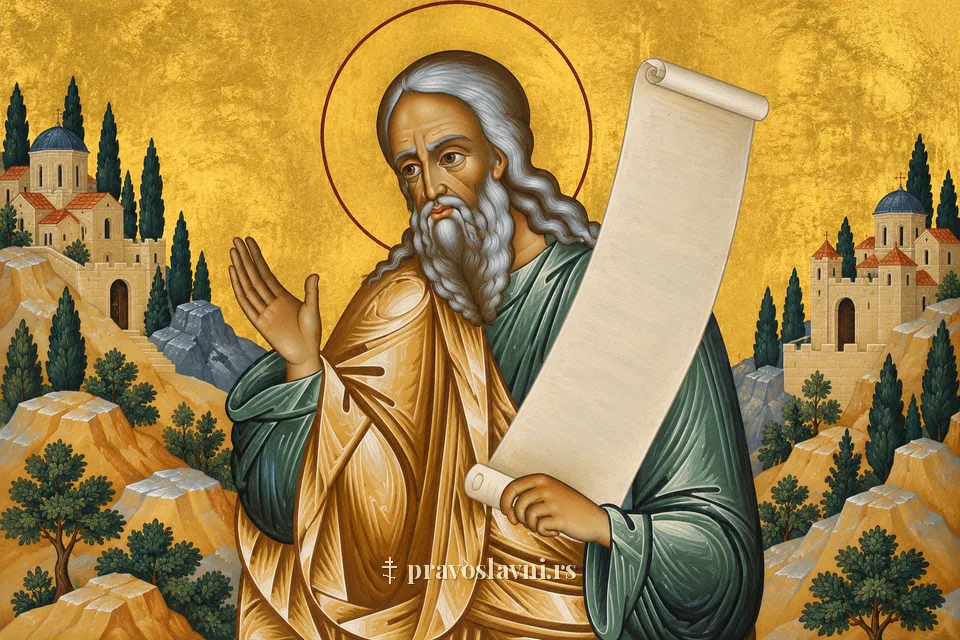
Illustration
Saint of the day
Holy Prophet Hosea
What happenedA prophet from northern Israel whose book is the first among the twelve minor prophets — an image of God's faithfulness to an unfaithful people.
“For I desire mercy and not sacrifice, And the knowledge of God more than burnt offerings.”
— Hos 6:6
Life
Israel, more than eight hundred years before the birth of Christ. The Prologue says that Hosea was the son of Beeri, of the tribe of Issachar. The people to whom he was sent had fallen away from God. The Prologue says that the prophet greatly rebuked both Israel and Judah for idolatry. In the land, says the prophet in his book, there is no truth or mercy or knowledge of God.
Many prophets spoke in words. Of Hosea God asked more: that his own life should become an image of what God is saying to His people.
In the first chapter of the book the Lord tells Hosea to take a harlot as his wife, for the land is departing from the Lord like a wife unfaithful to her husband. Hosea obeyed. He married Gomer, the daughter of Diblaim. Three children were born to them, and each child was given a name according to the word of God, as a message to the people: Jezreel, No-Mercy and Not-My-People. His home became a sermon that the whole people could see.
The third chapter brings the most unusual scene. The Lord speaks to Hosea again: let him go and love a woman who is an adulteress, just as the Lord loves the children of Israel, although they turn to other gods. Hosea bought her back for fifteen shekels of silver and one and a half homers of barley.
In this lies the heart of his book. God does not give up on an unfaithful people. He punishes, He warns, but He calls them back. In the eleventh chapter the Lord remembers how, when Israel was a child, He loved him and taught him to walk, holding him by the arms. And then, when the people had gone away, God's words are: “How can I give you up, Ephraim?”
The Prologue says that Hosea foretold God's punishment for sins, the ruin of Samaria and of Israel for falling away from God, but also God's mercy on the tribe of Judah. Even so, the book does not end in ruin. The last chapter begins with a call: “O Israel, return to the Lord your God.” The Lord promises that He will heal their backsliding and love them freely.
The Prologue further says that Hosea foretold the coming of the Lord and the wealth of gifts that He would bring to the earth. When the Pharisees condemned Christ for sitting with sinners, He repeated to them Hosea's words that God desires mercy and not sacrifice. And Hosea's words that people, out of fear, will say to the mountains to cover them are repeated by Christ on the way to Golgotha.
Hosea, says the Prologue, lived to a great old age and reposed in peace.
In his Life there are no swords and no prisons. There is something else: a man allowed God to take both his home and his family happiness and turn them into a message. And that message was not a condemnation, but a call. His whole book rests on one thought from the sixth chapter: “For I desire mercy and not sacrifice, and the knowledge of God more than burnt offerings.”
The Holy Prophet Hosea teaches us that God's love calls the sinner back even when he himself no longer hopes to return.
Full Life
A prophet in a hard time
Hosea lived in Israel more than eight centuries before Christ was born. According to the Prologue, his father's name was Beeri, and he came from the tribe of Issachar. His own book tells us when he prophesied: at that time Uzziah, Jotham, Ahaz and Hezekiah were reigning in Judah, and in Israel Jeroboam, the son of Joash.
The people had become estranged from God. The Prologue says that he did not keep silent about the idols either to Israel or to Judah. In the book it is written that sacrifices are being offered on the mountaintops and on the hills, and that in the land there is neither truth, nor mercy, nor knowledge of God.
A household as a sermon
God asked of Hosea that he should speak to the people not only with his lips, but also with his own life, as a living image of God's message. The first lines of the book say so without any softening. The Lord commands him to marry a harlot, because the land too is departing from the Lord just like a wife who is unfaithful to her husband. Hosea obeyed. He took as his wife Gomer, the daughter of Diblaim.
The children who were born to them received their names according to God's word, and each name carried a message. The first son was called Jezreel. The daughter was given the name No-Mercy — a sign that God would no longer show mercy to the house of Israel. The second son's name was Not-My-People.
What he felt in his soul, Scripture does not say. It is written only that he obeyed. In this way his household became a sermon before the eyes of all.
Then, in the third chapter, comes a new command: to go again and love a woman who is committing adultery, just as the Lord loves the children of Israel, even though they turn to other gods. He paid fifteen shekels of silver for her, and in addition a homer and a half of barley. He asked of her that she live with him for a long time and not run after others.
Love that calls back
What, then, is the heart of the whole book? God does not abandon the people who are unfaithful to Him. He punishes them and warns them, but He still keeps calling them to Himself. In the eleventh chapter the Lord remembers Israel as a child whom He loved: He called His son out of Egypt, led him by the hands and taught him his first steps. And then God's sigh resounds: “How can I give you up, Ephraim?”
The Prologue sums up his prophecy in this way: Israel and Samaria, who have turned away from God, will perish, and the tribe of Judah will find mercy. And yet, in the book, ruin does not have the last word. Already in the second chapter, after the sharpest rebukes, God calls the unfaithful wife His bride: He will lead her into the wilderness and there speak tenderly to her. He promises her an everlasting betrothal — in righteousness, mercy and love — and to those who did not belong to Him He will say that they are His people. In the sixth chapter the prophet calls the people to return to the Lord: He has torn, and He will also heal; He has stricken, and He will also bind up the wound. The last chapter opens with the call: “O Israel, return to the Lord your God,” and the Lord promises that He will heal their backsliding and love them freely.
Words that were fulfilled in Christ
In the tenth chapter Hosea writes that people in their fear will call upon the mountains to cover them, and upon the hills to fall on them. Christ spoke those words as He was going to Golgotha, addressing the women who were weeping for Him. The Prologue says that he also prophesied about Christ: with His coming the old sacrifices would come to an end.
The New Testament returns to him more than once. The Pharisees condemned Christ for keeping company with sinners, and He answered them with Hosea's words: mercy is dearer to God than sacrifice. The Evangelist Matthew, writing of how the Child Jesus stayed in Egypt, recalls Hosea's word about the son whom God calls out of Egypt. The Apostle Paul takes from Hosea the words about death, whose power has been taken away, as well as the promise that God will declare to be His people even those who did not belong to Him before.
The Prologue records that he lived for a very long time and that his end was peaceful.
A call, not a verdict
Hosea's life knows neither swords nor prisons. His sacrifice was of another kind: he gave over to God his household and his family happiness, so that He might make a message out of them. It was not a condemnation, but a call. His whole book rests on a single sentence: “For I desire mercy and not sacrifice, and the knowledge of God more than burnt offerings.”
From Hosea we learn that God's love calls the sinner to return even when he himself no longer believes that there is any way back.
Other saints of the day
Venerable Martyr Andrew
In the time of the Emperor Constantine Copronymus icons were being thrown out of the churches, and those who venerated them ended up in prisons; many at that time, as his Life says, hid themselves or gave way. Andrew was a Cretan monk, and the Prologue mentions him as a priest who stood up resolutely in defence of the holy icons. When he heard what was being done in Constantinople, he went there. According to his Life, at every step there he warned the people not to be taken in by the heretics and encouraged those who were suffering. He could no longer look calmly on the torture of the confessors, and so he sought out the emperor in the church of St Mamas. The Prologue says that there, before the whole court, he openly rebuked him for the persecution. According to his Life, Andrew knew what awaited him and went to it deliberately, ready to suffer for Christ. He paid for it with beatings and prison, but even from there he did not cease to encourage the faithful, and then they dragged him through the city. His life, according to the Prologue, was cut short in the year 767 by a heretic with the blow of an axe. God glorified His witness: according to his Life, the sick who after twelve weeks prepared a worthy grave for him recovered at once, and the Prologue too knows of healings from his relics. From Andrew we learn that the truth should be spoken even before those who are able to punish.