Thursday30April 202617 April (according to the Julian calendar)
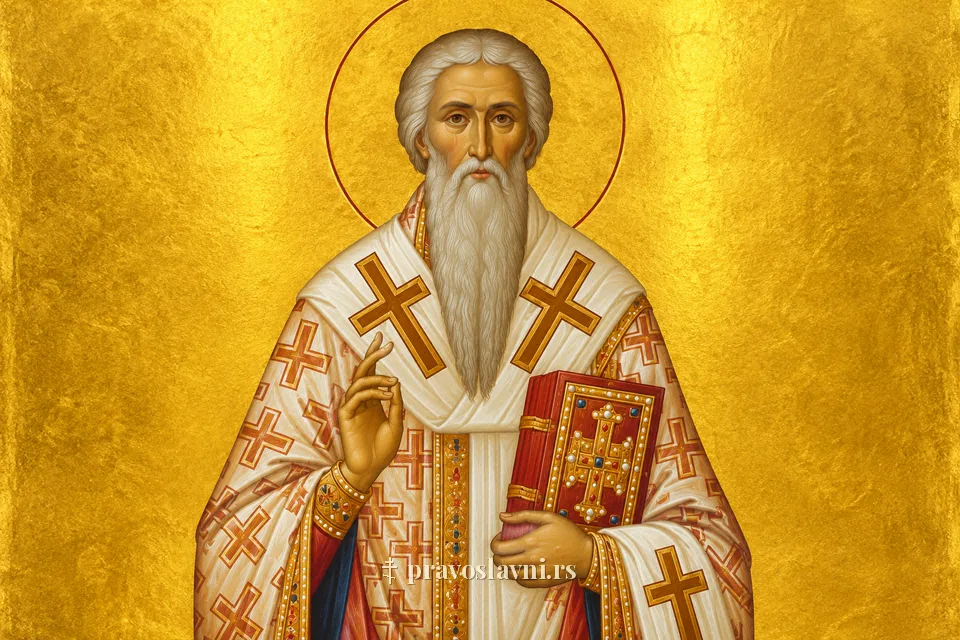
Illustration
Saint of the day
Hieromartyr Simeon, Bishop in Persia
What happenedThe Persian bishop Simeon did not bow down to King Shapur, and before the execution he encouraged his flock to the end and was the last to lay down his head.
“For consider Him who endured such hostility from sinners against Himself, lest you become weary and discouraged in your souls.”
— Heb 12:3
Life
When, at the place of execution, the turn came to the old presbyter Ananias, he began to tremble. Then Pusicius, who served the King but was inwardly a Christian, addressed him with words which the Prologue preserves: “do not be afraid, elder, close your eyes and be courageous, that you may behold the divine light!” Pusicius was denounced at once, he openly confessed Christ and was tortured to death, and the virgin Askitrea, according to the Prologue his daughter, was killed as well. Bishop Simeon watched all this, for he was to be executed last.
Simeon was a bishop in Persia in the time of King Sapor. His Life says that he was falsely accused of being a friend of the Greek emperor and an enemy of Persia, and that Sapor first burdened the Christians with a tax and then began to kill the clergy and pull down the churches. He was arrested together with the presbyters Abdelas and Ananias. According to his Life, he did not bow before the King, because earlier he had bowed out of respect for the royal dignity, but now he was being asked to renounce his God. Neither promises nor threats shook him, nor the demand that he bow down to the sun.
According to his Life, in prison he also met with joy. Simeon's rebuke brought back to the faith Ustazan, a royal eunuch who had fallen away from Christ, and he confessed the true faith before the King. He was executed before Simeon, and the Life records that he asked for it to be proclaimed that he was dying not as the King's enemy, but only as a Christian.
Together with Simeon many of the faithful were led out to the place of execution — according to the Prologue a thousand, according to the Life a hundred. To the last he encouraged the others not to be afraid, while he himself remained to await his turn, and only then was he beheaded. A year later Azat, the King's favourite among the eunuchs, also suffered for Christ, together with about a thousand more Christians, so that the King was sorry for that loss and put a stop to the mass killings. They all suffered in the year 341 or 344.
Simeon teaches that a true shepherd does not bow his head before the enemy of his God and that he goes to death last, so that none of his own may lose courage.
Full Life
A Shepherd in a Time of Persecution
Simeon was a bishop in Persia — the Life says, in the city of Seleucia-Ctesiphon — in the time of the wicked King Sapor; the Prologue calls him Sabores, or Sapor. According to the Life, there were many Christians in Persia and they had churches and clergy, so the magi, the Persian priests, rose up against them, and the Jews joined them out of envy, and together they persuaded the King to begin a persecution. Simeon was falsely accused of being an enemy of Persia and a friend of the Greek emperor, to whom he was supposedly reporting on Persian affairs. Sapor, as the Life records, first burdened the Christians with a heavy tax, and then began to kill the clergy, plunder the church treasuries and pull down the churches.
He Does Not Bow to the Enemy of God
Simeon was arrested together with two presbyters, Abdechalas and Ananias. The Life says that they were brought before the King in chains and that not one of them bowed. Simeon, according to the Life, explained that formerly he had bowed to the King out of respect for the royal dignity, but that he would not bow now, when they had brought him to renounce his God, and he said to him: “I must not bow to you, the enemy of my God.” The King, according to the Life, tried with promises and with threats to wipe out Christianity to persuade him to bow to the sun, but Simeon remained firm and was thrown into prison.
The Repentance of the King's Tutor
The royal eunuch Usthazanes had denied Christ. Simeon rebuked him — the Life says, he turned away from him when Usthazanes bowed to him — and Usthazanes repented and confessed the true faith before the King. According to the Life, he had been the King's tutor from childhood; he put on black rags and sat lamenting at the doors of the palace, and to the King he said: “I will no longer honour the creature rather than the Creator.” He was put to death before Simeon, and the Life states that he asked for a herald to proclaim that he was not dying as an enemy of the King, but only as a Christian. Simeon, according to the Life, rejoiced in prison and glorified God for the conversion and martyrdom of Usthazanes, and when they brought him before the King a second time, he again refused to bow to the sun or to the King.
The Last at the Place of Execution
Many Christians were led out to execution with Simeon — a thousand according to the Prologue, a hundred prisoners according to the Life, among them many clergy. The Life says that the chief magus announced that everyone who bowed to the sun would be set free, but no one consented. Simeon was to die last. To the end he encouraged the others not to fear death, while he himself waited for all of them to go before him.
The aged Ananias, one of the two presbyters arrested with Simeon, began to tremble at the last hour. Then Pusicius, a royal official and a secret Christian, encouraged him with words that the Prologue preserves: “do not be afraid, elder, close your eyes and be courageous, that you may behold the divine light!” Pusicius was at once denounced as a Christian; he confessed it openly and by the King's order was tortured to death. The virgin Askitrea, who according to the Prologue was the daughter of Pusicius, was killed as well. Simeon was beheaded last.
Witnesses after Him Too
A year later the martyr's crown was received by Azades, the eunuch whom the King loved most, and with him about a thousand of the faithful. Then the King was sorry for that loss, so he put a stop to the mass killings. The Life adds that after this he ordered that only bishops and priests should be persecuted, and that the historians Sozomen and Nicephorus write of countless Christians who went joyfully to their death. They all suffered in the year 341 or 344, and the Life states that there were one thousand one hundred and fifty martyrs in all.
Simeon shows what a true shepherd is like: he does not bow to the enemy of his God, he brings a fallen brother back to the faith, and he goes to his death last, so that no one of his flock may lose courage.