Save your slava — you'll get a reminder a week and a day before.
Wednesday06October 202723 September (according to the Julian calendar)
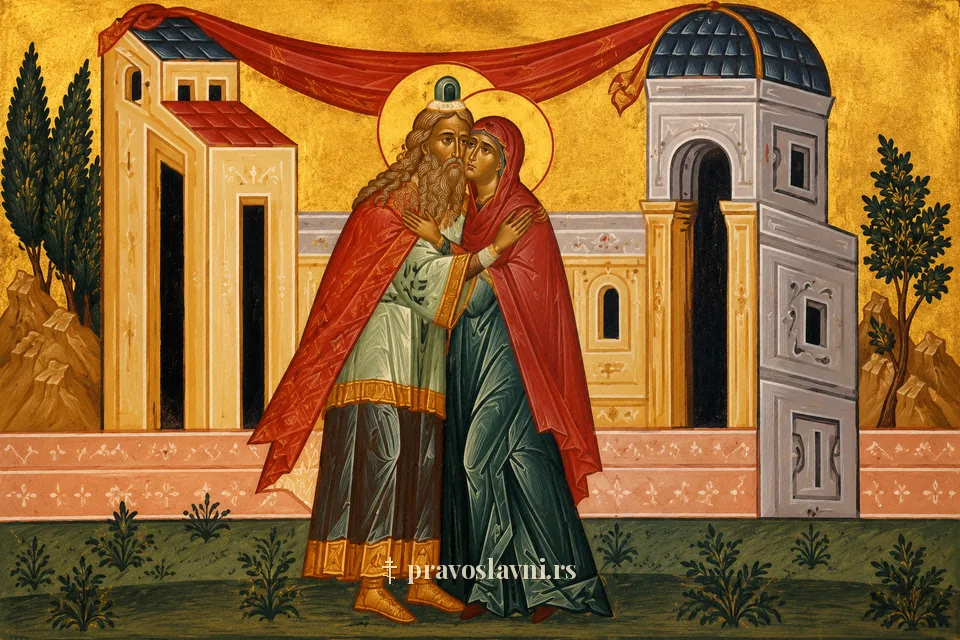
Illustration
Feast of the day
Conception of St John the Forerunner and Baptist
What happenedThe angel Gabriel announces to the old priest Zacharias that his wife Elizabeth will bear him a son — the greatest among those born of women.
Sung at the Slava (family patron saint's feast) and on the saint's feast day.
Rejoice, O thou that before wast barren and didst not bear; for lo, thou hast clearly conceived the lamp of the Sun, who shall enlighten the whole world sick with blindness. Dance for joy, O Zacharias, crying out with boldness: He that is to be born is a prophet of the Most High.
The Evangelist Luke tells of the old priest Zacharias and his wife Elizabeth, who lived in Judea in the days of King Herod. Both of them were righteous and lived according to God's commandments, but they had no children. Elizabeth was not able to bear a child, and their years were well advanced. According to the Prologue, the longing for a child accompanied them through all those years, and prayer along with it. In those days childlessness was a disgrace, but they did not draw away from God.
One day the lot fell to Zacharias to offer incense in the temple. While the people were waiting outside, an angel appeared to him in the sanctuary and said: “Do not be afraid, Zacharias, for your prayer is heard.” Elizabeth would bear a son, who would be called John and would be filled with the Holy Spirit even before his birth, and he would go before the Lord in the spirit and power of Elijah. Zacharias could not believe it, for they were both old. The angel told him that he was Gabriel and that, because of his unbelief, he would remain mute until the promise was fulfilled. And so it was: he came out of the temple without a voice and could only show by signs that something had happened.
Elizabeth soon conceived. When she was visited by her kinswoman Mary, to whom the same angel had announced the birth of the Son, Elizabeth's unborn child leaped for joy.
When the boy was born, the relatives wanted to give him his father's name, but his mother said that he would be called John. They asked Zacharias, and he wrote on a little tablet: “His name is John.” At that very moment he began to speak and started praising God. Filled with the Holy Spirit, he prophesied that his son would prepare the way for the Lord.
The Prologue sees in this event more than the joy of one family: in it we see the hand of God preparing the salvation of the world, for it was this very child who was appointed to become the Forerunner of Christ. Whoever knows how mighty God is rejoices more than he marvels.
Zacharias and Elizabeth teach us that whoever waits faithfully does not wait in vain. God answers when He finds that the time has come, and He often gives more than we dared to ask for.
Full Life
Two righteous people without a child
The Evangelist Luke begins the story of John the Baptist in Judea, in the days of King Herod, in the house of the priest Zacharias. Zacharias belonged to the priestly division of Abijah, and his wife Elizabeth was descended from the line of Aaron. Luke says of them something that is seldom said of anyone: both husband and wife were righteous in the eyes of God and kept His commandments blamelessly.
And yet there was no children's laughter in that house. Elizabeth was barren, and the years were passing. According to the Prologue, the longing for a child stayed with them through all those years, and prayer along with it. Childlessness was considered a disgrace in those days, and Elizabeth bore it with difficulty. But neither sorrow nor the looks of other people drew them away from God.
A voice in the sanctuary
One day the lot fell to Zacharias to enter the temple and offer incense. Then the thing happened for which he no longer even hoped. The people were waiting outside and praying. In the sanctuary, beside the altar of incense, an angel appeared to Zacharias. The old man was frightened, but the angel calmed him: “Do not be afraid, Zacharias, for your prayer is heard.”
The message was greater than any father's wish. Elizabeth would bear a son, and he was to be given the name John. This boy would be no ordinary child: the Holy Spirit would be in him even before his birth, he would drink no wine, and he would turn many of his people back to God. In the spirit and power of Elijah he would go before the Lord.
Zacharias, like any man, doubted. He was old, his wife was old — how was he to believe? The angel told him his name — Gabriel — and that he stands before God. And since he had not believed, he would remain without a voice until the promise was fulfilled. When he came out, the people understood from his signs that he had seen something in the sanctuary. He went home in silence.
The silence in which joy grows
Elizabeth soon conceived. For five months she hid herself from the eyes of the world and gave thanks to God for taking away her reproach.
Then her young kinswoman Mary from Nazareth arrived at the house. The same Gabriel had announced to her that she would bear a Son, and as proof that everything is possible for God he had mentioned to her the pregnancy of the aged Elizabeth. As soon as Mary greeted her kinswoman, Elizabeth's unborn child leaped for joy. Elizabeth, filled with the Holy Spirit, called Mary blessed among women. Mary stayed with her for about three months. Zacharias was silent all that time — but he watched God's promise being fulfilled.
“His name is John”
When the boy was born, all the neighbours and relatives rejoiced. On the eighth day, at the circumcision, the relatives wanted him to bear his father's name. Elizabeth said that he would be called John. Since there was no one of that name in the family, they asked the father. The father asked for a writing tablet and wrote on it: “His name is John.” At that moment he began to speak, and the first thing he said was praise to God. This was talked about throughout all the hill country of Judea, and people wondered what this child would become. Filled with the Holy Spirit, Zacharias prophesied that his son would prepare the way for the Lord.
What we celebrate on this day
The Prologue sees in this event more than the joy of one family. In it, according to the Prologue, we see the hand of God preparing the salvation of the world, for it was this very child who was appointed to become the Forerunner of Christ. The Prologue also mentions Sarah and Manoah, to remind us that God did not do this for the first time. Whoever knows how mighty God is rejoices more than he marvels.
This is a quiet story. There are no battles or tortures in it, only two old people who for years carried the same sorrow and did not stop believing. And from their house came the man who would prepare the way for the Saviour.
Hence the lesson: when we wait faithfully, we do not wait in vain. God answers when He finds that the time has come, and He often grants more than we dared to ask.