Saint of the day
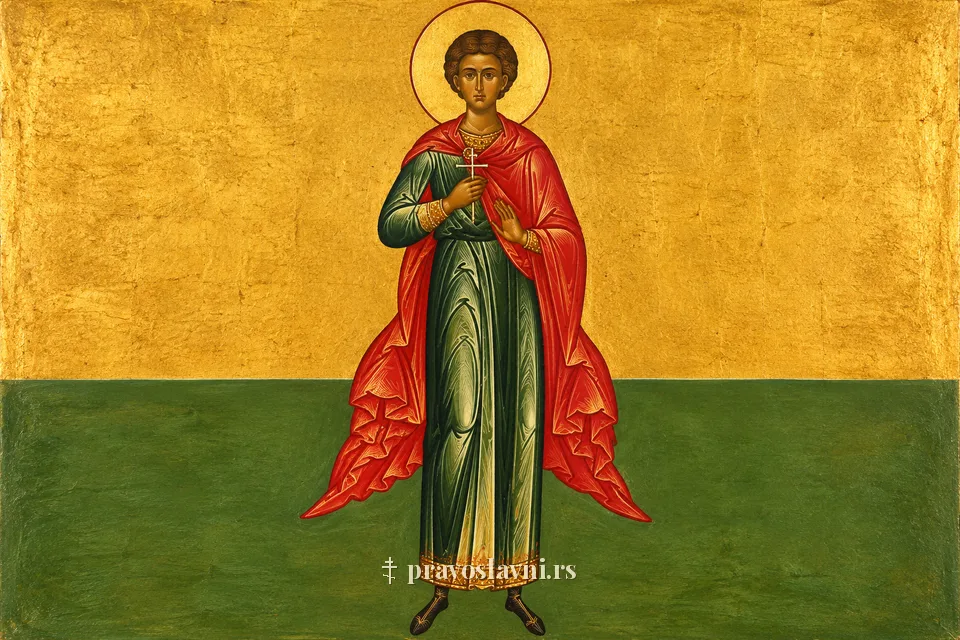
Holy Martyr Boniface
What happenedSent to the East to bring back relics of martyrs, the sinful servant Boniface became a martyr himself, and it was his own relics that were brought to Rome.
Read the LifeOrthodox Calendar · 19 December according to the Julian calendar
Thursday, 1 January 202619 December (according to the Julian calendar)What happenedSent to the East to bring back relics of martyrs, the sinful servant Boniface became a martyr himself, and it was his own relics that were brought to Rome.
Read the Life
No meat, dairy products, eggs or fish — oil and wine are allowed.
This is a recommendation — for your own fast, consult your priest or spiritual father.More about the fast →
Today the Church keeps the commemoration of a saint · not a Red Letter day.
More about the feast →
“Therefore whoever confesses Me before men, him I will also confess before My Father who is in heaven.”
— Mt 10:32St Boniface is an example of a man whom repentance led from sin to the crown of martyrdom. According to the Prologue and his Life, he was the servant and steward of the estate of Aglaida, a wealthy Roman woman; both of them were pagans and lived in sin. His Life mentions his fondness for drink, but also his generosity towards the poor, towards travellers and towards those in need.
Aglaida wished to have the relics of a martyr as protection for her house, and so she sent him to the East. As he was setting out, he joked that the martyr he would bring back to her might well be he himself. Aglaida laughed, for she knew him as a sinner, but she gave him her blessing.
His Life says that while still on the journey he turned to God through fasting and prayer. In Tarsus in Cilicia, where, according to his Life, he found a persecution under way, the sight of the tortured Christians, according to the Prologue, drew tears of repentance from him, and he publicly confessed the faith: “I too am a Christian!” According to his Life, he refused to sacrifice to the idols and endured heavy torments; the Prologue and his Life say that not even the lead did him any harm. In the end he was condemned and beheaded, and his Life records that his suffering brought five hundred and fifty people to the faith.
His companions, according to his Life, went looking for him only after three days, because they thought he was off drinking somewhere; for five hundred gold coins they ransomed his body and his head and carried them to Rome. An angel, both sources say, told Aglaida to receive him as the guardian of her soul. She went out with the clergy to meet the relics, remembered the words he had spoken at their parting, and built him a church, where, according to his Life, healings took place. She herself then turned to God as well: what she had she gave to the poor, and the last years of her life she devoted to repentance. She was buried, as his Life says, beside Boniface.
Boniface teaches us that it is never too late for repentance and that no one should lose hope in himself, for God receives even the one who has wandered for a long time. And his companions, who thought the very worst of him, remind us not to judge others too hastily.
Among the saints there are also those whose lives for a long time held no promise of holiness. Boniface is one of them. According to the Prologue and his Life, he was a servant and steward of the estate of Aglaida, a distinguished Roman lady, and both of them were at that time still pagans and lived in sin. The Life adds of her that she was the unmarried heiress of a great estate and the daughter of Acacius, a former governor of Rome, and of him that he was given to drink.
Yet the same Life does not forget the other side of his character: a poor man, a traveller or a person in trouble never went away from him without help. Sin and mercy stood side by side in him, just as they stand in many people today.
Wishing to have the relics of a martyr guard her house, Aglaida sent Boniface to Asia to find them. The Life says that she had heard how the veneration of the martyrs benefits the soul, and that she gave him a great deal of gold for the journey, for the relics and for almsgiving. He set out with servants, friends and horses.
According to the Life, his repentance began while he was still on the road: he fasted, kept away from meat and wine, and prayed often. The real turning point came in Tarsus in Cilicia, where, as the Life relates, he found a persecution under Diocletian and Maximian. According to the Life, he left his company at the inn and went alone to the place where the Christians were suffering. The Prologue says that, as he watched their torments, he wept and repented of the whole of his life up to then. The Life adds that he kissed some twenty martyrs, praying that he too might receive a share in their crowns, and that he cried out: “Great is the God of the Christians, great indeed!” Then he said before everyone that he too was a Christian, Boniface from Rome; the Prologue preserves his words: “I too am a Christian!”
What he then endured the Life describes at length; here it is enough to say that, according to the Life, he did not bow down to the idols even after heavy tortures. Both sources say that not even molten lead did him any harm, and the Life also ascribes to an angel the fact that he came out unhurt from boiling pitch. The sentence in the end was the sword. According to the Life, his execution did not remain without fruit: five hundred and fifty pagans turned to the faith at that time, and the Life also records an unusual sign on the body of the beheaded martyr. The Prologue places his suffering in the year 290.
According to the Prologue and the Life, Aglaida learned from an angel that she was to receive Boniface as the guardian of her soul; the Life says that the angel appeared to her in a dream. With fear, and together with the clergy, she went out to meet the relics. Then the jest made at their parting came back to her mind: as he was setting out, Boniface had said that he himself might become the martyr who would be brought to her, and she had laughed at him, seeing in him a sinner given to wine, although she blessed him for the journey all the same. She built a church for him, according to the Life on her own estate, some ten kilometres from Rome, and laid the relics in it. The Life mentions healings, demons cast out and prayers answered at his tomb. She herself then turned to God: she gave everything she had to the poor and, according to the Life, renounced the world. She spent another fifteen years in repentance, as the Prologue says, or eighteen, as the Life says. According to the Life, she reposed in peace and was buried beside Boniface.
His companions, according to the Life, thought the worst of him: while he was suffering, they believed that he was drinking somewhere, and so they went to look for him only after three days. They found him with the help of a witness, ransomed the body and the head for five hundred gold coins and carried them to Rome. The Life says that the dead martyr opened his eyes to them, looked at them gently and forgave them, and they wept and begged for forgiveness.
Here too lies the lesson of this day. From the life of Boniface it can be seen that the time for repentance does not run out, and that suffering for Christ transfigures even one who has sinned for a long time. No one, therefore, should lose hope in himself, for God stretches out His hand even to the one who has long gone astray. And his companions warn us not to pass hasty judgements on others: a person whom we have written off may be closer to God than we think.


