Saint of the day
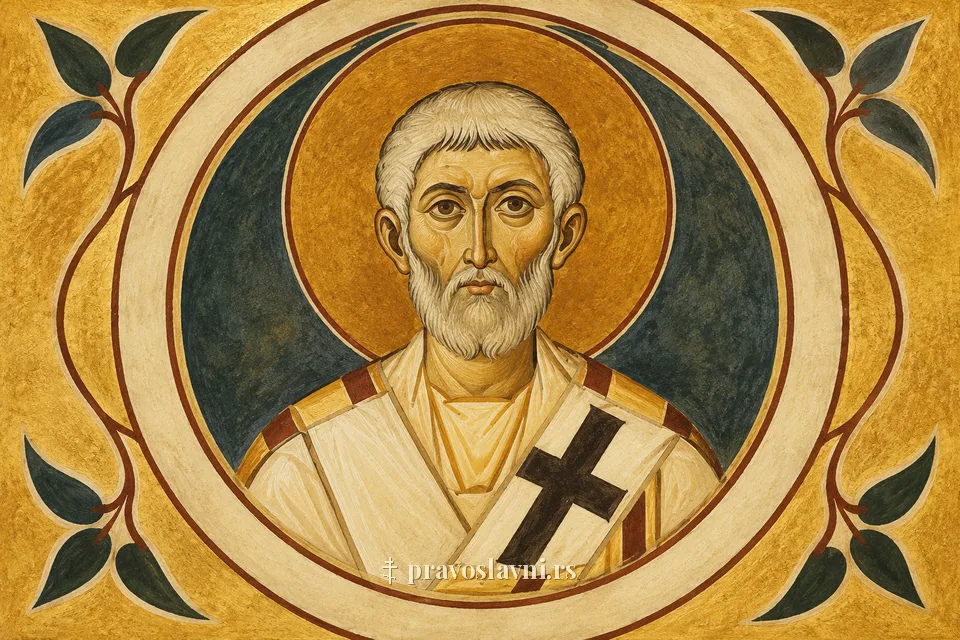
Hieromartyr Ignatius the God-bearer
What happenedSt Ignatius the God-bearer set out joyfully in chains for Rome, longing to suffer for Christ as God's wheat.
Read the LifeOrthodox Calendar · 20 December according to the Julian calendar
Friday, 2 January 202620 December (according to the Julian calendar)Save your slava — you'll get a reminder a week and a day before.
Send a greeting card →What happenedSt Ignatius the God-bearer set out joyfully in chains for Rome, longing to suffer for Christ as God's wheat.
Read the Life
No meat, dairy products, eggs or fish — oil and wine are allowed.
This is a recommendation — for your own fast, consult your priest or spiritual father.More about the fast →
Many families celebrate their Krsna slava (family patron saint's day) today
More about the feast →
“It is no longer I who live, but Christ lives in me; and the life which I now live in the flesh I live by faith in the Son of God, who loved me and gave Himself for me.”
— Gal 2:20Sung at the Slava (family patron saint's feast) and on the saint's feast day.
Having become a sharer in the ways and a successor to the throne of the Apostles, thou didst find in deeds, O inspired of God, the ascent to divine vision; wherefore, rightly dividing the word of truth, thou didst also suffer for the faith even unto blood, O hieromartyr Ignatius: entreat Christ God that our souls be saved.
Translation: pravoslavni.rs
A disciple of St John the Theologian, like Polycarp of Smyrna, Ignatius succeeded Evodius, the successor of the Apostle Peter, on the episcopal throne of Antioch. The name God-bearer, according to the Prologue and his Life, is explained by the fact that God was unceasingly the subject both of his thoughts and of his words. It is also told that he himself, as a boy, was the very child whom Christ took in His arms and showed to the disciples as an example of humility.
To him the Church also owes the alternate singing of two choirs, the model for which, according to the Prologue and his Life, he saw in the angels glorifying the Holy Trinity.
Trajan's stay in Antioch, on the eve of the war with the Armenians and the Persians, brought an accusation against him. Not even the honours he was offered could bring him to offer sacrifice, and so he received the death sentence: the wild beasts in Rome. He greeted this news with joy. His Life says that he wore his chains as an adornment, and that in his guard he saw ten leopards.
According to his Life, in Smyrna, where on his journey he met Polycarp and other bishops, he left them as his testament faithfulness to the apostolic teaching and watchfulness against heresies. His Life says that from there he wrote to the Romans, asking them not to try to rescue him; in that letter he described himself with the words: “I am the wheat of God.”
His Life says that before the Roman public he stated clearly why he was dying: solely for Christ. The lions ended his life, and only a few of the larger bones remained. The same Life adds that Trajan, on hearing of his courage, ordered that the Christians should no longer be persecuted, and that the relics were translated to Antioch. His Life, with the reservation that this is what some relate, also hands down that the name of Christ, which he claimed was in his heart, was after his death found upon his very heart.
According to the Prologue, even after death he has not ceased to give help to those who turn to him. He teaches us not to fear death, to keep the apostolic teaching and to shun heresies, to prefer the heavenly to the earthly, and to confess Christ, who lives in the heart, with our words as well.
The Prologue and his Life state that St Ignatius, together with Polycarp, later Bishop of Smyrna, was a disciple of St John the Theologian. At the head of the Church of Antioch he succeeded Evodius, who had been the successor of the Apostle Peter; the Life says that he was appointed by the decision of the apostles. This was the city in which, as the Life recalls, the name “Christians” was first heard (Acts 11:26), and Ignatius preached to it with apostolic zeal.
According to the Prologue and the Life, in a vision he beheld angels glorifying the Holy Trinity in choirs, and so he also introduced into the Church the singing in which two choirs alternate. The Life adds that this manner of singing passed from Antioch to all the churches.
According to both sources, he received this name because God never left either his mind or his tongue: he thought of Him and he spoke of Him. They also give another reason, with the caution that this is what is told: that as a child he was the one whom Christ took in His arms and set before the disciples as an example of humility and childlike faith. In this connection the Prologue quotes the Gospel: “Therefore whoever humbles himself as this little child is the greatest in the kingdom of heaven” (Mt 18:4).
The Life also passes on the account of some that he unceasingly spoke the name of Jesus Christ, saying that it was written in his heart. Some, as the Life records, also tell that after his death his heart was found whole and that the very same name, “Jesus Christ”, stood written upon it.
According to the Life, after a hard war with the Scythians the Emperor Trajan ascribed the credit to the gods and ordered sacrifices throughout the whole empire, with death for the Christians who refused. The accusation, according to the Life, arrived while the emperor was staying in Antioch and preparing for a campaign against the Armenians and the Persians: Ignatius was charged with honouring the crucified Christ and with teaching virginity and contempt for riches. Before the Senate, according to the Life, he confessed the faith and explained his name. Trajan offered him high honours if he would offer sacrifice, according to the Prologue the rank of senator, and according to the Life the office of high priest of Zeus, but he refused. According to the Life, to the senators who mocked a God who had died he replied with a sermon on Christ's Passion, Resurrection and Ascension.
The punishment was death by wild beasts in the Roman amphitheatre, on the day of a festival. The Life says that the Senate advised that he should not be executed in Antioch, lest he should win glory. Ignatius received the sentence with joy. According to the Life, he thanked God that he was wearing chains as the Apostle Paul once had. Both sources say that he compared the ten cruel soldiers of his guard to leopards.
The Prologue traces the journey to Rome through Thrace, Macedonia and Epirus, while the Life mentions Smyrna, Troas and the harbour of Portus near Rome. The Life records that, on leaving Antioch, he entrusted the care of his faithful to God in prayer, and that in Smyrna he instructed Polycarp and the clergy of the churches of Asia to guard against heresies and to hold fast to the apostolic tradition. From the faithful, according to both sources, he asked for prayer that his martyrdom might not be prevented.
From Smyrna, according to the Life, he sent a letter to the Church of Rome through the Christians from Ephesus. The chief request of that letter was that the Romans should not thwart his death; there too stand the words: “I am the wheat of God”. The letter, according to the Life, is full of humility: he does not place himself in the rank of the holy Apostles Peter and Paul, but considers himself merely a condemned man. The Life also preserves his desire: “I want to be God's.” The Life also says that, when the Roman Christians wanted to beg the people to stop the spectacle, he asked them not to do so, and then prayed with them for the Churches and for the end of the persecution.
According to the Life, before a full amphitheatre he said that he was dying not for any crime, but for Christ. Lions took his life. Of his body, according to the Life, only the bones remained; the Prologue says that the heart was preserved as well. The Prologue gives the year 106, and the Life his burial outside the city on 20 December in the year 107. The witnesses, according to the Life, spent the night in prayer, some of them saw him in a vision, and they wrote down the day for the sake of his commemoration. On hearing of his courage, Trajan, as the Life records, ordered that the Christians should no longer be persecuted, and Antioch, according to the same Life, received back what was left of him, as a protection for the city and a remedy for the sick. According to the Prologue, not even death interrupted his help: whoever turns to him is not left without it.
Ignatius teaches us to confess Christ, who lives in the heart, with our lips as well, not to fear death, to put the heavenly before the earthly, to keep the apostolic teaching and to love one another.
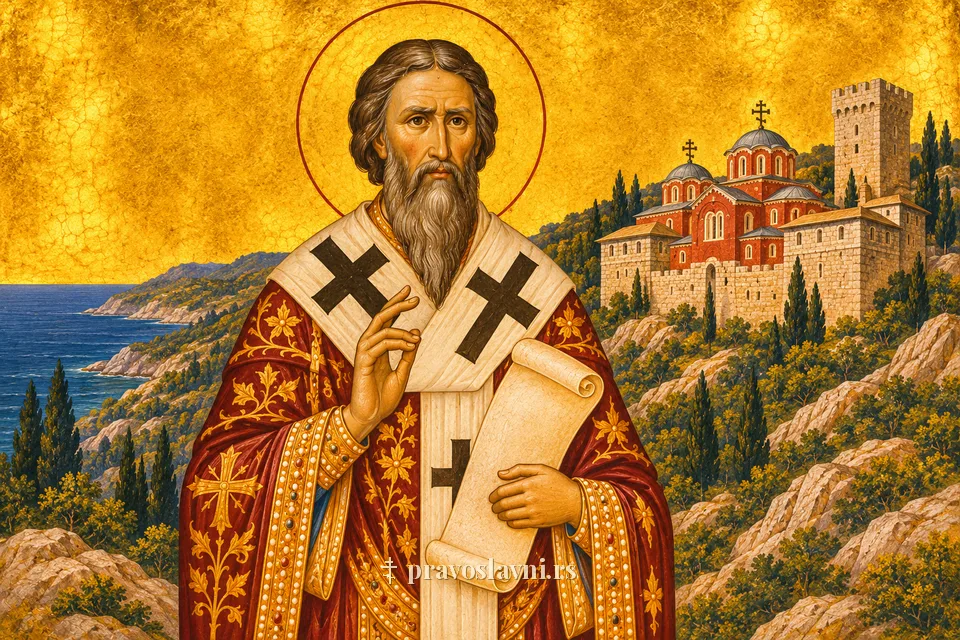
According to his Life, of all the children in that wealthy and God-fearing house only Danilo remained alive. He was received at the court of King Milutin, but he secretly exchanged it for the monastery of Končul on the river Ibar, where out of love for God he became a monk. Hilandar, of which he became abbot, he defended for three and a half years against Catalan mercenaries and pirates, and he preserved it. The conflict between the kings Dragutin and Milutin found him on the episcopal throne at Banjska, where he guarded the royal treasury and at last reconciled the quarrelling brothers. Later, as Bishop of Hum, he also reconciled Milutin with his son Stefan Dečanski, and his Life records that the old king breathed his last at Nerodimlje in Danilo's arms. The Prologue remembers him as a man who was strict with himself throughout his whole life, to whom God also granted the gift of tears, and it records his struggle against the Latins and the Bogomils. He left his mark as a builder at Banjska and at Dečani, whose construction he oversaw, as well as at Peć, Žiča and other places, where he built new churches and restored old ones. To the Serbian past he also left a book on the lives of the kings and archbishops. His Life preserves his saying: “Blessed be the name of the Lord for all things.” He ended his earthly path in peace, in the years of Dušan's reign as tsar. He is remembered as a hierarch who spared no effort for his homeland and the Church, and his Life stresses that, while serving the people, in his heart he constantly longed for silence and solitude.


