Monday09February 202627 January (according to the Julian calendar)‹›
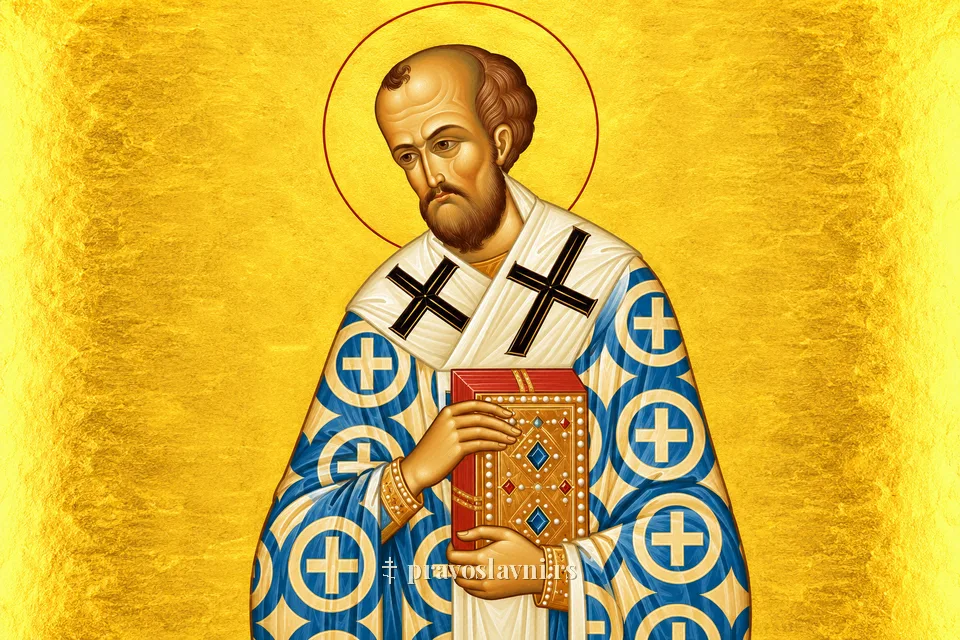
Illustration
Feast of the day
Translation of the Relics of St John Chrysostom
What happenedAbout thirty years after his death in exile, the relics of St John Chrysostom were brought back to Constantinople, and the emperor begged forgiveness over them.
St John Chrysostom was Patriarch of Constantinople, yet he died in exile, in Armenia. Only about thirty years after his death were his relics brought back to Constantinople. The Prologue blames his banishment on the Empress Eudoxia, the mother of Emperor Theodosius, while his Life connects it with a dispute over a widow's vineyard.
The return began with a single sermon. While Patriarch Proclus, once a disciple of Chrysostom, was speaking in his memory, the people interrupted him: they wanted the relics of their shepherd to be in the capital. Proclus, according to the Life, himself persuaded Emperor Theodosius to have them translated, and the Emperor sent envoys. According to the Life, the bishop and the people of Comana grieved and protested, but the Emperor's will prevailed.
Even so, the relics remained where they were, immovable; the Life states this as fact, while the Prologue passes it on as a story. Then the Emperor repented and wrote a letter with two requests: forgiveness for himself and the return of the hierarch to his throne, for the consolation of his flock. Only with that letter laid upon the coffin did the relics allow themselves to be carried.
The Prologue records that on the way the touch of the coffin brought healing to many who were sick. The Life also mentions a lame beggar who was cured by the cloth from the tomb. In the harbour of Chalcedon the relics were met by the Emperor, the Patriarch, the clergy and a great multitude of people.
In Constantinople, in the Church of St Irene, the body was found, according to the Life, incorrupt and fragrant. The Emperor did not forget his mother, the Empress Eudoxia: in tears he asked forgiveness for her, and, according to the Prologue, also the hierarch's help before the judgement seat of Christ. The final destination was the Church of the Holy Apostles; there the relics, as the Life says, were placed upon the patriarchal throne. Both sources also remember the greeting of peace: the Prologue says that the people heard “Peace be unto all!”, and the Life that Patriarch Proclus saw the hierarch pronounce it. In the end they were laid beneath the holy table in the altar. The translation took place in the year 438.
This day teaches that no one is too great to ask for forgiveness. God glorifies the righteous man even after death, and repentance opens the way to reconciliation.
Full Life
A Return after Death
It can rarely be said of any shepherd that he returned to his flock only after he had died. Of St John Chrysostom, once Patriarch of Constantinople, this can be said without exaggeration. His own feasts fall on other days, and today's commemoration is dedicated to the translation of his relics, which took place in the year 438. That journey ended in the Church of the Holy Apostles, and his Life adds that the relics were placed there in the altar, beneath the holy table.
The beginning of the journey was far away, in Armenia, where Chrysostom ended his life as an exile. The Prologue calls that place Comana and describes it as a village, while in his Life it appears as the town of Comana. Nor do the sources say the same about who was to blame for his exile. The Prologue lays the responsibility on the Empress Eudoxia, the mother of Theodosius the Younger. His Life connects Chrysostom's troubles with a dispute over the vineyard of a certain widow, and it does not name the one who wronged her.
The Emperor Who Begged Forgiveness
In this story it is the heart of one ruler that changes most. Both sources remember Theodosius in Constantinople weeping over the relics and asking forgiveness for his mother Eudoxia, speaking as though she herself were pleading. The Prologue also records his plea that the saint would be a help to his mother at the judgement seat of Christ. His Life adds that over Eudoxia's tomb too, during the Liturgy in the Church of the Holy Apostles, peace reigned at last.
The Emperor had come a long way to reach that moment. According to the Life, Theodosius — the son of Arcadius and grandson of Theodosius the Great — agreed to the translation at the request of Proclus. For the relics he sent a silver casket, and with it chosen dignitaries. When they reported to him that the relics could not be moved, he repented, took counsel with Proclus and wrote a personal letter to the saint. The Prologue passes on this immovability with a reservation, as something that is told, while the Life sets it out as a fact. The letter, according to both sources, was a plea: that he might be forgiven and that the exiled shepherd might return to the capital, as a comfort to his flock. The weight vanished only with the letter: laid upon the casket — the Life says, upon the saint's breast, with a vigil that lasted until morning — it made it possible for the relics to be carried.
A People That Had Not Forgotten
It was Proclus who set everything in motion: as patriarch, three decades after Chrysostom's death, he preached about the former shepherd of the capital. The Life says that Proclus had once been Chrysostom's disciple and that he was speaking in the Great Church, on the saint's yearly feast. The people interrupted the homily with the demand that the relics should come to Constantinople, and that desire took hold of the Emperor as well.
In Comana, too, the parting was not easy. According to the Life, the bishop of that place and the people grieved and resisted, but in the end they yielded to the Emperor's command. Along the way, according to the Life, crowds gathered with candles, and in the harbour of Chalcedon the relics were met by the imperial and the church authorities and a multitude of people. “Take your throne, O father!” — so, according to the Life, the people cried out in the Church of the Holy Apostles when they saw the relics on the patriarchal throne. Then, both sources say, words of peace were heard from the saint's lips: “Peace be unto all!” The witness, according to the Prologue, was the people, and according to the Life it was Patriarch Proclus, who saw the saint's mouth move.
Signs along the Way
Healings accompanied the relics. The touch of the casket, says the Prologue, restored health to many who were sick; among those healed the Life also mentions a lame beggar. The same Life mentions healings in the Church of the Holy Apostles as well.
The Life also records two stations in Constantinople before the final destination, the churches of St Paul and of St Irene. In the second of them it was shown that corruption had not touched the body and that it gave off a fragrance, when the casket was opened by the Emperor and the patriarch themselves.
This feast speaks of repentance and of the plea for forgiveness, from which not even an emperor shrank. God does not forget His righteous one even after death, and the Church rejoices that the exiled shepherd returned to those whom he had taught.