Saints of the day
Holy Martyrs at Eugenius
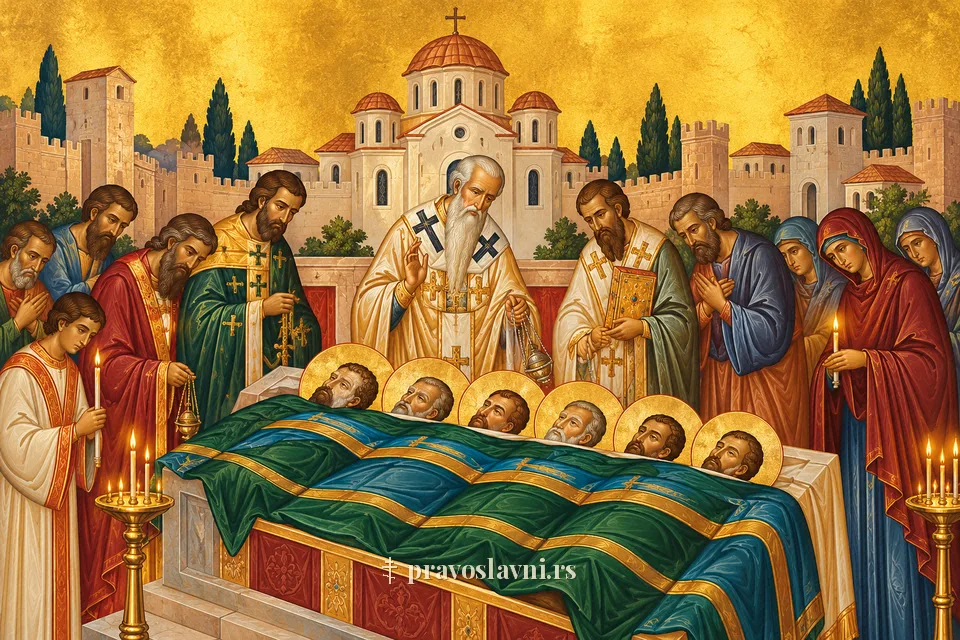
What happenedNear Constantinople, at Eugenius, the relics of a multitude of martyrs were found whose names the Lord alone knows, and among them the relics of the Apostle Andronicus.
Read the LifeOrthodox Calendar · 22 February according to the Julian calendar
Saturday, 7 March 202622 February (according to the Julian calendar)What happenedNear Constantinople, at Eugenius, the relics of a multitude of martyrs were found whose names the Lord alone knows, and among them the relics of the Apostle Andronicus.
Read the Life
No meat, dairy products, eggs or fish — oil and wine are allowed.
This is a recommendation — for your own fast, consult your priest or spiritual father.Prayer of St Ephraim the Syrian →More about the fast →
Today the Church keeps the commemoration of a saint · Second week of Great Lent.
More about the feast →
“He guards all his bones; Not one of them is broken.”
— Ps 34:20There are martyrs whose names no one knows but God. Such are the martyrs of Eugenius, a place not far from Constantinople. They suffered at the time when the pagan emperors were persecuting the Church, and the persecutors, according to the Life, did not allow their bodies even a grave. The Christians buried them in secret, and for many years no one knew where they rested.
When the time of peace had come — the Prologue mentions Emperor Arcadius — God, according to the Life, revealed that place: there the sick began to receive their health. The bishop and the clergy dug up the earth and found many relics untouched by decay, and solemnly translated them to the church with chanting.
Among them, as was revealed to the cleric Nicholas Calligraphus, were also the relics of the Apostle Andronicus and of his helper Junia, whom the Apostle Paul greets in the Epistle to the Romans.
The names of the others, the Prologue says, are known to the Lord alone, and He has written them in the Book of the Living. God does not forget those whom people have forgotten.
In the Epistle to the Romans the Apostle Paul greets two of the faithful: “Greet Andronicus and Junia” (Rom 16:7). Andronicus was one of the Seventy, and Junia was his helper. Their relics were found at Eugenius, not far from Constantinople, among the relics of many martyrs. That they too rest there was learned through a revelation by the cleric Nicholas Calligraphus; the Prologue says that God revealed it to him, and the Life praises him as a virtuous man. According to the Prologue, Emperor Andronicus I later, in the twelfth century, built a magnificent church over the relics of the Apostle.
The other martyrs of Eugenius left no names. The Prologue says: “Their names are known to the Lord alone”, and both sources add that He has written them in the Book of the Living in heaven. They suffered at the time when the pagan Roman emperors were persecuting the Church, and the martyrs were beyond counting. The persecutors, according to the Life, did not allow their bodies even a grave, but the Christians buried them in secret, and at Eugenius, both sources say, they remained unknown for many years.
Only when the time of peace and of Christian emperors had come — the Prologue mentions Emperor Arcadius — did God, according to the Life, reveal that place. The sign was healings: the sick received their health there. The bishop and the clergy then dug up the earth and found many relics, untouched by decay, which the Life understands as the fulfilment of the psalm: “The Lord guards all their bones” (Ps 33:21). The Life also says that those relics worked miracles and set people free from illnesses and evil spirits, and so they were solemnly translated to the church, accompanied by a multitude of people and by chanting.
This commemoration reminds us that God does not forget those whom people have forgotten: even when their bodies lie hidden for a long time and their names are lost, they remain written in the Book of the Living.


