Saint of the day
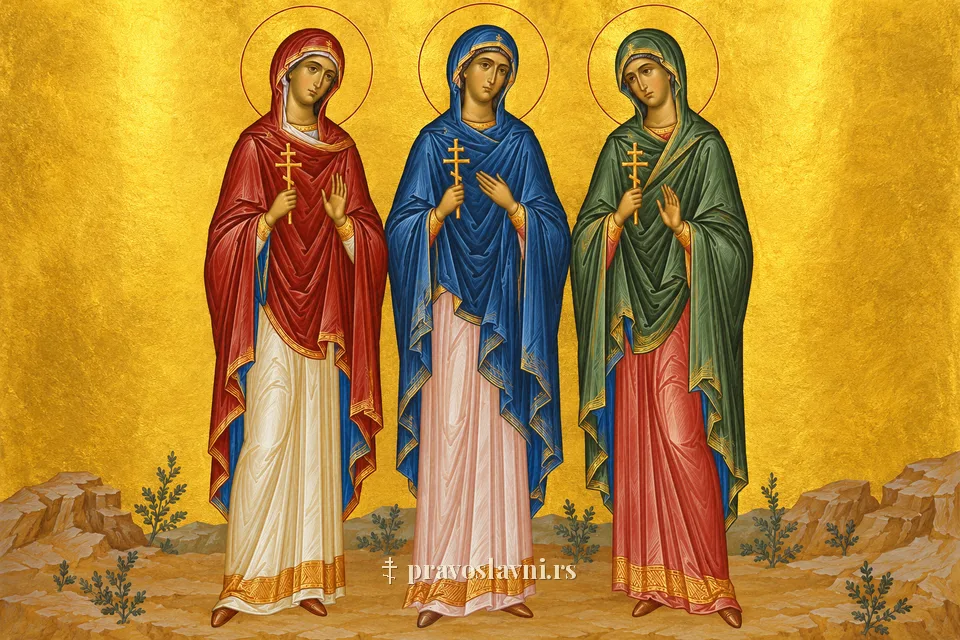
Holy Martyrs Agape, Chionia and Irene
What happenedThree sisters from near Aquileia, Agape, Chionia and Irene, confessed Christ before Emperor Diocletian and suffered, and St Anastasia buried them.
Read the LifeOrthodox Calendar · 16 April according to the Julian calendar
Wednesday, 29 April 202616 April (according to the Julian calendar)What happenedThree sisters from near Aquileia, Agape, Chionia and Irene, confessed Christ before Emperor Diocletian and suffered, and St Anastasia buried them.
Read the Life
No meat, dairy products, eggs or fish — oil and wine are allowed.
This is a recommendation — for your own fast, consult your priest or spiritual father.More about the fast →
Today the Church keeps the commemoration of a saint · not a Red Letter day.
More about the feast →
“Professing to be wise, they became fools.”
— Rom 1:22St Anastasia the Deliverer from Bonds buried together three sisters — Agape, Chionia and Irene — who suffered for Christ around the year 304, in the time of Emperor Diocletian. The Prologue says that they came from the surroundings of Aquileia.
Their suffering was announced in advance. The Prologue and the Life record that their spiritual guide Chrysogonus, whom the Emperor put to death in Aquileia, appeared after his death to the old presbyter Zoilus and said that the maidens would suffer within nine days. The same was revealed to Anastasia, who, according to the Life, visited them and prepared them for their struggle, and later served both them and the other prisoners.
Before the Emperor the sisters would not agree to serve the idols. Irene told the Emperor that it is madness to serve idols which mortal men have made for money, and the Emperor threw them into prison. Before the governor Sisinius, according to the Life, Agape said: “Our faith is invincible”, and Chionia: “Our faith is unchangeable.” Irene answered him: “I will not, for I am a Christian, a handmaid of the almighty God.”
God preserved them from shame. When the governor Dulcitius, to whom the Emperor had handed them over as he set out for Macedonia, came to them by night with an impure intention, his mind, as the Prologue and the Life record, was darkened: instead of the maidens, his passion fell upon the sooty pots, and he went away black and put to shame. Irene, who was sent among the soldiers, was delivered, according to the Prologue and the Life, by angels of God, who led her to a hill which the tormentor could not reach, and so he ordered that she be shot with arrows.
Agape and Chionia died in the fire; the Life says that they prayed to the end and that the flame touched neither their bodies nor their clothing. Their bodies, according to the Life, were carried away by night by Anastasia's servants and laid in a new tomb. Irene, according to the Life, died giving thanks to God, saying that she was going to Christ and to her sisters.
The Prologue compares them to lilies, pure in body and soul. Their example teaches that the faith which a person carries within cannot be taken away.
Agape, Chionia and Irene were sisters by birth — Agape the eldest, Irene the youngest. The Prologue says that they were born and grew up in the neighbourhood of Aquileia. All three suffered for Christ in the time of the Emperor Diocletian, around the year 304.
Two more saints are connected with their commemoration. Chrysogonus was their spiritual guide, and the Life calls him the teacher of the Christians who languished in the Roman prisons. After him there came from Rome his disciple Anastasia the Deliverer from Bonds, who in the end served the sisters and buried them. Diocletian put Chrysogonus to death in Aquileia; the Life says that he was beheaded outside the city and that his body was left on the shore, for the beasts and the birds.
The Prologue and the Life record that it was revealed in a vision to the old presbyter Zoilus where the martyr's body lay, so he carried it away and kept it in his home. A month later, as both sources say, Chrysogonus appeared to him with the news that the three maidens would suffer before nine days had passed, and that within that time Zoilus himself would also depart from this world. The same was revealed to Anastasia too. The Life tells that she sought out Zoilus, visited the sisters and spent the whole night with them, preparing them for their struggle, and later she served both them and the other prisoners. When the nine days were fulfilled, Zoilus died, and the sisters were brought before the Emperor.
The Emperor urged them to bow down to the idols, and the Life adds that he also promised them, as young maidens of good family, distinguished husbands. The sisters answered by confessing their faith in Christ. Agape, according to the Life, told him to look after the affairs of state, and Chionia agreed with her sister. Irene, the youngest, answered the Emperor that there is no sense in honouring idols, since the hand of a mortal man fashioned them for pay. Because of this they ended up in prison, and Irene, as the Life states, was tortured as well.
Later, before the governor Sisinius, they spoke just as firmly. According to the Life, Agape said: “Our faith is invincible,” and Chionia: “Our faith is unchangeable.” When he asked them about the Christian books, they answered that they carried within themselves what was written in them and that no one could take it away from them. And Irene, as the Life records, said to Sisinius: “I will not, for I am a Christian, a handmaid of the almighty God.”
Setting out for Macedonia, the Emperor took the prisoners with him, and handed the sisters over to Dulcitius. This man came to them at night, while they were praying, with an impure intention. The Prologue and the Life record that his mind was darkened, so that, not making out what was in front of him, he turned his impure passion on the sooty pots and came back all black. The Life adds that his men ran away from him, that the court laughed at him and that he blamed the sisters for his disgrace, as though they had bewitched him. Nor did he succeed in shaming them at the trial, and in the end he fell into a heavy sleep and they carried him home. The Emperor therefore transferred the case to Sisinius.
Nor did God forsake Irene. She was sent among the soldiers to a house of shame, but, as the Prologue and the Life say, angels of God — according to the Life, two radiant men — came for her and led her out on to a hill. The governor did not manage to climb up to her, although, according to the Life, he rode round it on horseback the whole day, so he ordered that she be shot with arrows.
Agape and Chionia were condemned to death by fire; the Prologue says that Irene was kept longer, because they hoped to dishonour her. The Life records that the elder sisters breathed their last in prayer, and that the flame harmed neither their bodies nor their clothing; Anastasia's servants carried them away by night, anointed them and laid them in a new tomb. Irene, according to the Life, wounded by the arrows, said that she was going to Christ, into the company of her sisters, gave thanks to God, lay down and breathed her last. Anastasia buried all three of them together with honour.
In its song the Prologue praises the three sisters as lilies, pure in body and soul, who gave to God their body, their soul and their suffering. Their example teaches that the faith a person carries within cannot be taken away.


