Saint of the day
Venerable John of the Ancient Caves
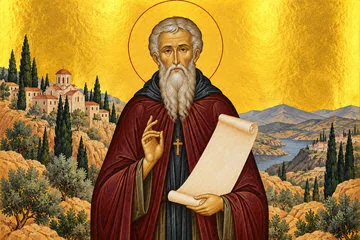
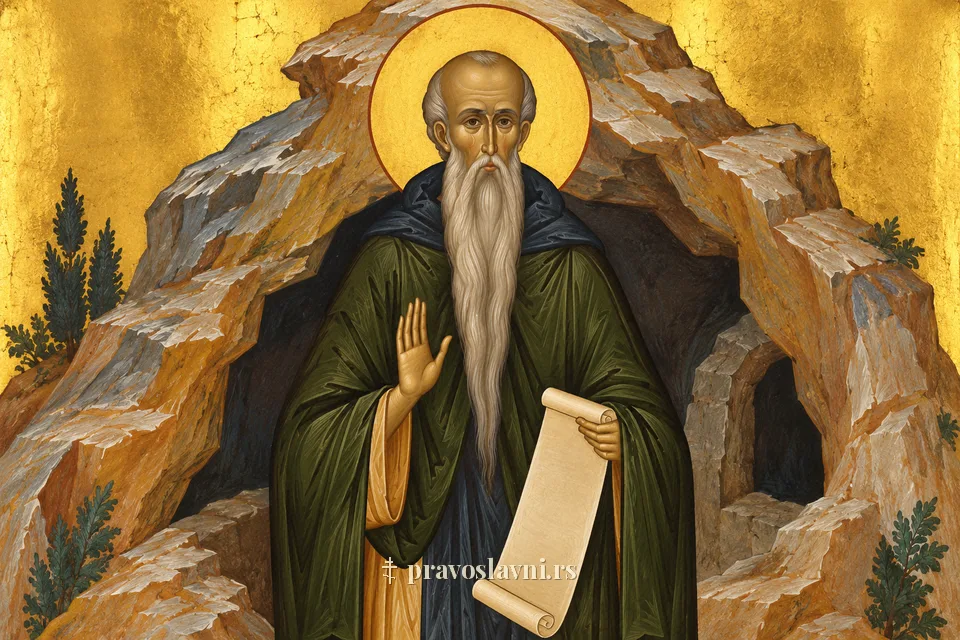
What happenedJohn left his homeland, became a monk and spent his life in ascetic struggle in the Ancient Cave, the Lavra of St Chariton the Great in Palestine.
Read the LifeOrthodox Calendar · 19 April according to the Julian calendar
Saturday, 2 May 202619 April (according to the Julian calendar)What happenedJohn left his homeland, became a monk and spent his life in ascetic struggle in the Ancient Cave, the Lavra of St Chariton the Great in Palestine.
Read the Life
You may eat meat, eggs, milk and dairy products, as well as any other food — but try to be moderate.
More about the fast →
Today the Church keeps the commemoration of a saint · not a Red Letter day.
More about the feast →
“Beloved, I beg you as sojourners and pilgrims, abstain from fleshly lusts which war against the soul.”
— 1 Pet 2:11Venerable John, according to the Prologue, went to Paradise after his death, having lived the ascetic life for a long time in Palestine, in the eighth century.
From his youth he loved Christ with all his heart, soul and mind. His Life says that he rejected worldly pleasures and pride, left his homeland, became a monk and went as a stranger into a foreign land for the Lord's sake. He visited the holy places, Jerusalem first of all, and listened, according to the Prologue, to the teachings of holy men.
He settled in the Ancient Cave — the lavra of St Chariton the Great in the desert near Jerusalem, founded before the other lavras. His Life records that it had once been a robbers' cave in which Chariton was miraculously preserved, and that he afterwards arranged a church in it and built a monastery above it. John lived in that cave and served in the cave church, and so from this he was named “of the Ancient Caves”. According to his Life, because of his virtuous life he became a priest.
He fasted, spent his nights in prayer and vigil and constantly remembered death; the Prologue adds that he learned humility. His Life says that angels carried his soul to the heavenly dwellings.
His life teaches that love for Christ, humility and the remembrance of death prepare a person for Paradise.
Venerable John of the Ancient Caves loved Christ from his youth with all his heart, with all his soul and with all his mind. The Life says that, wounded by divine love, he dedicated himself wholly to God, and it quotes for this the words of the psalm: “But it is good for me to draw near to God” (Ps 72:28). As a monk, he chose for the Lord's sake the life of a stranger far from his homeland; the Life says that he cared nothing for worldly pleasures. He went round the holy places — according to the Life, Jerusalem first — and the Prologue adds that he listened to the teachings and counsels of holy men.
He settled in the so-called Old Cave, the lavra of St Chariton the Great in Palestine. The Life explains that the lavra is in the desert near Jerusalem and that it is called Old because it was founded before the other lavras. The Life also explains how the lavra came to be. Robbers once held the cave; they dragged Chariton into it bound, but they died from wine that a snake had poisoned, and he found himself miraculously free. Chariton came upon gold in the cave, turned the cave into a church, gathered monks around him and built a monastery above it.
The name “of the Ancient Caves”, in Serbian Staropećinik, the Life explains by that very place: John lived in the old cave to the end and served in the church arranged within it. According to the Life, it was there too that he was ordained a priest on account of his virtuous life.
He gave himself up to strict ascetic struggle: to fasting, to all-night prayer and vigil, and to the constant remembrance of death. The Prologue says that he learned humility. According to the Life, he followed the example of the ancient desert-dwellers, and abstinence so wore him out that he became altogether weak; in this way he kept the passions of the body under control.
He reposed in the eighth century, after a long life pleasing to God. The Prologue says that he went to paradise, and the Life that angels carried his soul to the heavenly dwellings.
John shows that love for Christ from one's youth, withdrawal from the world, fasting, vigil, humility and the remembrance of death make a person holy and prepare him for paradise.
Blessed Matrona of Moscow was born in the year 1881 in the village of Sebino in the Tula governorate, the youngest of the four children of the poor and devout peasants Dimitry and Natalia. Her Life says that she was born blind, but the Lord gave her spiritual sight; at baptism she was given her name after St Matrona of Constantinople. From childhood she loved prayer and the church services, and already from the age of seven or eight people came to her because of her gift of clairvoyance and healing. At seventeen she lost the use of her legs, and she lived like that for about fifty years. In her youth she went on pilgrimage to the holy places and met St John of Kronstadt. From 1925 she lived in Moscow, often without documents. She reposed in the year 1952 and was buried in the Danilov cemetery, and her grave became a place of pilgrimage.