Saint of the day
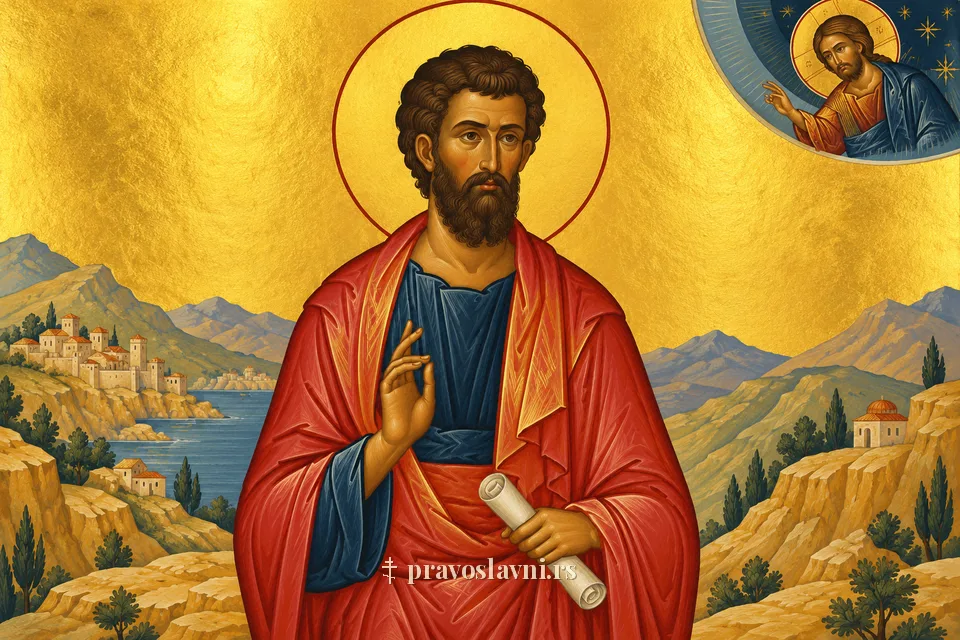
Holy Apostle James, son of Zebedee
What happenedThe Apostle James, son of Zebedee, embraced and forgave the man who had slandered him, and the two were beheaded together for Christ in Jerusalem.
Read the LifeOrthodox Calendar · 30 April according to the Julian calendar
Wednesday, 13 May 202630 April (according to the Julian calendar)What happenedThe Apostle James, son of Zebedee, embraced and forgave the man who had slandered him, and the two were beheaded together for Christ in Jerusalem.
Read the Life
No meat, dairy products, eggs or fish — oil and wine are allowed.
This is a recommendation — for your own fast, consult your priest or spiritual father.More about the fast →
Today the Church keeps the commemoration of a saint · Leavetaking of Mid-Pentecost.
More about the feast →
“They said to Him, ”We are able.” So Jesus said to them, “You will indeed drink the cup that I drink, and with the baptism I am baptized with you will be baptized.”“
— Mk 10:39While they were leading him to execution, the Apostle James embraced the man who had slandered him and said to him: “Peace to you, and forgiveness!” That man, Josias, had accused him before King Herod, but when he saw the apostle's boldness he came to believe in Christ and was condemned together with him. Both of them were beheaded for the Lord in Jerusalem in the year 45.
James was the son of Zebedee and the brother of John the Theologian. When the Lord called them, both left their fishing nets and their father and followed Christ. As one of the Twelve, James was, according to his Life together with Peter and John, a witness of the Transfiguration on Tabor and of the Lord's sorrow in Gethsemane. The Life does not hide his zeal either: when the Samaritans would not receive the Lord, he and John asked for fire from heaven, and the Lord rebuked them. The Life also records that the Lord promised him that he would drink the cup that He too would drink.
After he had received the Holy Spirit, he carried the Gospel far away, all the way to Spain. On his return he said openly that Jesus is the Messiah, and because of this he came into conflict with the Jews. The Prologue records that in a dispute he overcame the magician Hermogenes, so that both he and his disciple received baptism. The Life tells that story at greater length: the sorcerer sent demons against the apostle, but an angel of the Lord bound them, and James, at their request, had them released. In the end Hermogenes burnt his books of sorcery and began to serve Christ.
The Life says that on the way to the place of execution James also healed a paralysed man. He was, according to the Life, the second martyr after the Protomartyr Stephen. His relics were translated to Spain, and at his tomb people receive healing to this day.
The Apostle James teaches us readiness to leave everything for the sake of Christ and boldness in bearing witness to the faith. But above all he teaches forgiveness: the mercy he showed to his slanderer, and even to those who wished him harm, shows what kind of heart Christ builds in His disciples.
The most unusual account in the Life of the Apostle James is not a story of punishment but of mercy. The Pharisees, with whom James disputed in Jerusalem about the Scriptures, hired the sorcerer Hermogenes to overcome him. The first to go against the apostle was Hermogenes's disciple Philetus, but he came away from that meeting asking to become a disciple of James himself. The sorcerer then caused demons to bind Philetus, and James set him free: he sent him his kerchief and told him to say the words of the psalm about the Lord who gives freedom to the prisoners (Ps 145:7–8). Philetus was then baptised.
Nor did the demons that Hermogenes next sent to fetch the apostle and Philetus carry out the order. His Life says that an angel of the Lord bound them, and they cried out: “Apostle of Christ, James, have mercy on us.” The apostle had mercy and caused them to be released. When at last they brought the sorcerer himself, bound, they admitted, according to his Life, that in the apostle's house they had no power at all. James did not seek revenge: he told Philetus to untie Hermogenes and let him go home, giving him his staff. Hermogenes later came back, asked for baptism, threw his books of sorcery into the fire and became a servant of Christ, who worked miracles in His name. The Prologue reduces the same account to the brief report that the apostle defeated a magician in debate and that both the teacher and the disciple were baptised.
James, the son of Zebedee, was the brother of John, whom his Life calls the Theologian. At the Lord's call the brothers left their father and their fishing nets and followed Him (Mt 4:21–22), and James entered the number of the Twelve. With Peter and John, according to his Life, he was among the three apostles before whom Christ revealed what remained hidden from the others: on Tabor he saw the Transfiguration, and in Gethsemane the Lord's sorrow.
His Life also records the occasion when the Samaritans would not receive the Lord: James and John asked that fire should come down on them from heaven, and the Lord rebuked them (Lk 9:54–56). It also mentions Christ's promise that James would drink the cup that He too would drink (Mt 20:23).
When he had received the Holy Spirit, James spread the Gospel through many lands, as far as Spain. On returning — to Jerusalem, according to his Life — he publicly bore witness that Jesus is the Messiah, which gave rise to disputes with the Jews; among them his Life makes special mention of the Pharisees and the lawyers.
The Jews accused James before King Herod. Here his Life cites the words of the Acts of the Apostles about Herod, who persecuted the Church, killed James the brother of John with the sword, and imprisoned Peter (Acts 12:1–4). The slanderer before the king was a certain Josias, whom, according to the Prologue, the Jews had persuaded to do this; his Life gives the account of him following Eusebius, Bishop of Caesarea in Palestine.
Josias, however, repented, for he was moved by the apostle's boldness — his Life says also by his holiness, and the Prologue by his preaching. He confessed Christ and was condemned together with James. On the way to the place of execution, according to his Life, the apostle healed a paralysed man. On that road Josias asked James for forgiveness, and the apostle embraced him and said: “Peace to you, and forgiveness!” Both were beheaded in Jerusalem in the year 45.
His Life calls James the second martyr, after the Protomartyr Stephen, and says that his disciples buried his body with honour. His relics were later translated to Spain, and at his tomb people do not cease to receive healings even today.
James left everything at Christ's first call and bore witness boldly, and on every occasion he chose mercy: he released the demons who begged him, let go the sorcerer who wished him harm, and embraced his slanderer, who then died beside him as a confessor. The apostle teaches us that mercy should be stronger than an offence, even towards an enemy.


