Saint of the day
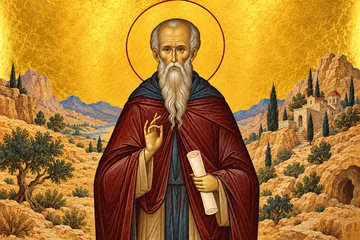
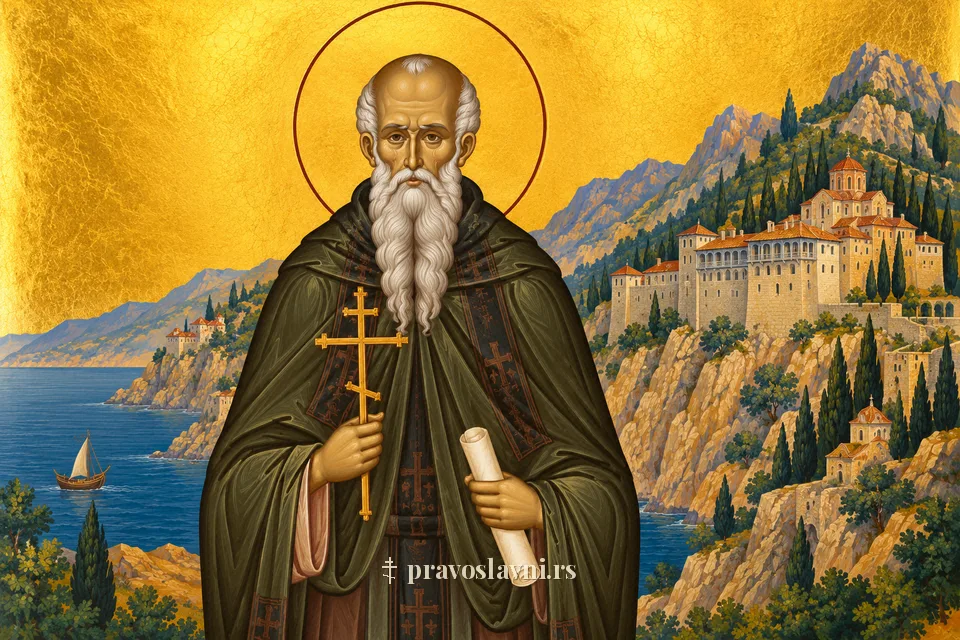
Venerable Athanasius of Athos
What happenedVenerable Athanasius built the famous Lavra on the Holy Mountain and, according to his Life, established a strict common life in it.
Read the LifeOrthodox Calendar · 5 July according to the Julian calendar
Saturday, 18 July 20265 July (according to the Julian calendar)What happenedVenerable Athanasius built the famous Lavra on the Holy Mountain and, according to his Life, established a strict common life in it.
Read the Life
You may eat meat, eggs, milk and dairy products, as well as any other food — but try to be moderate.
More about the fast →
Today the Church keeps the commemoration of a saint · not a Red Letter day.
More about the feast →
“But seek first the kingdom of God and His righteousness, and all these things shall be added to you.”
— Mt 6:33Athanasius was born in Trebizond, of God-fearing parents, and in the world he was called Abramius. He was left an orphan early; according to his Life, he was raised by his aunt, and his companions in their childhood games used to make him the abbot. He was educated in Constantinople, where his companions loved him for his modesty and gentleness. He became a disciple of St Michael Maleinos, who tonsured him a monk and gave him the name Athanasius. Michael's nephew Nicephorus Phocas, later emperor, came to know him and held him in honour.
Seeking solitude, Athanasius went to the Holy Mountain (Mount Athos). According to the Life, he hid there under the name Barnabas, pretending to be an illiterate sailor, until at a gathering in Karyes the protos gave him something to read and so recognised him. Disciples gathered around him and he built the famous Lavra, with the help of the emperors Nicephorus Phocas and John Tzimiskes. He ordered the life in it, according to the Life, as a strict cenobitic community, on the foundation of the rules of St Basil the Great and the customs of the ancient monasteries of Palestine. According to the Prologue, he loved the brethren as a father and led them by his example in work and in prayer.
When demons and men attacked him, he answered with meekness and prayer. The Life records many miracles: healings, the rescue of monks from an overturned boat, the sweetening of sea water, the driving away of locusts. In a time of famine he was ready to leave the Lavra, but on the road the Most Holy Theotokos met him, told him to stay and promised that she herself would be the steward of the Lavra. Athanasius struck a rock with his staff and water flowed out of it; according to the Prologue, on his return he found the granaries full.
He died suddenly, when a building that they were inspecting collapsed on him and six monks; according to the Prologue, in the year 980. According to the Life, his body did not decay, and many were healed with oil from the lamp at his tomb. The Prologue says that even after his death he came to the brethren, comforting them or admonishing them.
He fled from honours and sought to be hidden, and God made him the father of the Holy Mountain.
Athanasius was born in Trebizond, of God-fearing parents, and in the world his name was Abraham. According to his Life, his father was from Antioch and died before he was born, and his mother, a native of Colchis, died soon after his baptism. He was left an orphan early; his Life says that he was brought up by his aunt and that in their childhood games his companions used to make him the abbot. He was taken to Constantinople for his schooling — according to the Prologue, a certain general brought him there. He was modest and gentle, and so his companions loved him. His Life records that he surpassed his teacher Athanasius and became a teacher himself, but that he quietly withdrew from that post so as not to grieve his former teacher, who envied him.
He became a disciple of St Michael Maleinos — according to his Life, in the monastery of Kymina — and it was he who tonsured him a monk and gave him the name Athanasius. Michael's nephew Nicephorus Phocas, at that time a general and later Emperor, came to know him and respected him; the Prologue says that Nicephorus himself thought of becoming a monk. Seeking solitude, Athanasius went to the Holy Mountain (Mount Athos); according to his Life, he was fleeing from the abbacy that Michael intended for him.
His Life says that on the Holy Mountain he hid at Zygos under the name Barnabas, pretending to be an illiterate sailor. But at the assembly in Karyes the protos gave him something to read, and then he was recognised.
Disciples gathered round him and he built the famous Lavra. According to his Life, he built it at Melana, with the gold that Nicephorus sent him after the victory on Crete: churches, a refectory, a hospital and a guest-house. Emperors helped him — first Nicephorus Phocas, and then John Tzimiskes. His Life says that Emperor John, after some of the old monks had complained about Athanasius, confirmed to the Lavra a yearly gift of 244 gold coins from Lemnos.
According to his Life, he established a strict common life in the Lavra. His models were the old Palestinian brotherhoods and the rules of St Basil the Great, and so property was held in common, silence was kept at table, and good order reigned at the services. The Prologue stresses that he loved the brethren as a father and led them by his example in work and in prayer.
Both demons and men attacked him, and he withstood them with meekness and unceasing prayer. For three years, according to his Life, he was confined to his bed because of his leg, which had been injured by a falling tree; he filled that time with the copying of books. His Life records many miracles: healings, the rescue of monks from a capsized boat, the sweetening of sea water, the driving away of locusts.
In a time of famine Athanasius was ready to leave the Lavra. Then the Most Holy Theotokos met him on the road, told him to stay and promised that she herself would be the steward of the Lavra — the Economissa. Athanasius struck a rock with his staff and water flowed out of it. The Prologue says that on his return he found the granaries full, and his Life says that this spring flows to this day. The Prologue draws a lesson from this: “God repeats the great wonders of old wherever and whenever it is needed.”
Athanasius died suddenly while he was inspecting a new building with six monks: according to the Prologue and his Life, the structure collapsed on them. According to the Prologue, this was in the year 980. His Life says that his body did not decay and that many were healed by the oil from the lamp at his tomb. According to the Prologue, even after death he did not abandon the brethren: he appeared to them many times, sometimes with consolation, sometimes with a rebuke.
On this day the Prologue also reflects on the crossing of the Red Sea (Ex 14), and the homily speaks of the watchfulness of the mind: “The mind, brethren, is the guide of the soul and the counsellor of the soul.” He fled from honour and sought to be hidden, and God made him the father of the Holy Mountain; when he was ready to give up, the Theotokos herself told him to stay.
On this day we commemorate the finding of the relics of Venerable Sergius of Radonezh, the wonderworker of all Russia, whose main feast is on 25 September (according to the Julian calendar). The relics were found incorrupt in the time of Grand Prince Yuri Dmitrievich. The Trinity Monastery was burned down in 1408 in the Tatar invasion, and the monks, with Sergius's successor St Nikon, went into the forests and saved the icons, vessels and books connected with Sergius; Sergius had foretold to Nikon even earlier that the monastery would be restored. When the new stone church of the Holy Trinity was to be built, Sergius appeared to a certain devout layman and complained that he was being left for so long in the earth and the water. The relics were found while the foundations were being dug, at the time when Nikon was abbot: although the grave was surrounded by water, neither the body nor the clothing had been damaged. They were first laid in the wooden church of the Holy Trinity, and in 1426 they were translated to the stone Trinity Cathedral, in which they rest to this day.