Feast of the day
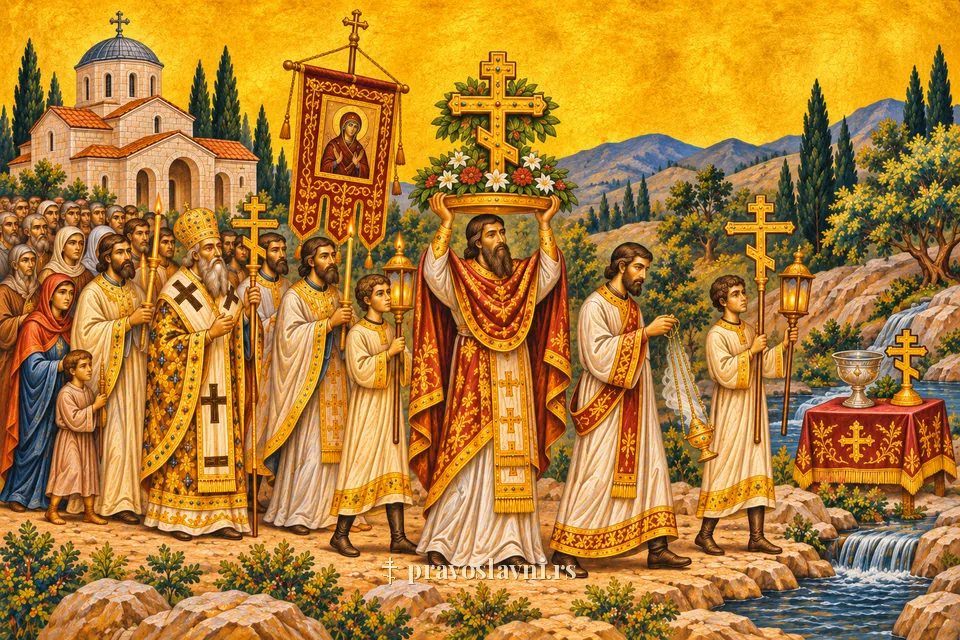
Procession of the Precious Cross
What happenedThe Procession of the Precious Cross was established in thanksgiving for two victories of Christian armies, won on the same day with the help of the Cross.
Read the LifeOrthodox Calendar · 1 August according to the Julian calendar
Friday, 14 August 20261 August (according to the Julian calendar)Save your slava — you'll get a reminder a week and a day before.
Send a greeting card →What happenedThe Procession of the Precious Cross was established in thanksgiving for two victories of Christian armies, won on the same day with the help of the Cross.
Read the Life
No meat, dairy products, eggs, fish or oil — food cooked in water.
This is a recommendation — for your own fast, consult your priest or spiritual father.More about the fast →
Many families celebrate their Krsna slava (family patron saint's day) today
More about the feast →
“Looking unto Jesus, the author and finisher of our faith, who for the joy that was set before Him endured the cross, despising the shame, and has sat down at the right hand of the throne of God.”
— Heb 12:2With this day begins the Gospojina Fast, or Dormition Fast, which lasts until Velika Gospojina, the feast of the Dormition of the Most Holy Theotokos. The Church appointed it having before her eyes the Theotokos, who, towards the end of her earthly life, fasted and prayed. The fast is kept with water, oil and wine are permitted only on certain days, and fish is allowed solely on the Transfiguration. There is more about fasting in the guide “Fasting — simply explained”.
On the same day the Church celebrates the Procession of the Precious and Life-giving Cross. From the Church of Hagia Sophia in Constantinople the Cross was carried out first into the centre of the church, and then outside as well, through the city streets, so that the earth and the air might be sanctified. Hence the name of the feast: the Cross, together with icons, was solemnly carried to rivers, wells and springs, and the bishops prescribed the blessing of water for that day.
Today too the Cross is brought out into the middle of the church, and the faithful venerate it. After the Liturgy the Lesser Blessing of Water is usually served. The Cross remains in the midst of the church until Vespers of the following day, when it is returned to the altar.
On the same day the Church also remembers the Holy Maccabean Martyrs: the priest Eleazar, the seven brothers and their mother Solomonia.
On one and the same day two Christian armies, the Greek and the Russian, won their victories: the Greeks over the Saracens, and the Russians over the Bulgars. The Precious Cross was carried with both armies, and a light shone above them — according to the Prologue from the crosses themselves, and according to the Life from the icon of the Most Holy Theotokos which was carried together with the Cross.
When each of the rulers learned of the other's victory, Emperor Manuel and Prince Andrew, together with their hierarchs, established a feast of thanksgiving, on 1 August by the old calendar. The Life remembers that before the battle Prince Andrew prayed with tears and received Holy Communion, trusting more in God's help than in weapons, while two priests in vestments carried the Cross among the army.
The Prologue also describes the custom of Constantinople: the Cross, which was kept in the palace church, was brought before the feast to Hagia Sophia and then carried through the city. The people venerated it, the earth and the air were sanctified by the procession, and after it the Cross was returned to the palace. To this day the Cross is brought out of the altar into the middle of the church, where the faithful kiss it. According to the Life, the hierarchs appointed the blessing of water for this day, and the Cross, together with icons, is carried in procession to rivers, springs and wells.
The Life calls us to keep the feast in the fear of God and with almsgiving. The Cross is the sign of victory: the Life reminds us that it will appear in the sky at the Second Coming of Christ and will go before the saints into the Kingdom.
The feast of the Procession of the Precious Cross was established by agreement between the Greek Emperor Manuel and the Russian Prince Andrew. The occasion was two victories won on the same day: the Greeks defeated the Saracens, and the Russians the Bulgars.
The Life describes Prince Andrew Yurievich before the battle: he prayed with tears and received the Holy Mysteries in Communion, and two priests in vestments carried the Cross among the army. The prince, says the Life, trusted more in God's help than in weapons.
Both sources speak of a light that appeared above the army. According to the Prologue, crosses were carried with both armies and a heavenly light shone forth from them. The Life says that rays shone from the icon of the Most Holy Theotokos with the Divine Child, which was carried together with the Cross, and that the light was seen on the first day of August (according to the Julian calendar), in both camps.
When the rulers informed each other of the victories, they established, together with their chief hierarchs, a feast of thanksgiving, on 1 August (according to the Julian calendar). The Life states that in Greece this was done by Patriarch Luke of Constantinople, and in Russia by Metropolitan Constantine of Kiev and Bishop Nestor of Rostov.
The Prologue also records an old custom of Constantinople. The Precious Cross was kept in the church of the imperial palace. Before the feast it was brought to Hagia Sophia, and then carried through the streets of the city, so that the people might venerate it and so that the earth and the air might be sanctified. After that it was returned to the palace church.
On this feast the Cross is brought out from the altar to the middle of the church, where the faithful bow down before it and kiss it. The Life says that the hierarchs also appointed a blessing of water for this day, and so the Cross is carried with icons in procession to rivers, springs and wells.
The Life calls for the feast to be kept in the fear of God and for almsgiving not to be forgotten on that day. The Cross is the sign of victory, and the Life reminds us that at the Second Coming of Christ it will appear in the sky as a sign and will go before the saints into the Kingdom.
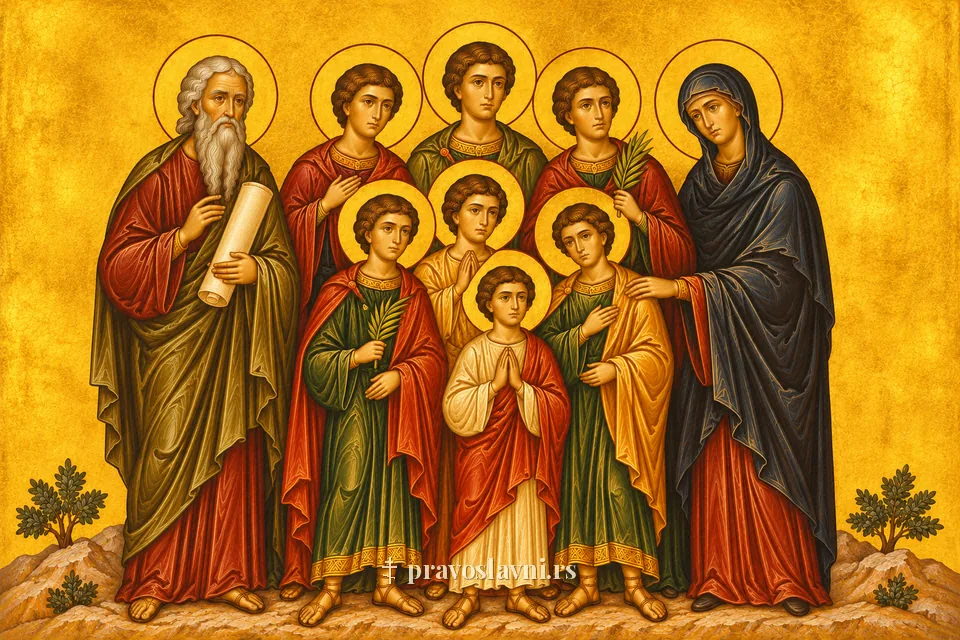
King Antiochus bore the surname Epiphanes, which means “the glorious”, though some called him the madman. He wanted to replace faith in the One God with Hellenic idolatry. He ordered that, contrary to the Law of Moses, pork should be eaten: whoever tasted it would thereby show before everyone that he was renouncing the faith. The elder Eleazar, a priest and one of the translators of Holy Scripture into the Greek language, refused to do this. According to his Life, his friends offered him permitted meat, so that he might only pretend to eat, but he refused even that pretence: according to the Second Book of Maccabees (2 Macc 6:24), he said that it did not befit one of his age to dissemble, lest many of the young be led astray. He was tortured and met his end in the fire, and according to his Life he prayed before his death that his death might be a ransom for the people. Then, before the eyes of their mother, one after another, seven brothers who had refused the same thing were tortured and put to death. According to the Prologue, their names were Abim, Antoninus, Eleazar, Gurias, Eusebonus, Alim and Marcellus, and their mother was called Solomonia. The eldest, according to the Life, said on behalf of them all: “We are ready to die rather than transgress the laws of our fathers.” Their mother encouraged them and suffered together with them, praying with uplifted hands, as the Life says. According to the Prologue, they suffered about 180 years before Christ. The account of them is found in the Second Book of Maccabees (2 Macc 6:18–31 and 7).


