Saint of the day
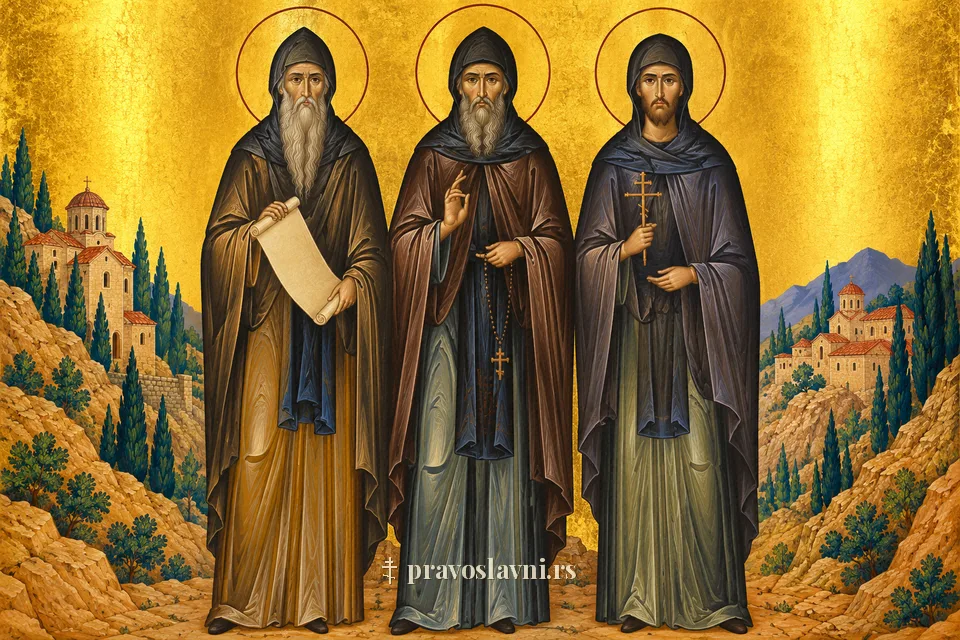
Venerable Isaac, Dalmatus and Faustus
What happenedVenerable Dalmatus, an officer whom the Emperor Theodosius the Great held in high esteem, left the army and, with his son Faustus, became a monk under the elder Isaac.
Read the LifeOrthodox Calendar · 3 August according to the Julian calendar
Sunday, 16 August 20263 August (according to the Julian calendar)What happenedVenerable Dalmatus, an officer whom the Emperor Theodosius the Great held in high esteem, left the army and, with his son Faustus, became a monk under the elder Isaac.
Read the Life
No meat, dairy products, eggs or fish — oil and wine are allowed.
This is a recommendation — for your own fast, consult your priest or spiritual father.More about the fast →
Today the Church keeps the commemoration of a saint · Sunday — a festive day · 11th Sunday after Pentecost. Tone 2..
More about the feast →
“So He said to them, ”This kind can come out by nothing but prayer and fasting.”“
— Mk 9:29Emperor Theodosius the Great greatly valued his officer Dalmatus. Dalmatus had a wife and children, but, according to the Life, he left them, and when he gave up his service he took with him only his son Faustus. They went to the monastery of the elder Isaac in a suburb of Constantinople, and there both of them received the monastic tonsure.
According to the Prologue, the zeal of the former officer gladdened the elder. Before his death Isaac appointed him as his successor in the place of abbot, and according to the Life Patriarch Atticus ordained him a priest. He was able to refuse food for as long as forty days, and by this abstinence, together with prayer, as both sources say, he withstood the demons. The monastery was later named after him the Dalmatian monastery.
His ascetic labour did not end in the cell. When Nestorius began to blaspheme against the Mother of God, Dalmatus was of great help to the fathers of the Third Ecumenical Council; the Life says that for this he was made archimandrite. He reposed in peace, according to the Life in deep old age.
Nor did the son turn aside from his father's path: he lived as an ascetic and reposed in the same monastery.
Their memory bears witness that the service of Christ is worth more than every earthly honour.
Venerable Isaac had a monastery in a suburb of Constantinople. The Prologue notes that he is also commemorated separately on 30 May (according to the Julian calendar). To that monastery there came Dalmatus, from the imperial service, and with him his son.
Dalmatus was at first an officer of Emperor Theodosius the Great, who valued him very highly. Yet he gave up his rank and went to Isaac's monastery; according to his Life, he left his wife and his other children and took with him only Faustus. Both of them received the monastic tonsure, according to the Life from the hands of Isaac himself.
The elder watched how the new monk dedicated himself to God without reserve, and the Prologue says that this was a joy to him. The Life adds that Patriarch Atticus of Constantinople ordained him a priest. According to both sources, Dalmatus was distinguished by strict fasting — at times he would take no food for forty days — and fasting and prayer were the weapons with which he overcame the demons. Isaac, who according to the Life was very old, appointed Dalmatus as his successor in the place of abbot. The monastery was later named after him, the Dalmatian monastery.
Dalmatus greatly helped the fathers of the Third Ecumenical Council in the struggle against the heresy of Nestorius, which blasphemed the Mother of God. The Life says that the council was held in Ephesus, in the time of Emperor Theodosius the Younger, and that Dalmatus, for his service, was made archimandrite of the monastery. He reposed in peace, according to the Prologue in the fifth century, and according to the Life in deep old age.
Faustus walked the path of his father; both sources remember that he was like him in everything. He lived the ascetic life, pleasing God, and ended his life in peace in the same monastery.
Father and son exchanged earthly rank for monastic obedience.


