Saint of the day
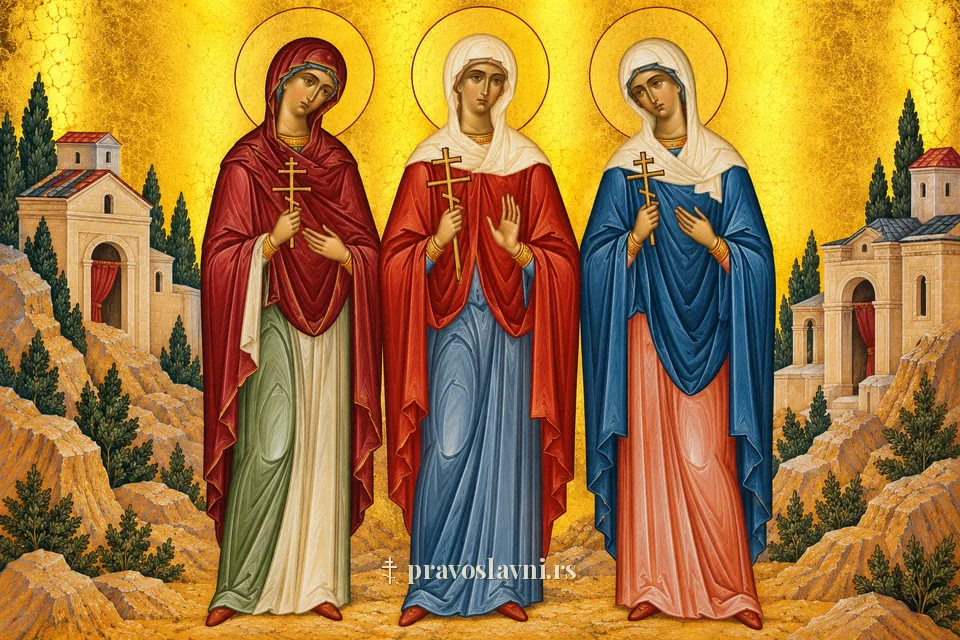
Holy Martyrs Menodora, Metrodora and Nymphodora
What happenedThree sisters, Menodora, Metrodora and Nymphodora, refused wealth and marriage in order to remain faithful to Christ, and suffered as martyrs.
Read the LifeOrthodox Calendar · 10 September according to the Julian calendar
Wednesday, 23 September 202610 September (according to the Julian calendar)What happenedThree sisters, Menodora, Metrodora and Nymphodora, refused wealth and marriage in order to remain faithful to Christ, and suffered as martyrs.
Read the Life
No meat, dairy products, eggs, fish or oil — food cooked in water.
This is a recommendation — for your own fast, consult your priest or spiritual father.More about the fast →
Today the Church keeps the commemoration of a saint · not a Red Letter day.
More about the feast →
“Let us hold fast the confession of our hope without wavering, for He who promised is faithful.”
— Heb 10:23Before the governor Fronto stood three sisters from Bithynia: Menodora, Metrodora and Nymphodora. He offered them wealth, honours and marriage to noblemen, if only they would offer sacrifice to the gods. Their Life records the answer that Menodora gave in the name of them all: “We are Christ's, and we are ready to die for Christ.”
The sisters grew up in the Christian faith. They withdrew into solitude, where they lived in virginity, fasting and prayer. God gave them the gift of healing, the sick came to them, and word of them spread against their will. That is how they came to be brought to trial. According to the Prologue, the governor wondered that, after so great an ascetic struggle, they looked so serene and full of grace.
The first to suffer was the eldest, Menodora. The Prologue records her words to the governor: “do you not see: I am doing nothing else but offering my whole self as a sacrifice to my God?” Fronto showed her body to the other two and demanded that they deny Christ, but both Metrodora and Nymphodora remained faithful and suffered.
The punishment of God overtook Fronto. The Christians buried the sisters with honour, and their Life says that a church was built beside their grave and that healings took place there. According to the Prologue, they suffered between the years 305 and 311.
The Prologue teaches that many years of the ascetic struggle of fasting and prayer also have the measure of martyrdom. The firmness of the three sisters, as the Prologue sings, overcame all the designs of the governor.
Menodora, Metrodora and Nymphodora were sisters by birth from Bithynia, brought up in the Christian faith. The eldest was Menodora, and the youngest Nymphodora. They withdrew to a deserted place to live in virginity, fasting and prayer, as brides of Christ; their Life says — to a hill beside the hot springs of Pythia.
God gave them the gift of healing. The sick began to come to them, and word of the sisters spread, although they did not wish it. In this way the governor Fronto also learnt of them, and he ordered them to be brought to trial.
The Prologue records that Fronto was surprised at how bright and full of grace their faces were, although they had lived in strict ascetic labour. At first he tried to entice them: he promised them riches, honours and marriage to noblemen, if they would offer sacrifice to the gods; according to the Prologue, he also promised to send them to the emperor. Their Life says that Menodora answered in the name of all three: “We are Christ's, and we are ready to die for Christ.”
Menodora was the first to be tortured; the Prologue says that the other two were kept in prison during that time. When they commanded her once again to offer sacrifice, the Prologue records her answer: “do you not see: I am doing nothing else but offering my whole self as a sacrifice to my God?” And so she gave up her soul to God. Fronto showed the sisters her body — according to their Life, after four days — and tried to persuade them to renounce Christ. They remained firm and they too suffered; their Life says that Metrodora suffered first, and then Nymphodora.
Nor did Fronto escape without punishment. The Prologue says that he and his servants were struck by a thunderbolt, and their Life that fire fell upon them from heaven when he ordered the bodies of the martyrs to be burnt. Their Life adds that rain put out the fire and that the bodies remained untouched. The Christians buried them with honour; according to their Life, together in one tomb beside the hot springs, where a church was later built and where healings took place. According to the Prologue, they suffered between the years 305 and 311, in the time of Emperor Maximian Galerius.
The Prologue reminds us that the women martyrs, by their courage and endurance, have lit up the history of the Church, and that ascetic labour in solitude, which lasts for years, is in its own measure a martyrdom. The three sisters travelled both paths: first the quiet path of fasting and prayer in solitude, and then the confession of Christ before the court. Their firmness, as the Prologue sings, brought all the governor's intentions to nothing.


