Saint of the day
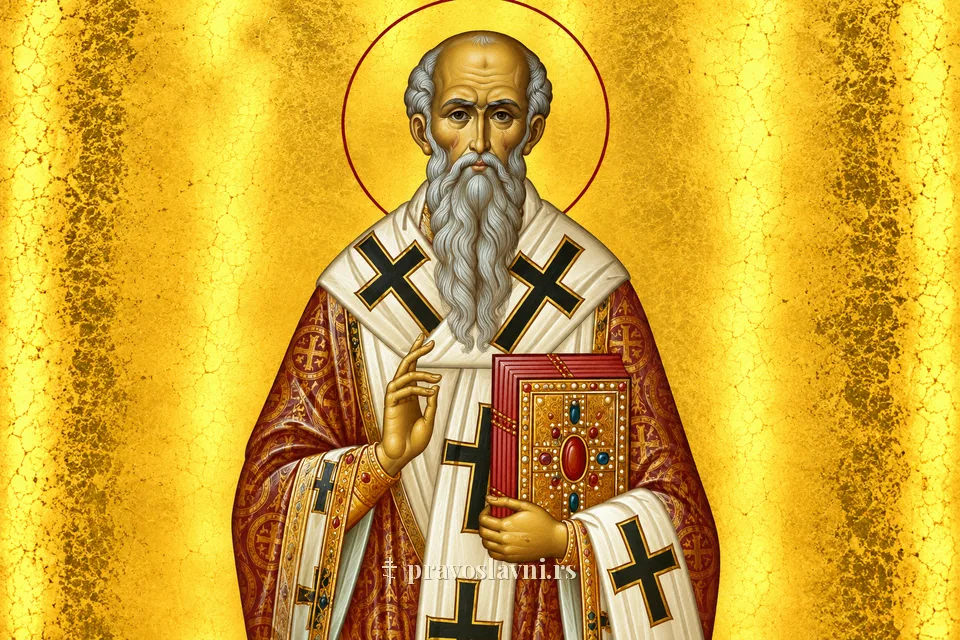
Hieromartyr Autonomus
What happenedSt Autonomus, a bishop who preached throughout Bithynia, was killed by pagans in the altar of his church during the Divine Liturgy.
Read the LifeOrthodox Calendar · 12 September according to the Julian calendar
Friday, 25 September 202612 September (according to the Julian calendar)What happenedSt Autonomus, a bishop who preached throughout Bithynia, was killed by pagans in the altar of his church during the Divine Liturgy.
Read the Life
No meat, dairy products, eggs, fish or oil — food cooked in water.
This is a recommendation — for your own fast, consult your priest or spiritual father.More about the fast →
Today the Church keeps the commemoration of a saint · Leavetaking of the Nativity of the Theotokos..
More about the feast →
“And so I have made it my aim to preach the gospel, not where Christ was named, lest I should build on another man’s foundation.”
— Rom 15:20St Autonomus suffered in the altar of the church which he himself had built in Soreoi, in Bithynia: the pagans burst in during the Divine Liturgy and killed him. His Life says that his blood stained the altar. The Prologue records that many other Christians also suffered with him, and his Life says that the faithful were scattered, and that the body of the saint was buried by the deaconess Maria.
By that moment a long road lay behind him. According to his Life, he was a bishop in Italy. From the persecution of Diocletian he took refuge in Asia, holding to the word of Christ that the disciples, when they are persecuted in one city, should flee to another (Mt 10:23). In Soreoi he was received by the devout Cornelius, whose house, according to his Life, soon became too small for the new believers. When many pagans had been baptised, Autonomus built a church of the Archangel Michael, and ordained Cornelius a presbyter and afterwards a bishop.
His Life follows him through Lycaonia, Isauria, Claudiopolis on the Black Sea and the province of Asia, where he tore down the temples of the idols and converted people. Even when Diocletian came to Nicomedia, Autonomus withdrew only in order to continue his preaching. In nearby Limnae, too, many came to believe. It was the pagans from Limnae and the surrounding district, according to his Life embittered because the Christians had torn down their temple, who attacked the church in Soreoi.
God did not allow the tomb of the martyr to be forgotten. Under the Emperor Constantine the official Severian built a church over the tomb; his Life says that on his way to Alexandria his mules stopped there and would not move until he had promised a church. First he built a small chapel, and afterwards a larger church as well. Later, when the place had become deserted, the saint appeared to the soldier John, who uncovered his relics, completely incorrupt, and then, according to his Life, built a church on that spot. His Life also cites the testimony of Metaphrastes that the body remained whole. Many sick people were healed beside them.
The relics of St Autonomus bear witness that the glory of God accompanies those who are pleasing to Him even after death.
St Autonomus was, as his Life records, a bishop in Italy. When the Emperor Diocletian raised a persecution against the Christians, he left his own land and crossed over to Bithynia, in Asia. His Life says that he set out because he remembered Christ's commandment that the disciples, when they are persecuted in one city, should flee to another (Mt 10:23).
He settled in a place called Soreoi, in the house of a devout man named Cornelius. Many pagans there came to believe in Christ and were baptised, so that, according to his Life, the house of Cornelius became too small for them. Autonomus therefore built a church in Soreoi dedicated to the Archangel Michael, and he ordained his host a presbyter, and afterwards also bishop of that place.
Soreoi was his stronghold, but it was not the limit of his work. His Life lists the regions to which he carried the Gospel: Lycaonia and Isauria, Claudiopolis on the Black Sea and the province of Asia, where he pulled down the temples of the idols and converted many. When he returned from Asia to Soreoi, he rejoiced that the faithful were growing in the faith. When Diocletian came to Nicomedia in order to wipe out the Christians, Autonomus, according to his Life, withdrew from the pursuit so that he might be able to go on preaching.
He also went to nearby Limnae, a settlement of pagans. There too many received the faith. His Life says that the new Christians of Limnae pulled down the place of the pagan festival and the temple, and that the pagans of Limnae and of the surrounding villages began to plan their revenge.
Their revenge brought them to the church in Soreoi, in the middle of the Divine Liturgy. The pagans burst into the church and killed the bishop in the altar. The Prologue records that many other Christians who were in the church also suffered at that time, and his Life says that the faithful were scattered. The blood of the saint, according to his Life, stained the altar at which he was serving, and the murderers, according to his Life, even covered the dead body with stones and then went away rejoicing. The body, according to his Life, was afterwards buried by the deaconess Maria.
The grave of St Autonomus did not remain forgotten. In the time of the Emperor Constantine a state official named Severian built a church over it. His Life tells how this came about: travelling by land to Alexandria, Severian reached the grave, and his mules stopped and could not move until he promised that he would build a church there. On his way back he first raised a small chapel, and then a larger church over the grave.
Later, according to his Life, a certain priest pulled down the dilapidated church and built a new one in another place, not knowing about the relics, and so the spot stood deserted for a long time. Then the saint appeared to a soldier named John. His Life says that this happened while John was hunting in that place, and that the saint commanded him in a dream to build a church. John uncovered the relics and found them completely incorrupt, and then, according to his Life, he also built the church. Many of the sick were healed at the holy relics. His Life also cites the testimony of Metaphrastes that the incorrupt body had kept its hair, eyelashes and skin.
The Prologue and his Life end with the same thought: whoever glorifies God by his life, God also glorifies him, and his Life adds that He does this through the relics of the saints as well.


