Saint of the day
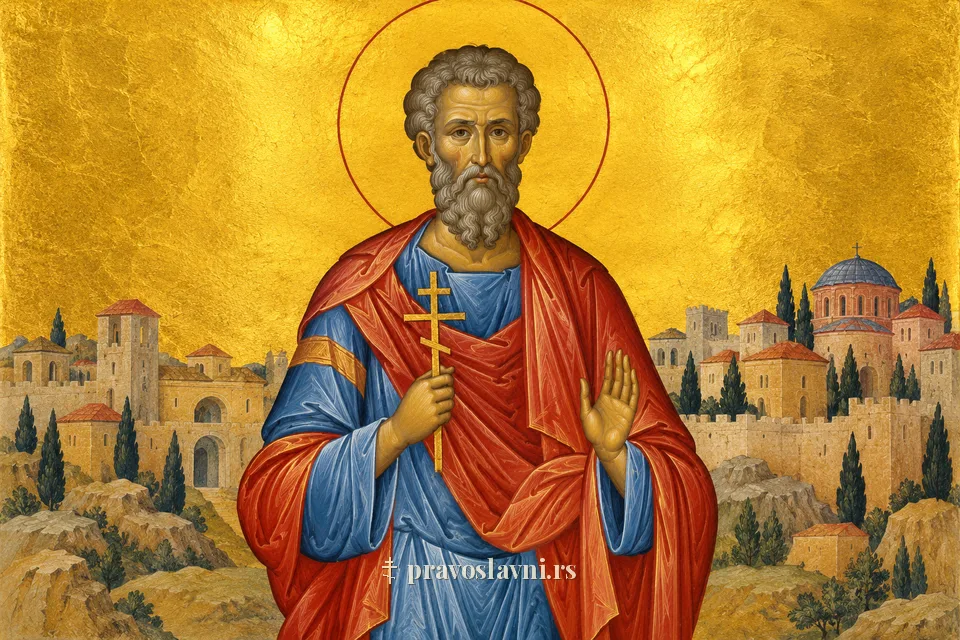
Holy Martyr Lucillian and those with him
What happenedThe old pagan priest Lucillian accepted Christ and in his old age suffered together with four youths and the virgin Paula.
Read the LifeOrthodox Calendar · 3 June according to the Julian calendar
Wednesday, 16 June 20273 June (according to the Julian calendar)What happenedThe old pagan priest Lucillian accepted Christ and in his old age suffered together with four youths and the virgin Paula.
Read the Life
No meat, dairy products, eggs or fish — oil and wine are allowed.
This is a recommendation — for your own fast, consult your priest or spiritual father.More about the fast →
Today the Church keeps the commemoration of a saint · not a Red Letter day.
More about the feast →
“Therefore, if anyone is in Christ, he is a new creation; old things have passed away; behold, all things have become new.”
— 2 Cor 5:17Among the martyrs of this day the eldest is Lucillian, who served idols all his life and in old age came to believe in Christ. He renounced the idols, was baptised and, according to his Life, began to instruct pagans and lead them to the faith. This stirred up Nicomedia, and so he was brought to trial, according to his Life before the governor Silvanus. Since he would not deny Christ, he was severely beaten and thrown into prison.
There he found four young men, Claudius, Hypatius, Paul and Dionysius, who were also imprisoned for Christ. Together they prayed, talked about God and chanted psalms, and the Life says that the old man encouraged them before the torments that awaited them. The same Life relates that the old man and the young men were thrown into a red-hot furnace and that they came out of it unharmed, because the fire grew cold and rain put it out.
After their tortures they were sent to Byzantium. There the aged Lucillian was crucified on a cross, and the young men were put to death by the sword.
The virgin Paula is commemorated with them as well. According to the Life, she was a wealthy orphan from a Christian family, who fed, clothed and cared for the prisoners in the gaol. When the martyrs had suffered, she took their bodies in the sight of all and buried them with honour, and so she herself was brought before the court. According to the Life, Silvanus first tried to work on her with sweet words and intimidation, and then ordered her to be beaten with rods. The same Life records that an angel of the Lord healed her and that she came out of the furnace unharmed. In the end, according to the Life, she was beheaded in Byzantium, on the spot where Lucillian had suffered, and from the Lord she received two crowns, that of virginity and that of martyrdom.
They suffered in the time of Emperor Aurelian, according to the Prologue between the years 270 and 275.
St Lucillian teaches that it is not too late for conversion even in old age, and St Paula that care for those who suffer is a work of love.
Lucillian was a priest of the idols, and he grew old in the service of the idols; the Life says that he served in the temples near Nicomedia. In deep old age he came to believe in Christ, renounced the idols and was baptised. According to the Life, from that time on he taught the pagans and brought many of them to the faith.
His conversion disturbed Nicomedia. He was accused before the authorities and brought to trial, according to the Life before Silvanus, the governor of Nicomedia. He would not renounce the faith, and so he was severely beaten and thrown into prison.
In the prison he found four young men who had been shut up there for the sake of Christ: Claudius, Hypatius, Paul and Dionysius. The old man and the young men spent their time together in prayer, devout conversation and the singing of psalms. The Life says that Lucillian encouraged them to go without fear to torments and to death. He who had once led people to the idols was now leading the young to Christ.
The Life also tells that the old man and the young men were thrown into a red-hot furnace and that they came out of it unharmed: the fire grew cool, and a great rain put it out. The pagans did not see in this a sign from God, but said that it was Christian sorcery.
After various tortures they were sent to Byzantium; the Life says that Silvanus condemned them to death. There the four young men were beheaded with the sword. Lucillian was crucified on a cross.
Together with these martyrs the virgin Paula is also remembered. The Life says that she was the daughter of Christian parents, an orphan and wealthy. Her money served her as a means of reaching the prisoners: for gold the guards would let her in to them, and she would bring the confessors food and clothing and tend them. She gathered up the blood of the martyrs and kept it as a holy treasure.
Paula did not hide the fact that she was showing honour to the martyrs: she took up their bodies in the sight of everyone and buried them worthily, and according to the Life she followed them as far as Byzantium and there laid the four young men in the grave. Because of this she herself was accused and tortured. The Life tells that Silvanus, when she returned to Nicomedia, first tried flattery and threats, and then ordered that she be beaten with rods. An angel of the Lord healed her wounds, and from the furnace into which she was thrown she came out unharmed. Finally, according to the Life, she was sent to Byzantium and beheaded on the spot where Lucillian had suffered. From the Lord she received two crowns, that of virginity and that of martyrdom.
They all suffered in the time of Emperor Aurelian, and the Prologue says that this was between the years 270 and 275.
The Life teaches that the faithful endurance of sufferings for Christ brings an eternal reward. Lucillian shows that it is not too late for conversion even in old age: an old priest of the idols became the teacher and companion of young martyrs. And Paula, who carried food to the prisoners and tended them, remains an example of mercy towards those who suffer.


