Saturday10July 202727 June (according to the Julian calendar)‹›
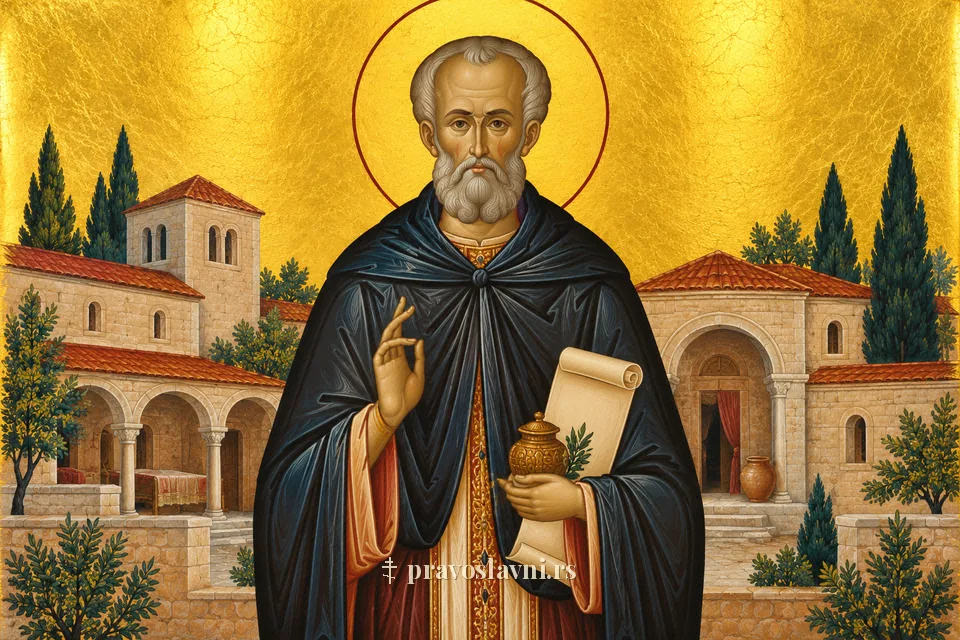
Illustration
Saint of the day
Venerable Sampson the Hospitable
What happenedVenerable Sampson, a physician from Rome, treated the sick in Constantinople free of charge and took in strangers, and for healing the emperor he asked only for a house for the poor.
St Sampson gave his knowledge and his home to the poor. He came from a wealthy and distinguished Roman house, and he devoted himself most of all to medicine, although he was well versed in Holy Scripture too. He treated the sick free of charge and, along with the medicine, gave them a word for the soul as well. According to his Life, after the death of his parents he set most of his slaves free and left Rome.
In Constantinople he lived in a modest house, open to strangers, the poor and the sick. The Patriarch, according to the Life against his will, ordained him a priest. When Emperor Justinian fell ill and the physicians did not know how to help, God pointed Sampson out to him in a dream. Sampson's touch was enough for the illness to vanish. He did not accept gold and silver; he asked nothing for himself, but only a roof for the poor. According to the Life, the emperor built a hospice for strangers and a hospital beside his house, and in it Sampson was like a father to those in need.
He reposed in peace in the year 530 and was laid in the church of the holy martyr Mocius, his kinsman. To many who called upon him he appeared even after his death. The Life records that the hospice remained whole in a great fire and that myrrh flowed from his tomb and healed many.
The teaching of the Prologue on this day: look at your own sins, and in others at their virtues.
Full Life
The wealth he left behind
Sampson came from a rich and distinguished Roman house; the Life records that he was said to be of imperial descent. According to the Life, when his parents died he gave most of the slaves their freedom, kept one servant with him, put on one single garment and left Rome. When the Emperor later offered him gold and silver, he refused, explaining that he had already left his treasure for the sake of Christ.
A physician without pay
He was an educated man, well versed in the Holy Scriptures too, and above all he devoted himself to medicine. The Life stresses that he did not study medicine in order to earn money, but in order to care for the poor for God's sake. He did not charge the sick, and along with the remedy he also gave them a word for the soul. In Constantinople he lived in a modest house, in which strangers and the poor found a roof, and the sick found care. The Patriarch ordained him a priest; the Life says, against his will.
He was also summoned to the Emperor. Justinian was tormented by an illness before which the physicians were helpless. After the Emperor had prayed, God pointed Sampson out to him in a dream — according to the Life, a radiant young man showed him a grey-haired, humble priest. The illness disappeared at a single touch from Sampson. According to the Life, he asked the Emperor not to humble himself before him, and he attributed the recovery to the Emperor's faith and hope in God.
The hospice for strangers
As his reward Sampson asked only for a roof for the poor. According to the Life, the Emperor built and endowed a hospice for strangers and a hospital next to his house. The Prologue says that there he was like a father to those in distress. The Life also records that he admonished the negligent stewards of the hospice, who did not care about the sick. When a fire, which had started near the church of Hagia Sophia, surrounded the hospice, it remained, according to the Life, unharmed, and eyewitnesses saw Sampson pushing back the flames.
Help after death
He reposed in peace in the year 530 — according to the Prologue, on 27 June (according to the Julian calendar). He was laid to rest in the church of the holy martyr Mocius, who was his kinsman. To many who called on him in trouble he appeared even after his death. According to the Life, myrrh flowed from his tomb and healed many. The Life lists those who were healed: the Emperor's shield-bearer Theodoret, the nobleman Leo, the imperial counsellor Bardas, the servant George, and Irene; sometimes he came to them together with Sts Cosmas and Damian.
The teaching of the Prologue for this day: let a man look at his own sins, and in others at their virtues, and let him weep for a neighbour who sins instead of bringing that neighbour's sin out into the open.