Saint of the day
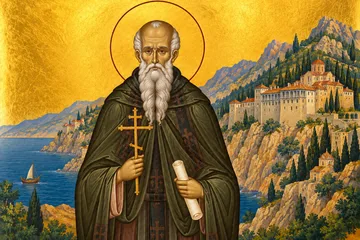
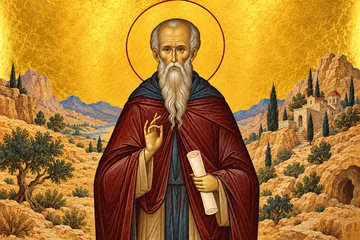
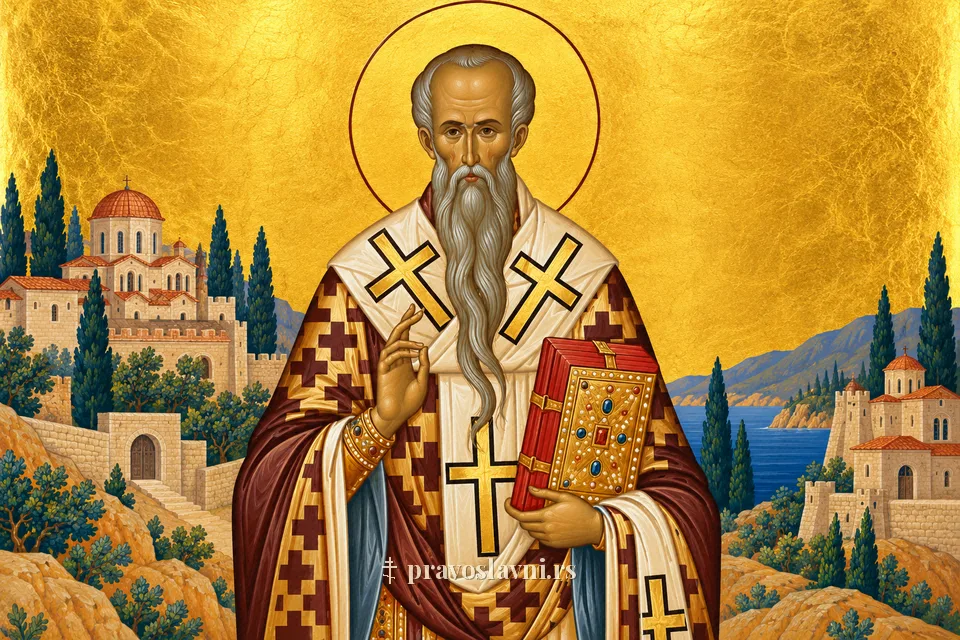
St Andrew of Crete
What happenedSt Andrew, who as a child began to speak after Holy Communion, became Archbishop of Crete and the author of the Great Canon.
Read the LifeOrthodox Calendar · 4 July according to the Julian calendar
Saturday, 17 July 20274 July (according to the Julian calendar)What happenedSt Andrew, who as a child began to speak after Holy Communion, became Archbishop of Crete and the author of the Great Canon.
Read the Life
You may eat meat, eggs, milk and dairy products, as well as any other food — but try to be moderate.
More about the fast →
Today the Church keeps the commemoration of a saint · not a Red Letter day.
More about the feast →
“He who eats My flesh and drinks My blood abides in Me, and I in him.”
— Jn 6:56Andrew of Damascus did not speak until he was seven years old. Speech came to him in church, when he received Holy Communion together with his parents. The hymn in the Prologue sees in this a sign that everything is in God's hands.
The Church remembers him above all for the Great Canon, the best known among his many works — homilies, hymns and canons. Through that canon Andrew has remained one of the great voices of repentance in the Church.
His ministry began in Jerusalem, where he came at the age of fourteen. According to the Prologue, he became a monk there in the Lavra of Venerable Sabbas the Sanctified and was an example even to the older monks. The Patriarch took him as his secretary, and when Patriarch Theodore of Jerusalem was unable to travel to the Sixth Ecumenical Council in Constantinople, convened against the Monothelites under Emperor Constantine the Bearded, he sent Andrew, then an archdeacon, to the council. There Andrew, by his zeal and wise word, helped Orthodoxy to be made firm; the Life also stresses his learning and his holiness. On his return, according to the Life, he cared for the poor, for travellers and for the sick.
Later he became archbishop in Crete. The faithful loved him, and he defended them from heresies. It is recorded that through his prayer the island was delivered from the Saracens; the Life tells that they besieged in vain Drumeos, the city in which the Christians had taken refuge with their archbishop, and that in the end they withdrew. According to the Life, when a drought came upon Crete, Andrew prayed and rain fell. According to the Prologue, the gentleness of his face and of his speech made people better.
He travelled to Constantinople for the last time. On the way back he said beforehand that he would not see Crete again, and he reposed on that journey.
The Prologue, in the words of Venerable Nilus of Sora, teaches that great works do not come about without suffering, but that God gives no one a burden heavier than his strength. The homily on the words of the Apostle Peter reminds us that the end of faith is the salvation of souls.
Andrew was born in Damascus, into a Christian family; the Life calls his parents virtuous. Speech came to him only at the age of seven, and in a wondrous manner: until then he had not uttered a single word, but when he received Holy Communion in church with his parents, he began to speak. In its hymn for this day the Prologue explains it simply: everything is in God's hands, and so God gave speech even to a mute child. According to the Life, the boy then devoted himself to the study of the divine books.
At the age of fourteen he came to Jerusalem. According to the Prologue, he received the monastic tonsure in the Lavra of St Sabbas the Sanctified; the Life says that the Patriarch received him into the clergy. According to the Prologue, he was better than many older monks and served them as a model, and the Life praises his purity and gentleness. The Patriarch appointed him his secretary.
The Sixth Ecumenical Council, convened in Constantinople against the teaching of the Monothelites, was held under the Emperor Constantine the Bearded, according to the Prologue in the year 681. Theodore, Patriarch of Jerusalem, was not in a position to travel — the Life notes that Jerusalem was then under Muslim rule — and so he sent Andrew, who was then an archdeacon, to the council. There Andrew showed himself to be a wise and eloquent defender of the faith, full of zeal, and the Life also stresses his learning and holiness. He helped Orthodoxy to be firmly established. When he returned, the Patriarch, according to the Life, entrusted him with the care of the poor, of travellers and of the sick.
Later he became archbishop in Crete, according to the Life during the reign of Justinian II. The faithful came to love him, and he guarded them against heresies. It is recorded that through Andrew's prayer the island was delivered from the Saracens. The Life sets out that story in more detail: the Christians took refuge with their archbishop in the town of Drumeos, the Saracens kept it under siege in vain and at last withdrew. The same Life tells that, during the time of his archpastoral ministry, Crete was left without rain one year, and that the rain fell when Andrew prayed.
The Prologue writes of him that he was gentle in appearance and in speech, so that, “looking upon his face and listening to his words that flowed like honey, everyone was delighted and amended his ways.”
From Andrew the Church received a great many writings: homilies, hymns and canons, and, according to the Life, also hymns in honour of the Theotokos. Among all these works the best known is the Great Canon, through which Andrew has remained one of the great voices of repentance in the Church. On his way back from a journey to Constantinople he said beforehand that he would not see Crete again, and on that voyage he reposed.
The Prologue quotes the thought of St Nilus of Sora that great and useful works do not come about without suffering, but that God gives no one a burden heavier than his strength. The reflection on the wonders that God worked through Moses and Aaron in Egypt (Ex 7–10) and on Pharaoh's hardened heart calls us to repentance. The homily, on the words of the Apostle Peter (1 Pet 1:9), teaches that the end of faith is the salvation of souls.
The mouth that God opened at Communion Andrew used all his life to serve God and the Church.
Tsar Nicholas the Second was born on 6 May 1868 (according to the Julian calendar). He came to the throne in 1894 and was crowned in 1896 in the Dormition Cathedral of the Moscow Kremlin. Tsaritsa Alexandra Feodorovna was born in 1872 in Darmstadt, and they were married in November 1894. They had four daughters — Olga (1895), Tatiana (1897), Maria (1899) and Anastasia (1901) — and a son, Alexei (1904), the only heir. The royal couple was deeply devout. Nicholas regularly came to the divine services on feast days, kept the fasts, built churches and worked for the canonisation of Venerable Seraphim of Sarov. He abdicated the throne on 2 March 1917 (according to the Julian calendar). The family was then held in Tobolsk, and afterwards in Yekaterinburg. They suffered in the night between 3 and 4 July 1918 (according to the Julian calendar), together with Doctor Botkin, the lady-in-waiting Demidova, the cook Kharitonov and the valet Trupp. The Russian Church Abroad glorified them in 1981, and the Moscow Patriarchate entered them in the calendar in the year 2000
Separate page: Holy Russian Martyrs Tsar Nicholas II, Tsaritsa Alexandra and their children →
St Sava of Gornji Karlovac, whose baptismal name was Svetozar, was born on 6 July 1884 in Mol, of his father Stefan and his mother Jelisaveta. He went to school in Mol, then to the grammar school and the seminary in Sremski Karlovci, and he studied law in Belgrade. He was ordained deacon on Theophany 1909, and then priest on Savindan (St Sava's Day), and until 1927 he was the parish priest in Bašaid. In that year he became an official, and then the secretary, of the Holy Synod of the Serbian Orthodox Church. When he was left a widower, he was tonsured a monk in 1929 at the Monastery of Krušedol and became its archimandrite and abbot. He was consecrated bishop, as vicar of Srem, by Patriarch Varnava on 30 September 1934 in Sremski Karlovci. He was elected Bishop of Gornji Karlovac with his seat in Plaški and was enthroned on 4 September 1938 He was arrested on 17 June 1941, together with thirteen respected Serbs from Plaški, and was killed in the same year; the exact circumstances of his death are not known. As Jovan Silaški remembered, he used to say: “I give my head, but I do not leave my people!” His commemoration is on 4 July (according to the Julian calendar).
Separate page: Hieromartyr Sava of Gornji Karlovac →
Venerable Martha was the mother of St Simeon of the Wonderful Mountain. According to her Life, she lived in Antioch, in the suburb of Daphne, and spent most of her time in church. The Prologue says that she wished to dedicate her whole life to God but, on the advice of St John the Forerunner, she obeyed her parents and married. Her days passed in prayer and service: at night she kept vigil in prayer, and she cared for the poor, the needy and the sick. She learned of her end a year in advance, in a vision of an angel. According to the Prologue, she reposed peacefully in the year 551 and was buried beside her son's pillar. Even after her repose she came to the faithful to instruct them, and to the sick to heal them.