Saint of the day
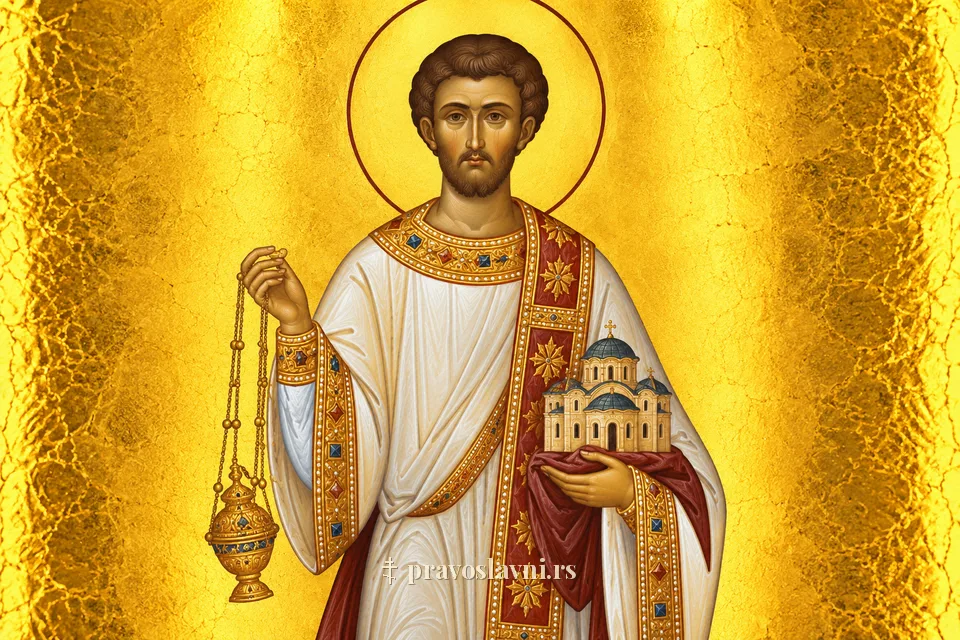
Holy Martyr and Archdeacon Lawrence
What happenedSt Lawrence, Archdeacon of the Church of Rome, suffered for Christ under the Emperor Decius, after he had shown the poor as the treasure of the Church.
Read the LifeOrthodox Calendar · 10 August according to the Julian calendar
Monday, 23 August 202710 August (according to the Julian calendar)What happenedSt Lawrence, Archdeacon of the Church of Rome, suffered for Christ under the Emperor Decius, after he had shown the poor as the treasure of the Church.
Read the Life
No meat, dairy products, eggs, fish or oil — food cooked in water.
This is a recommendation — for your own fast, consult your priest or spiritual father.More about the fast →
Today the Church keeps the commemoration of a saint · not a Red Letter day.
More about the feast →
“In everything give thanks; for this is the will of God in Christ Jesus for you.”
— 1 Thess 5:18Lawrence was archdeacon of the Church of Rome under Pope Sixtus, the keeper and steward of the Church's property. According to the Life, he was born in Spain and grew up in Rome.
When Emperor Decius set out to wipe out the Christians, Sixtus was put to death together with the deacons Felicissimus and Agapitus. Lawrence wished to go with him, and Sixtus comforted him, saying that he would soon follow him. Lawrence put the affairs of the Church in order and took the valuables to the house of the widow Cyriaca, whom he healed of a severe headache. To the blind Crescentian he restored his sight.
In prison he healed the blind prisoner Lucillus and baptised him, and that miracle also converted the gaoler Hippolytus. According to the Life, when the prefect Valerian demanded the treasure of the Church, Lawrence brought before him the poor, widows, children without parents and the sick, and said that this was the treasure of the Church.
He called on the emperor to renounce the false gods, and then he was tortured. While he was suffering, the soldier Romanus came to believe, and he was then put to death. At last they laid him on an iron gridiron and kindled a fire beneath it. Lawrence gave thanks to God to the end; according to the Life, at the end he said: “I thank You, Lord Jesus Christ, that You have counted me worthy to enter in at Your gates!” He gave up his soul to God, according to the Prologue in the year 258. Under cover of night Hippolytus carried the martyr's body to Cyriaca's estate and buried it there with honour.
His treasure was the poor, and he found his strength in suffering in thanksgiving to God.
Lawrence, according to the Life, was born in Spain and grew up in Rome, a Christian from childhood. He was archdeacon of the Church of Rome under Pope Sixtus, the keeper and steward of the Church's property. Sixtus was a native of Athens and before he became a Christian he had been a philosopher, and on the throne he succeeded Pope Stephen, after Stephen had been killed.
Emperor Decius resolved to wipe out the Christians. Sixtus was brought to trial and executed together with his deacons Felicissimus and Agapitus. Lawrence asked him why he was departing without his deacon; the Life gives his words: “Father, take me with you, your son.” Sixtus comforted him, saying that he would soon follow him, according to the Life after three days and through greater trials.
Lawrence put the affairs of the Church in order and carried the Church's valuables to the house of the widow Cyriaca; the Life says that he sought out the clergy who were in hiding and the poor and helped them. By the laying on of hands he healed Cyriaca of a severe headache, and he restored sight to the blind Crescention.
In prison he healed the blind prisoner Lucillus and baptised him. That miracle converted the gaoler Hippolytus himself as well, who, according to the Life, received baptism together with nineteen members of his household. Hippolytus is commemorated separately on 13 August (according to the Julian calendar). The Life records Lawrence's words to Hippolytus: “Do not weep for me, but rejoice.”
According to the Life, the prefect Valerian demanded the Church's treasure from him. Lawrence answered in his own way: he brought those for whom the Church cared, the destitute and the widows, children without parents, the blind, the lame and the sick, and said: “Behold, in these whom you now see the eternal treasures are laid up, as in vessels.”
He called on the Emperor to renounce the false gods, and then he was tortured. While he was suffering, the soldier Romanus came to believe in Christ, and he was then executed; the Life says that he saw a radiant young man beside Lawrence and that he was baptised. Finally they laid him on an iron gridiron and kindled a fire beneath it. In his suffering Lawrence gave thanks to God and mocked the Emperor's idolatry. According to the Life, at the end he said: “I thank You, Lord Jesus Christ, that You have made me worthy to enter Your gates!” He gave up his soul to God, according to the Prologue in the year 258.
Under cover of night Hippolytus carried the martyr's body to Cyriaca's estate, where it was laid with honour in a cave; according to the Life, the Liturgy was served by the presbyter Justin. The Life adds that Sixtus was buried in the cemetery of Callistus, the deacons in that of Praetextatus, and that Hippolytus suffered three days after Lawrence.
Lawrence's treasure was the poor, and he found his strength in suffering in thanksgiving to God.


