Tuesday07September 202725 August (according to the Julian calendar)‹›
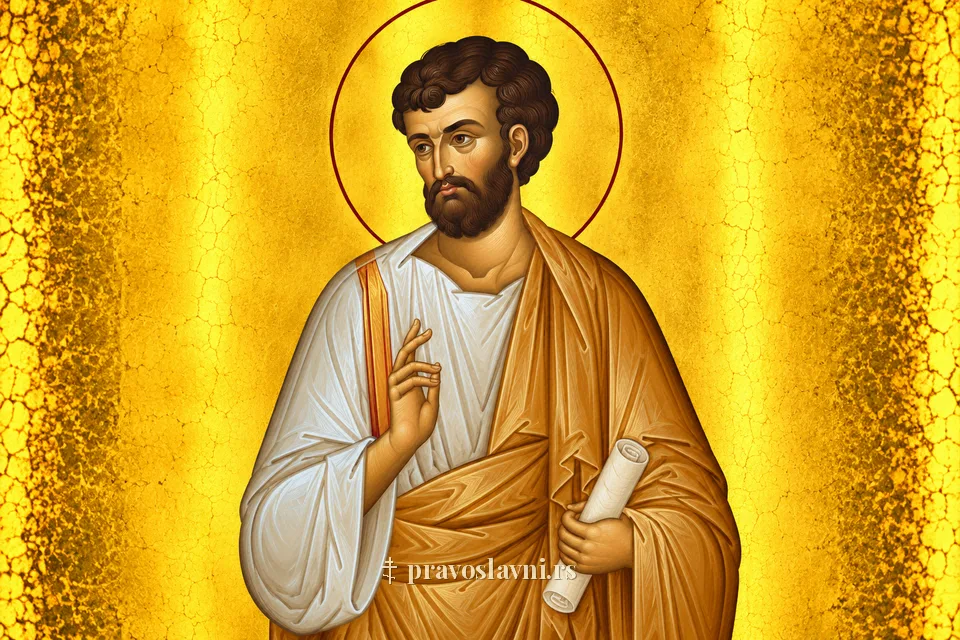
Illustration
Feast of the day
Translation of the Relics of the Holy Apostle Bartholomew
What happenedThe lead coffin with the relics of the Apostle Bartholomew, cast into the sea, did not sink but, by God's Providence, floated to the island of Lipari.
One day on the shore of the island of Lipari Bishop Agathon, the priests and the faithful gathered to welcome an unusual ship: a lead coffin with the relics of the Apostle Bartholomew. He had learned of its coming through a revelation, and the Life says that the apostle himself appeared to him.
That coffin had travelled a long way. The apostle suffered in Armenia at the hands of pagans, and the Christians laid his body in a lead coffin. At the tomb, as the Prologue and the Life record, many healings took place, and so many people turned to Christ. The enraged pagans threw the coffin into the sea, together with four coffins of other martyrs. But the coffins did not sink; instead, by God's providence, they sailed like ships. The Life says that the heavy lead became light, and that the martyrs' coffins accompanied the apostle's as a guard of honour. The coffins then parted, and the apostle's arrived at the island of Lipari.
The relics were carried into the church with chanting, and many of the sick were healed. There they remained until the time of Emperor Theophilus the iconoclast. When the Muslims attacked the island, the relics were translated to Benevento; the Life says that this was done by Sicard, the prince of Benevento, who sent sailors from Amalfi to fetch them.
Thus what was meant to vanish in the depths of the sea became a blessing for many. God keeps His saints even after their death, and through their prayers the faithful receive help.
Full Life
The tomb that troubled the pagans
The Apostle Bartholomew suffered for Christ in Armenia, at the hands of pagans; the Prologue says that he was crucified. This day is not his principal feast, but the commemoration of the translation of his relics.
The Christians took the body of the apostle and laid it in a leaden coffin. The tomb did not remain quiet: many miracles took place at it, especially healings of the sick, and many who had not believed turned to Christ. This enraged the pagans — the Life says, their priests — so they threw the coffin into the sea, and with it four coffins containing the relics of other martyrs.
A journey that no man guided
The coffins did not sink. By the providence of God they sailed over the sea like ships. The Life adds that the heavy leaden coffin became light and that two of the martyrs' coffins sailed on its right side and two on its left, as though paying honour to the apostle. According to the Life, the journey led them through the Bosphorus, the Propontis and the Hellespont, across the Aegean and the Ionian Sea to Sicily, past Syracuse, and then westwards, towards the Lipari Islands.
There the coffins parted. Those of the martyrs came to rest on various shores, among them in Calabria, in Messina and in Sicily, while the apostle's reached the island of Lipari. The Life says that everyone marvelled at how a leaden coffin had travelled so great a distance, for it was guided not by human power, but by the power of God.
The welcome on the shore
Agathon, the Bishop of Lipari, learned of that arrival through a revelation; the Life says that the apostle himself appeared to him. The priests and the faithful of the island went down to the seashore with him, and the coffin was welcomed with great joy. According to the Life, he greeted the apostle with the words: “Welcome, welcome, O apostle of the Lord!” He addressed the island, as his Life records, with the question: “From where, O Lipari, has such priceless wealth come to you?”
The relics were carried into the church with chanting; the Prologue says, into the church of St Bartholomew. Many sick people received healing there, and the Life records that the relics gave forth myrrh.
From Lipari to Benevento
The relics remained on the island of Lipari until the time of Emperor Theophilus the Iconoclast; the Prologue gives about the year 839. When the Muslims threatened the island — the Life calls them Hagarenes and says that they did in fact capture the island — the relics were translated to Benevento. The Life remembers that Sicard, the Prince of Benevento, sent sailors from Amalfi to fetch them, that he went out by sea to meet them with the bishop and the people, and that he laid them in the great church of Benevento. Since then, according to the Life, the feast of the translation has been celebrated on 25 August (according to the Julian calendar).
God keeps the bodies of His saints. What the enemies threw into the sea so that it would vanish became a blessing for others: the faithful received the relics with joy, and through the prayers of the apostle they received healing.
Other saints of the day
Holy Apostle Titus
St Titus was born on Crete and is numbered among the Seventy Apostles. According to his Life, he came from distinguished pagan parents; he studied Greek wisdom and poetry, but he lived in purity, and so St Ignatius the God-bearer calls him a virgin. A dream, which according to his Life was preceded also by a voice from heaven, directed him to the book of the Prophet Isaiah, and from that time on Greek wisdom could no longer satisfy him. With other Cretans he went to Jerusalem; there he listened to Christ, saw His miracles and, while still young, clung to Him with his whole being. He was baptised by the Apostle Paul, whom he served as a son in the work of the Gospel; in his epistles Paul calls him his son (Tit 1:4) and his brother (2 Cor 12:18). He travelled a great deal with Paul, and his Life says that he carried his epistles, for example to Corinth, and that he went to Dalmatia. Paul appointed him Bishop of Crete; according to his Life, his seat was in Gortyna. He was in Rome when Paul suffered, he buried his teacher with honour and returned to Crete. His Life records that at his prayer the idol of Diana fell and was shattered and that the almost completed temple of Zeus collapsed. As bishop he brought many of the Cretan pagans to baptism and guided the Church with wisdom right up to old age; he lived for ninety-four years. His Life says that before his end angels came for his soul and that at that hour he shone with light.