Saint of the day
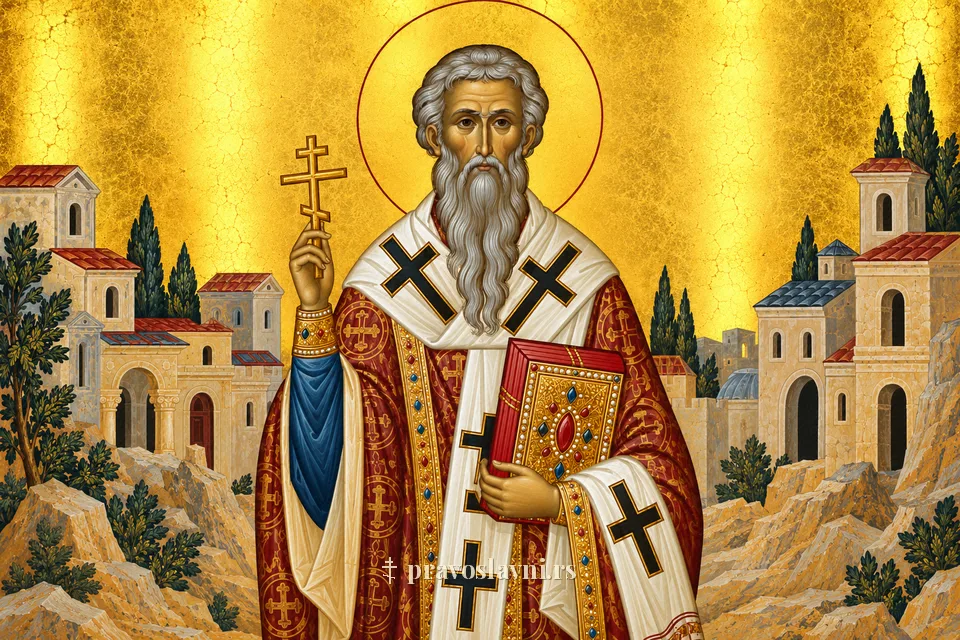
Hieromartyr Cornelius
What happenedThe Roman centurion Cornelius, after an angel appeared to him at prayer, received baptism from the Apostle Peter as the first Gentile in the Church.
Read the LifeOrthodox Calendar · 13 September according to the Julian calendar
Sunday, 26 September 202713 September (according to the Julian calendar)What happenedThe Roman centurion Cornelius, after an angel appeared to him at prayer, received baptism from the Apostle Peter as the first Gentile in the Church.
Read the Life
You may eat meat, eggs, milk and dairy products, as well as any other food — but try to be moderate.
More about the fast →
Today the Church keeps the commemoration of a saint · Sunday — a festive day · 14th Sunday after Pentecost – Sunday before the Exaltation of the Cross; Forefeast of the Exaltation of the Cross.
More about the feast →
“A devout man and one who feared God with all his household, who gave alms generously to the people, and prayed to God always.”
— Acts 10:2When in a pagan city the temple of the idols collapsed, and the wife and son of the governor Demetrius were left beneath the ruins, the Christian bishop Cornelius was lying bound in prison. His Life says that an angel freed him from his chains, that Cornelius prayed over the ruins and that the mother and son came out alive. The people shouted: “Great is the God of the Christians!” Cornelius, as the Prologue and his Life record, baptised Demetrius and 277 other people.
That bishop had once been a Roman centurion in Caesarea of Palestine. According to his Life, he was devout with all his household, gave alms and prayed constantly. An angel told him during prayer to send for Peter in Joppa, and Peter at the same time learned in a vision that he must not call unclean what God has cleansed. The apostle came, preached, the Holy Spirit came down upon those who were listening and Cornelius was baptised with his household. In this way he became the first pagan in the Church; the Prologue notes that before that there were those who considered the Church to be only Jewish.
He became a companion of Peter and a bishop, and according to the Prologue the apostle sent him among the pagans, and there he suffered much for Christ. His Life says that Cornelius knelt down in the temple of the idols facing the east, and that the temple collapsed at his prayer.
When in deep old age God revealed to him the hour of his death, he left instructions for the faithful and reposed in peace; his Life records that a voice from heaven called him to the crown of righteousness. His tomb was later forgotten, until the saint appeared to Bishop Silvanus of Troas and asked for a church. According to his Life, the relics were found incorrupt and fragrant, and many miracles flowed from them. His Life also remembers the painter Encratius, who cursed the saint because he was unable to paint his face, and then fell from the ladder; Cornelius appeared to him and healed him, and the painter repented.
God sees virtue even before a man comes to know the faith, and He calls the sincere to the truth.
Cornelius was a Roman officer, a centurion in Caesarea of Palestine; his Life says that he was serving there shortly after the Ascension of Christ. The Acts of the Apostles (Acts 10:1–2) remember him as a God-fearing man, devout together with all his household, who gave alms and prayed without ceasing.
His Life says that the apostle too was praying at that same time. At noon, on the roof of a house, Peter was at prayer, and three times he saw a sheet coming down from heaven with all kinds of animals in it, and he heard that a man must not call unclean what God has cleansed. And to the centurion, during his prayer, an angel announced that his prayers and his alms were pleasing to God, and commanded him to send to Joppa for Simon, who is called Peter.
Led by the Holy Spirit, Peter came to the house of Cornelius. According to his Life, the centurion fell down at his feet, and the apostle raised him up. While Peter was preaching Christ, the Holy Spirit came down on all who were listening, and Cornelius was baptised with all his household. The Prologue, referring to the tenth chapter of the Acts of the Apostles, records that he was baptised by Peter after a revelation from heaven.
The significance of that baptism was great: Cornelius is the first Gentile who entered the Church. The Prologue notes that before this there had been those who considered the Church to be Jewish only, meant for the circumcised.
The baptised centurion renounced everything that he had and became Peter's companion, and the apostle made him a bishop. His ministry took him to a certain pagan city. The Prologue says that Peter sent him there, while his Life says that, as they were travelling with Timothy, the matter was decided by a lot, which fell upon Cornelius.
The city was governed by Demetrius, a philosopher and a hater of Christians. His Life says that he threatened him with tortures if Cornelius would not offer sacrifice, and the Prologue records that the saint endured many insults and torments there for Christ. When they took him to the temple of the idols, Cornelius knelt down facing the east and prayed, and an earthquake brought down the temple together with the idols.
Under the ruins, according to his Life, there remained Demetrius's wife Evanthia and his son Demetrian, while Cornelius was bound and left in prison overnight. The slave Taleton reported that the wife and the son were dead, but the chief priest Barbates reported that he had heard them alive, glorifying the Christian God. An angel freed Cornelius from his fetters, and Demetrius found him walking freely about the prison and asked him for help. The saint prayed over the ruins, the place opened, and the mother and the son came out unharmed. The people, according to his Life, cried out: “Great is the God of the Christians!”
Cornelius then baptised Demetrius and 277 other people; his Life says that among them were Demetrius's wife, his son and his whole household. According to his Life, he remained in the city for a long time, converted many, and ordained the distinguished Eunomius a presbyter.
When he was already a very old man, God revealed to him when he would die. Before they parted, the Christians, at his invitation, received instruction and a prayer from him. His Life records that a voice from heaven called him: “Cornelius, come to Me, for behold, a crown of righteousness has been prepared for you.” He reposed in peace and, according to his Life, was buried near the ruins of the temple, and healings took place at his grave.
In time the grave fell into oblivion; his Life says that it became overgrown with thorns. The saint then appeared to Silvanus, Bishop of Troas, revealed to him where he lay and asked that a church be built. According to his Life, the relics were found incorrupt and fragrant, and during the procession the coffin moved of its own accord and came to rest in the church, to the right of the altar; the pagans who saw this came to believe. Many miracles flowed from the relics.
His Life also remembers the painter Encratius, whom Bishop Philostorgius invited to paint the church. Since he could not manage to paint the face of the saint, Encratius cursed him and fell from the ladder, and lay at the point of death. The saint appeared to him and healed him, and the painter repented and painted the icon just as he had seen him.
God does not overlook virtue even in one who has not yet come to know the faith, but calls the sincere to the truth. St Cornelius helps the faithful even after his death, and God forgives those who repent.


