Saint of the day
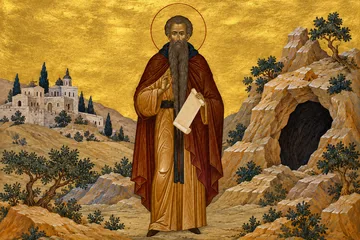
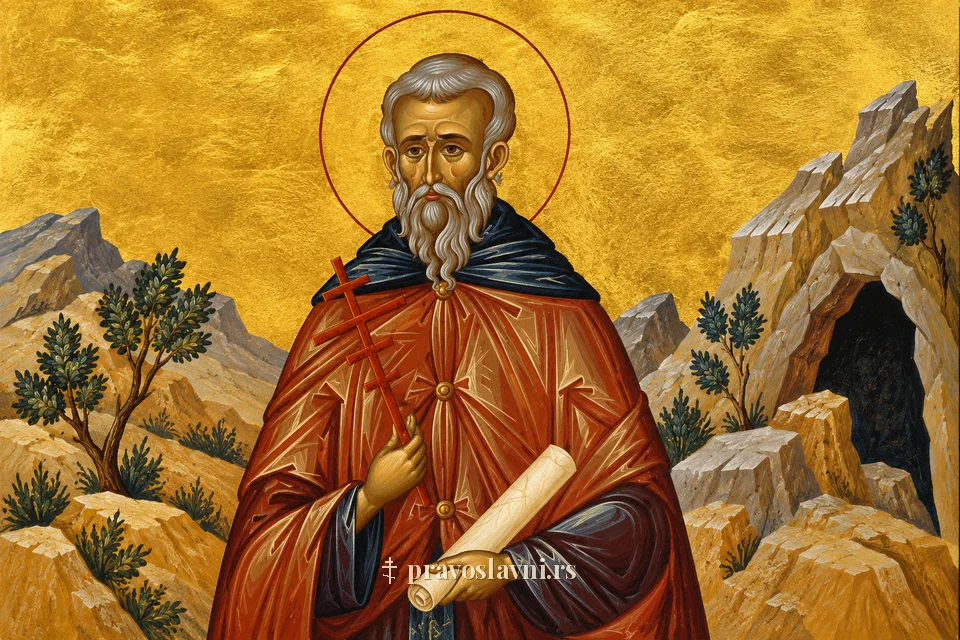
Venerable Chariton the Confessor
What happenedA confessor who survived torture under the Emperor Aurelian and then founded three monasteries in the desert.
Read the LifeOrthodox Calendar · 28 September according to the Julian calendar
Monday, 11 October 202728 September (according to the Julian calendar)What happenedA confessor who survived torture under the Emperor Aurelian and then founded three monasteries in the desert.
Read the Life
You may eat meat, eggs, milk and dairy products, as well as any other food — but try to be moderate.
More about the fast →
Today the Church keeps the commemoration of a saint · not a Red Letter day.
More about the feast →
“For He shall give His angels charge over you, To keep you in all your ways.”
— Ps 91:11Chariton lived in Iconium, a city that remembered the preaching of the Apostle Paul and the courage of St Thecla. He was known as the foremost among the Christians there, and the Prologue says that the spirit of Thecla lived in him.
When the Emperor Aurelian ordered that Christians be turned to the idols by force, Chariton was among the first to be brought before the court. He did not weigh his words: the idols are demons, and he serves the one living God. He called himself a disciple of St Thecla. They beat him so badly that, according to the Prologue, he had to be carried to the prison. But God, according to his Life, healed him quickly, and at the next trial he was bolder still. Then the emperor was killed, and his successor set the Christians free.
Chariton set out on pilgrimage to Jerusalem, but just outside the city he was captured by robbers. They left him bound in a cave, meaning to deal with him on their return. The Prologue records that a snake poisoned the wine they kept in the cave, so that when they came back and drank, not one of them survived. The treasure they had plundered Chariton, according to his Life, gave away to the needy, and with what was left he built a monastery. The robbers' cave became a church, and around it grew up the monastery of Pharan.
Monks kept coming one after another, while he longed for silence and fled ever deeper into the desert. Everywhere they found him, and so two more monasteries came into being. The last one, Souka, is called the Old Lavra by the Greeks. In the end he settled in a cave high up on a mountain, where, according to his Life, water flowed out of the dry rock at his prayer.
Before his death he gathered the brethren of all three monasteries. When they asked him where they should bury him, he answered: “Give dust to dust wherever you wish” (the Life). He reposed, according to the Prologue, in deep old age, in the year 350. The Prologue also attributes to him the rite of monastic tonsure.
Chariton shows us that the life which God preserves for us should be given as a gift to others, and that even the place of greatest danger can be turned into a place of prayer.
Chariton lived in Iconium, in Asia Minor. That city remembered the preaching of the Apostle Paul and it remembered St Thecla, who showed there that she was ready to die for Christ. The Prologue links Chariton with her in particular: the spirit of Thecla lived in him. He was a man of high repute, and everyone in the city knew him as the foremost among the Christians.
When the Emperor Aurelian ordered that Christians be turned to the idols by force and that the disobedient be put to death, the governor began with the most distinguished. That is why Chariton was among the first to stand before the court in chains.
Chariton did not weigh his words. He said that what the emperor worshipped were not gods but demons, and that he himself served the one living God, the Creator of the world. The governor, according to his Life, at first tried to persuade him gently, but Chariton stood his ground. He called himself a disciple of St Thecla and recalled the Apostle's word: “Who shall separate us from the love of God?”
Then the beatings began. His Life passes on his answer to the torturers: he would rather “die a thousand times for the Saviour” (the Life) than live in the service of idols. The Prologue says that they wounded him so badly that he could not walk to the prison by himself, but had to be carried. But God, according to his Life, quickly healed him. At the next trial he spoke even more boldly, and so he was tortured again and locked up again.
Then news arrived that Aurelian had been killed on a journey, and his successor set the Christians free. According to his Life, Chariton was sorry that his martyr's struggle had not ended in death. God, however, had something else in store for him: that one day he should come before Him not alone, but with a multitude of spiritual children.
Once free, he set out to venerate the tomb of Christ. But outside Jerusalem robbers lay in wait for him. Since they found nothing of value on him, they took him to their cave. There they left him bound, intending to deal with him when they came back. Chariton did not despair. He gave thanks to God and prepared himself for death.
Deliverance came in an unusual way. The Prologue records that a snake poisoned the wine which the robbers kept in the cave, and when they came back and drank, not one of them survived. Chariton was free. He did not keep the treasure that the robbers had plundered. According to his Life, he gave it away to those who needed it more, and with what was left he built a monastery on that spot. So the robbers' cave became a church, and around it the monastery of Pharan grew up.
Monks began to arrive one after another. Chariton gave them a strict rule: fasting, work, silence and a clean conscience. But when the monastery was in good order, he left it in the care of the best of the brethren, and he himself withdrew. Word of the holy elder was already spreading, and what he loved most was stillness.
He found a cave near Jericho, but monks came there too, and a second monastery was born. He withdrew still farther, into the trackless wilds, and once again they found him. So the third monastery, that of Souka, came into being, which the Greeks call the Old Lavra. The more he fled from glory, the more people sought him.
Towards the end of his life he withdrew to a tiny cave high up on a mountain. There was no water up there, and he did not want the brethren to suffer on his account by carrying it up the steep slope. His Life says that at his prayer water flowed from the dry rock.
Sensing that his end was near, he gathered the monks from all three monasteries. They asked him where they should bury him. “Give dust to dust wherever you wish” (the Life), he answered. When they pressed him, he chose the first monastery, that cave in which God had delivered him from death. He instructed them, blessed them, and peacefully gave up his soul to God. The Prologue records that he died in deep old age, in the year 350, and attributes to him the rite of monastic tonsure.
Chariton shows us that the life which God preserves for us should be given to others, and that even the place of greatest danger can become a place of prayer.
For a long time no one knew about Abbot Serafim and the monks Avakum and Mardarije, whose memory is linked with Medna near Mrkonjić Grad. Their story was preserved and handed on to people by Petra Topić, whose maiden name was Tegeltija. She was a little girl of seven when, as she testified, they first appeared to her. According to her visions, they had been monks of the monastery of Sts Peter and Paul at Trebinje and later suffered as martyrs. Not even her own parents believed her, and the world thought her strange, but for decades she did not give up on one thing: the relics must be found. In the summer of 2003 the priest Slavoljub Tegeltija approached Bishop Hrizostom of Bihać and Petrovac: Petra would like to tell the bishop what she had seen. The bishop received Petra and then visited Crkvište in Medna, where the monks had most often appeared to her, but he did not hurry — he left it to time to show whether this was from God. The answer came in the autumn of 2006, when the bishop himself saw the monks in a dream, and then he gave his blessing for the digging to begin. The earth revealed the relics of all three, and Abbot Vasilije, a witness of the excavation, spoke of their warmth and their golden colour. The relics were first kept in the Church of the Nativity of the Most Holy Theotokos, not far from there, and near the place where they were found a monastery was built, whose church was consecrated in 2011; the relics were translated to it in 2019 God does not forget His saints even when people forget them, and one faithful and persistent soul can give them back to her people.
Separate page: Venerable Martyrs of Medna: Abbot Serafim and the monks Avakum and Mardarije →