Saint of the day
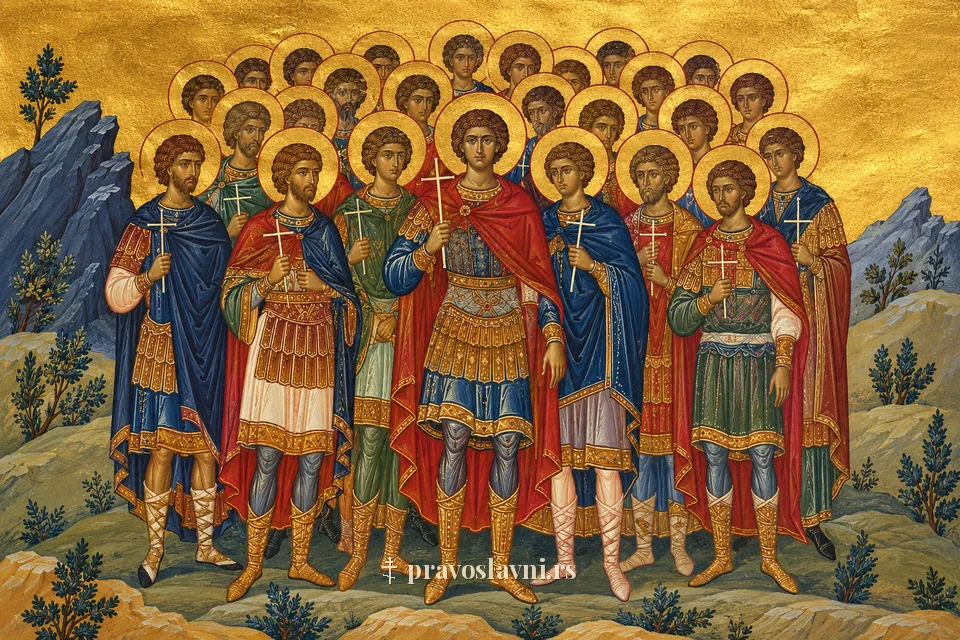
Holy Martyr Callistratus and those with him
What happenedA soldier from Carthage, a Christian from a family in which the faith had been handed down since the time of Christ; his courage converted 49 of his comrades.
Read the LifeOrthodox Calendar · 27 September according to the Julian calendar
Sunday, 10 October 202727 September (according to the Julian calendar)What happenedA soldier from Carthage, a Christian from a family in which the faith had been handed down since the time of Christ; his courage converted 49 of his comrades.
Read the Life
You may eat meat, eggs, milk and dairy products, as well as any other food — but try to be moderate.
More about the fast →
Today the Church keeps the commemoration of a saint · Sunday — a festive day · 16th Sunday after Pentecost.
More about the feast →
“Let your light so shine before men, that they may see your good works and glorify your Father in heaven.”
— Mt 5:16Callistratus, a soldier from Carthage in the regiment of the commander Persentinus, received the faith at home — according to the Prologue, he was a Christian from birth. The beginning of that family faith is bound up with Golgotha: a distant ancestor, Neocorus, a soldier in Jerusalem, became Christ's own there.
At the beginning of the fourth century Diocletian and Maximian commanded that Christians should either sacrifice to the idols or perish. In his regiment Callistratus was alone in the faith. He prayed at night, in secret, but one night in Rome he was overheard, and the commander learned about him. From Persentinus, according to the Prologue, Christians could expect no mercy. Callistratus nevertheless refused to sacrifice. He had nothing to defend himself with except patience and prayer.
After torturing him they threw him into the sea, in a leather sack. But God, according to the Prologue, preserved him, and his Life says that two dolphins carried him to the shore. Because of this, forty-nine soldiers came to Christ. The commander had them beaten and locked up, and the prison became a school of faith: Callistratus spoke to them about Christ, and their faith, according to the Prologue, no longer wavered.
The next day they all confessed Christ. According to his Life, they were thrown bound into a lake, but God preserved them, and a voice was heard from heaven: “Be brave, Callistratus, with your flock” (the Life). Another one hundred and thirty-five soldiers then joined them. Men wanted to put out one faith, and it only went on spreading.
Persentinus grew afraid of a mutiny. The end, according to the Prologue, came at night, by his order: Callistratus and his forty-nine companions were killed by the sword in the prison. This was in the year 304.
The promised church was built all the same. His Life says that it was built by the soldiers who had come to believe, on the spot where they buried the martyrs. The martyr had foretold it to the commander while they were still threatening him with the sea, and his word was fulfilled.
Callistratus shows us that even one man, quiet and steadfast in the faith, can kindle faith in many hearts.
Callistratus was a soldier from Carthage, in the regiment of the commander Persentinus. He did not have to seek the faith — he found it in his own home. The Prologue mentions that both his father and his grandfather were Christians, and it traces the roots of that faith all the way back to Jerusalem. Callistratus's ancestor Neocorus served there as a soldier in the time of Pilate and was a witness of Golgotha. The signs that accompanied the death of Christ made a believer of the soldier, and the Apostles instructed and baptised him. From him Christianity was handed down in the family from generation to generation.
It was the beginning of the fourth century, the time when Diocletian and Maximian wanted to wipe out Christianity. Their men went about the empire and demanded the same thing of every Christian: a sacrifice to the idols or his head.
In his regiment Callistratus was the only Christian. He tried to bring his comrades closer to Christ, but without much success. It was not easy for him. A soldier lives in his company and shares both tent and bread with his comrades, and yet in what mattered most to him Callistratus was alone. He prayed at night, when everyone had fallen asleep. One night in Rome someone heard him addressing Christ, and word of it reached the commander.
From Persentinus, according to the Prologue, Christians could expect no mercy. Before him Callistratus refused to offer sacrifice. According to his Life, he pointed out that as a soldier he had given no cause for any reproach — his only “guilt” was his faith in the true God. Not even threats of torture shook him.
His Life says that he was tortured cruelly, and that he asked God only for strength. Then Persentinus decided to drown him, so that he would not lead other soldiers to Christ as well. Callistratus was not afraid, but voiced his hope for something quite different: that he would bring those very soldiers to Christ, and that there, where they were threatening him, God would one day be worshipped in a church.
The sea was meant to finish the job. Callistratus was thrown into the deep in a leather sack. But the sea did not keep the martyr. The Prologue sees the hand of God in this, and his Life says that two dolphins carried him to the shore. They had wanted to see the end of one Christian, and instead they saw the beginning of many.
On that day Callistratus ceased to be alone. Forty-nine soldiers, according to the Prologue, came to Christ. Persentinus said that all this was sorcery, and had them beaten and locked up. So the prison became a school of faith. Callistratus spoke, the new Christians listened, and after that, as the Prologue records, there was no more wavering in their faith.
On the next day not one of them gave way: they all confessed that they were Christians. According to his Life, they were thrown bound into a lake, but there too God freed them and kept them safe. Then a voice was heard from heaven: “Be of good courage, Callistratus, with your flock” (the Life). A pagan statue also fell down, and one hundred and thirty-five more soldiers received Christ. The commander had wanted to put out one candle, and now hundreds of them were burning.
Persentinus now became afraid of a mutiny, and so he locked up Callistratus and the forty-nine once again. There they gave thanks to God together. The end, according to the Prologue, came at night, at the commander's order: Callistratus and his companions were killed with the sword in the prison. This was in the year 304.
The promised church was built all the same. His Life says that it was built by the soldiers who had come to believe, on the spot where they had buried the martyrs. Callistratus did not see it, but he had foretold it to the commander while they were still threatening him with the sea.
He had no sword in his hand when he defended the faith, but patience and prayer. Yet first the forty-nine followed him, and then many others too. Callistratus shows us that one man, quiet and steadfast, can set many hearts on fire by his faith.