Saints of the day
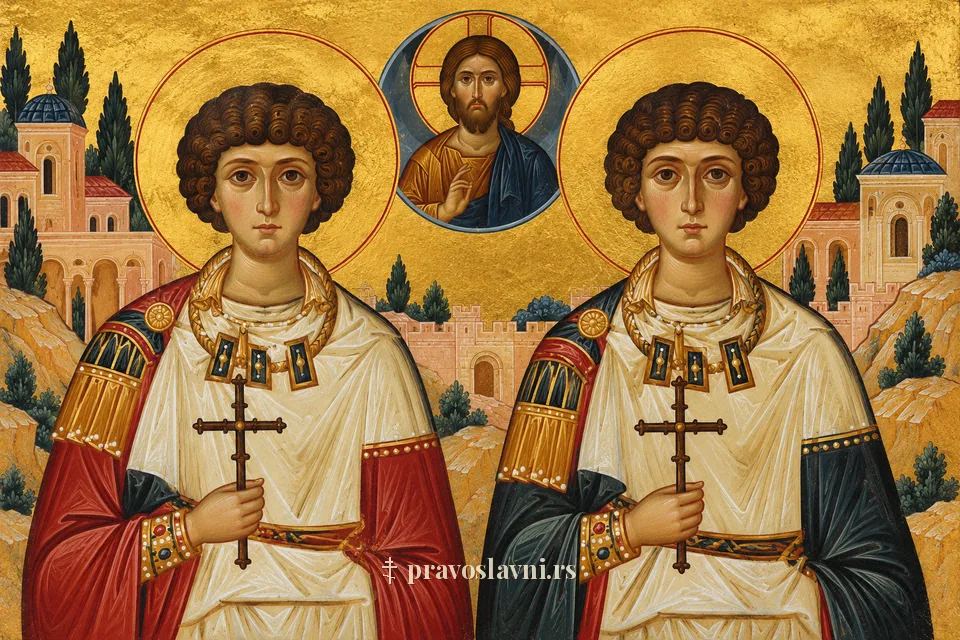
Srđevdan — Holy Martyrs Sergius and Bacchus
Holy Martyrs Sergius and Bacchus
What happenedTwo of the closest courtiers of the Emperor Maximian, who refused to offer sacrifice to idols; they suffered around 303.
Read the LifeOrthodox Calendar · 7 October according to the Julian calendar
Wednesday, 20 October 20277 October (according to the Julian calendar)Save your slava — you'll get a reminder a week and a day before.
Send a greeting card →What happenedTwo of the closest courtiers of the Emperor Maximian, who refused to offer sacrifice to idols; they suffered around 303.
Read the Life
No meat, dairy products, eggs, fish or oil — food cooked in water.
This is a recommendation — for your own fast, consult your priest or spiritual father.More about the fast →
Many families celebrate their Krsna slava (family patron saint's day) today
More about the feast →
“Greater love has no one than this, than to lay down one’s life for his friends.”
— Jn 15:13Sung at the Slava (family patron saint's feast) and on the saint's feast day.
O adornment of the passion-bearers of Christ and eyes of the Church of Christ, enlighten the eyes of our souls, O much-suffering Sergius and most glorious Bacchus: pray unto the Lord, that we may escape the darkness of sin and become partakers of the unwaning light, through your prayers, O saints.
Translation: pravoslavni.rs
Srđevdan is the feast of the holy martyrs Sergius and Bacchus. For many Serbian families it is the day of their Krsna slava (family patron saint's day).
For more on fasting on this day, see the guide “Fasting — simply explained”.
Few people at the court of the Emperor Maximian in Rome enjoyed such standing as the officers Sergius and Bacchus. The Prologue says that the emperor loved them, for they served him faithfully, and their Life says that many could reach the emperor only through them. And yet both of them were secretly serving another Master — they were Christians.
When envious men denounced them, the emperor, according to their Life, led the court to a sacrifice in the temple of Zeus, in order to see what they would do. The two of them did not go in. Brought in by force, they confessed, according to the Prologue, their faith in the one living God. The emperor, as the Prologue records, stripped them of all their marks of honour and sent them through Rome to be mocked, dressed in women's clothing. Not even a later promise of new honours made them waver.
The emperor therefore sent them to the East, where Antiochus was waiting for them, his governor, who, according to the Prologue, had obtained his very position thanks to them. On the way, their Life says, an angel encouraged them. Antiochus begged them to return to their former glory, and they, according to the Prologue, answered that they were seeking the Kingdom of Heaven and that for it they were ready even to die.
Bacchus was the first to breathe his last under torture, and according to the Prologue angels received his soul. In prison Sergius grieved for his friend, and comfort, according to their Life, came from Bacchus himself, who appeared to him after his death. Sergius refused even the last offer of Antiochus. According to the Prologue, he was driven in iron shoes all the way to Resafa in Syria, and their Life says that an angel healed his feet during the night. There, after praying, he was beheaded, around the year 303. A crown from Christ, the Prologue says, was waiting for him in Paradise, where his soul went to receive it together with Bacchus.
Christians from Sura wanted to carry away his body, but the grave, according to their Life, burst into flame. They understood that the martyr was to remain where he had suffered.
Sergius and Bacchus show that faithfulness to Christ stands above every earthly honour, and that not even death can break a friendship in Christ.
In Rome, in the time of Emperor Maximian, few stood closer to the throne than two officers — Sergius and Bacchus. The Prologue says that the Emperor loved them greatly, because they served him honourably and reliably. The Life adds that many people, when they needed something from the Emperor, knocked first of all on their door.
Yet they kept a secret: both of them believed in Christ. The Emperor hated Christians, and so, according to the Life, for a time they kept their faith to themselves. Their earthly master was dear to them, but the Lord in heaven was dearer still.
The envious saw through them all the same and informed the Emperor. Maximian did not want to ask them openly. According to the Life, he set a trap for them: he proclaimed a solemn sacrifice to Zeus and led the whole court into the temple. Sergius and Bacchus stayed outside. With that, everything had been said.
When they were brought by force before the Emperor, they made no excuses. According to the Prologue, they confessed that they worshipped only the living and true God. The Emperor then decided to shame them in public. The most distinguished officers of Rome, according to the Prologue, were stripped of all their marks of honour and paraded through the streets like buffoons, in women's clothing.
The shame did not break them. The Life says that the Emperor then tried another way — in a friendly manner, with promises of still greater honours. The answer stayed the same. What is more, the two martyrs spoke to the Emperor about Christ and called on him too to believe.
The Emperor did not wish to watch their suffering, so he sent them to Antiochus, his governor in the East. There was a particular bitterness in this: according to the Prologue, Antiochus owed his position precisely to their recommendation. The Life explains the Emperor's reckoning — he hoped that shame before their former protégé would break them.
They travelled in chains. The Life relates that on the first night an angel appeared to them and encouraged them. They continued the journey in fasting and the singing of psalms.
Antiochus, according to the Life, reminded them who had once served whom and begged them to return to the Emperor and to their old glory. According to the Prologue, they answered that earthly glory no longer interested them, for they were seeking the Kingdom of Heaven, and for it they were ready even to die.
Sergius was taken away to prison. Bacchus remained before the torturers and breathed his last under the beating. The Prologue says that angels received his soul and bore it up to the Lord. His body, left for the wild beasts, was, according to the Life, secretly taken at night and buried by Christians.
For Sergius, according to the Life, the news was hard to bear — he had lost the friend with whom he had shared every step. But Bacchus did not abandon him even after death: according to the Life, he appeared to him the very next night and promised that a shared reward was waiting for them in heaven. So this story reveals what is perhaps the most beautiful thing in it: a friendship which death does not cut short, but carries over into eternity.
Antiochus, according to the Life, tried once more, in the city of Sura. He reminded Sergius of the good old days and offered him a return to his rank. Sergius refused and even called on him to come to know the true God. The Prologue says that he was then driven, in iron shoes, all the way to Resafa in Syria. The Life adds that an angel healed his feet during the night, to the amazement of Antiochus.
At Resafa, after praying, he was beheaded, around the year 303. Together with Bacchus, says the Prologue, he was to receive a crown from Christ in Paradise — and that is where his soul went.
Christians from Sura afterwards tried to carry away the body. But the grave, according to the Life, blazed up with fire, and the sign was clear: Sergius was staying at Resafa. Later a church was built for him there, and, according to the Life, fifteen bishops translated the relics into it.
Sergius and Bacchus show that faithfulness to Christ stands above every earthly honour and that not even death dissolves a friendship in Christ.


