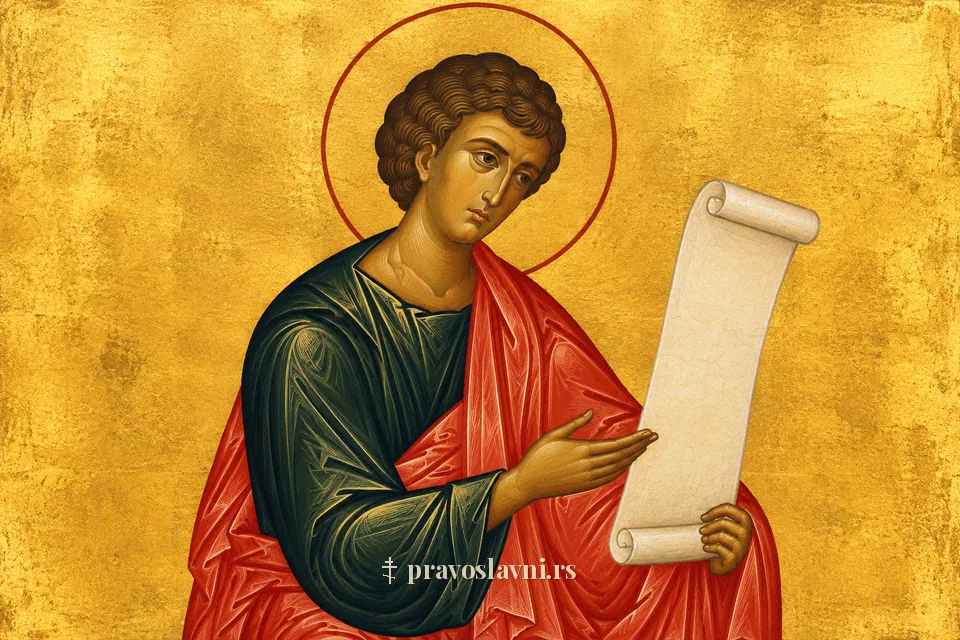
The Prophet Daniel was in the lions' den in Babylon, and his meal was brought to him by a man who had never seen that city — the Judean ploughman Habakkuk.
Habakkuk was of the tribe of Simeon, the son of Asaphat, and the gift of prophecy, according to his Life, he received from God as a reward for an upright life. He prophesied in the days of King Manasseh, first of the fall of Jerusalem and the carrying away of the people to Babylon. Nebuchadnezzar's campaign forced him to flee to the land of the Ishmaelites, and after his return to Judea he lived by tilling the soil.
One day, as he was taking a meal to the labourers in the field, an angel of the Lord sent him with that meal to Babylon, to Daniel, whom King Cyrus had thrown to the lions. “Lord, I have never seen Babylon, and I do not know where the den is,” he answered, as the Prologue records. Carried by the angel, in the twinkling of an eye he found himself above the den, fed Daniel and found himself once more in his own field (Dan 14:33–36).
In his later prophecies he saw Jerusalem free and foretold the time of Christ. God rewards virtue and cares for His faithful in wondrous ways.
Full Life
The Prophet Daniel was in the lions' den in Babylon, and his food was brought to him by a man who had never seen that city — the Judean ploughman Habakkuk.
A Prophet from the Tribe of Simeon
Habakkuk's father was called Asaphat, and his lineage was that of Simeon. The gift of prophecy, according to his Life, God gave him as a reward for an upright life. His prophetic ministry fell in the days of King Manasseh: the Prologue places it about six centuries before Christ, while his Life, which also mentions Manasseh's son Amon, places it in the years 660–611 before Christ.
His early prophecies concerned the fall of Jerusalem and the carrying away of the people to Babylon. Nebuchadnezzar's campaign forced him to flee to the land of the Ishmaelites; only after his return to Judea did he begin to live by tilling the soil.
A Meal for the Lions' Den
An angel of the Lord came upon him on his way to the field, with a meal for the labourers, and sent him with that meal to Babylon, to Daniel. Daniel, according to the Prologue and the Life, had been thrown to the lions by King Cyrus because he would not bow down to idols. The Prologue gives Habakkuk's answer thus: “Lord, I have never seen Babylon, and I do not know where the den is.”
What follows is told by the supplementary, Greek part of the Book of the Prophet Daniel: in the twinkling of an eye Habakkuk, carried by the angel who held him by the hair, found himself above the den (Dan 14:33–36). He called out to Daniel in the words that the Prologue records — “Daniel, Daniel, take the meal which God has sent you” — and when Daniel had eaten the meal, Habakkuk, by the angel's hand, found himself once more in his own field in Judea.
Hope of Deliverance
In his later prophecies Habakkuk looked beyond the captivity: he saw Jerusalem free and foretold the time of Christ. The place of his grave was called Keilah; there he was laid to rest as a very old man, and only in the time of Emperor Theodosius the Great were his relics found.
Habakkuk's life shows that God rewards virtue and cares for His faithful in wondrous ways: through a humble ploughman He fed Daniel in the lions' den.
Other saints of the day
Holy Tsar Uroš
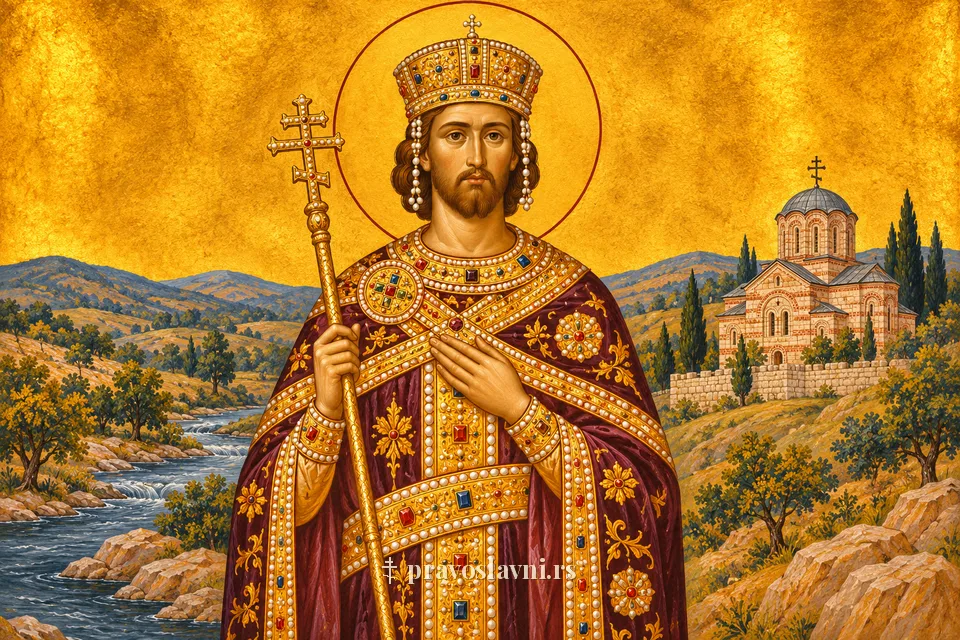
The holy Tsar Uroš was the son of Tsar Dušan and Tsaritsa Jelena, and his Life says that he was born in the year 1337, after his parents had had no children for about five years. In the year 1346, at the council in Skopje, Dušan was crowned tsar, and Uroš was proclaimed king and co-ruler. When Dušan died suddenly on 20 December 1355, the state passed to Uroš, a young man who had not yet reached the age of nineteen. The Serbian empire was crumbling away during his reign; he did not wish to subdue the powerful and disobedient nobility by force of arms, for by nature he was peaceful, humble and devout. His Life records that he gave the customs revenues of Dubrovnik to monasteries in Prizren, on Sinai and in Jerusalem, and that he made gifts to Hilandar and other monasteries of the Holy Mountain. Around 1365 Vukašin Mrnjavčević took the title of king and the place of co-ruler. About the death of Uroš the sources do not agree. The Prologue records that Vukašin killed him, on 2 December 1367, in the thirty-first year of his life. His Life places his death on 2 or 4 December 1371, after Vukašin perished at the Marica, while only Patriarch Pajsije of Janjevo and some chronicles speak of a murder by Vukašin's hand, whereas elsewhere Vukašin is named as an indirect cause of the death of Uroš. He was buried in the Monastery of the Dormition at Nerodimlje, near present-day Uroševac, and his Life says that after about 211 years a shepherd found his relics, which were fragrant and from which healings came about. The monk Hristifor translated them on 11 May 1705 to the Jazak Monastery on Fruška Gora, and on 14 April 1942, so that the Ustaše would not destroy them, they were moved to safety in Belgrade; the Prologue adds that their place is in the Cathedral Church, beside Prince Lazar and Despot Stefan Štiljanović. The Prologue ends his story with the thought that, after his violent death, God glorified him.
According to his Life, Venerable Joanikije of Devič came from Duklja, where he was born in the second half of the fourteenth century into a well-to-do and devout family, in the last years of the Serbian empire, before the Turks came to rule. He found his first dwelling in the wilderness in the gorge of Crna Reka on the Ibar: the cave in which he prayed later became a church dedicated to the Archangels. To escape the crowds of pilgrims he withdrew to Drenica, to the forest of Devič, after which the monastery was later named, and he lived in the hollow of a beech tree. There he built the church of the Entry of the Most Holy Theotokos into the Temple, and so he is regarded as the first ktetor (founder) of Devič; the second ktetor, according to his Life, was Despot Đurađ Branković, grateful because the saint had healed his daughter Mara. Since 2 December 1430, when Joanikije reposed, his grave has been kept by a small chapel, which is still standing today. His Life ascribes to him power over unclean spirits and records healings at his grave. The same Life also remembers punishments for desecration: a Hungarian officer who in the First World War, mocking the holy place, ordered the gravestone to be smashed, died that very same day, and his troops scattered. In the Second World War the Balli Kombëtar fighters destroyed the greater part of the monastery, but the chapel, according to his Life, they did not manage to pull down: the hands of those who tried remained motionless until they had prayed. Among those whom the saint brought to Devič his Life names Miloš from Herzegovina, who was getting ready to go to Jerusalem, but after Joanikije appeared to him in a dream he restored Devič and became a monk there, and the shepherdess Stojna from Lopiže near Sjenica, who recovered her health in the monastery and received the monastic name Efimija. The survival of Devič through all its sufferings bears witness to God's faithfulness towards those who hold fast to Him.