Saint of the day
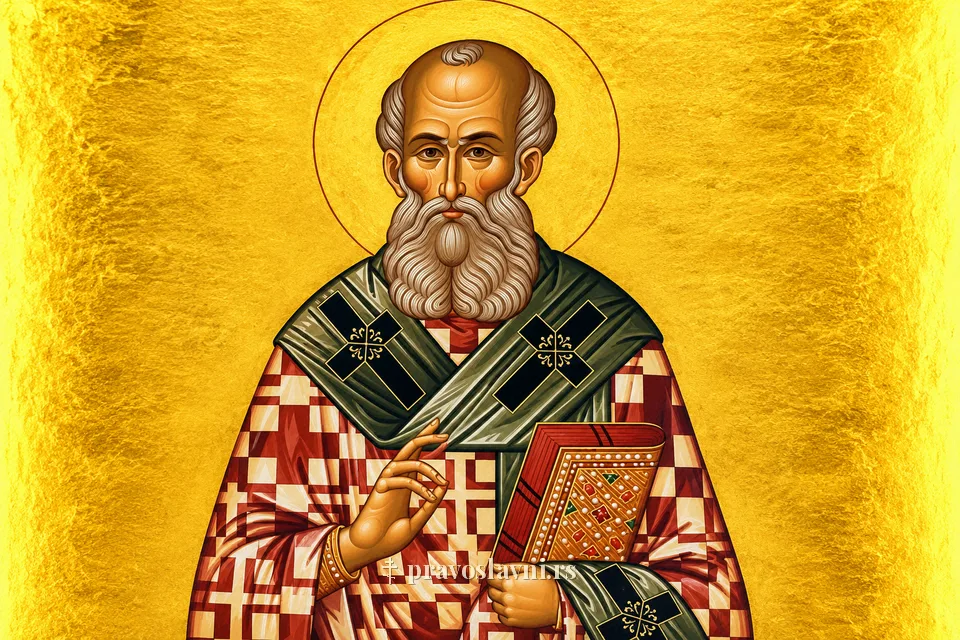
St Athanasius the Great
What happenedHis Life records that St Athanasius, accused of cutting off the hand of the reader Arsenius, brought Arsenius before the judges alive and with both hands.
Read the LifeOrthodox Calendar · 18 January according to the Julian calendar
Saturday, 31 January 202618 January (according to the Julian calendar)Save your slava — you'll get a reminder a week and a day before.
Send a greeting card →What happenedHis Life records that St Athanasius, accused of cutting off the hand of the reader Arsenius, brought Arsenius before the judges alive and with both hands.
Read the Life
You may eat meat, eggs, milk and dairy products, as well as any other food — but try to be moderate.
More about the fast →
Many families celebrate their Krsna slava (family patron saint's day) today
More about the feast →
“I and My Father are one.”
— Jn 10:30St Athanasius the Great was an Alexandrian, the son of devout Christians. His Life says that as a boy on the seashore he played at being a “bishop” and baptised pagan children with sea water, and that Archbishop Alexander recognised those baptisms as valid. Athanasius studied the sciences and Holy Scripture and entered the clergy.
Archbishop Alexander took him as a deacon (the Life says: archdeacon) to the First Ecumenical Council in Nicaea, at which Arius was condemned, and Athanasius showed himself to be a zealous defender of the faith. Later he himself succeeded Alexander on the see of Alexandria and would not receive Arius into communion, however much the emperor demanded it.
From then on he lived under unceasing slander. His Life says that at the council in Tyre, where his accusers were at the same time his judges, he said: “Righteousness is quenched, truth is trampled underfoot, justice has perished.” It also records that they accused him of having cut off the hand of the reader Arsenius and displayed a severed hand, whereupon he brought before the judges the living Arsenius with both his hands. Even so, they condemned him in his absence, persecuted him and sent him into exile.
His hiding places kept changing: according to his Life, he was for a long time in a dry well, and a certain faithful man brought him food; the Prologue adds deserts, other people's houses, and even a tomb. Three emperors — Constantius, Julian and Valens — were his most persistent persecutors. His Life also preserves an incident from the Nile: when Julian's pursuers asked him on the river about Athanasius, he answered that he was not far away — and they went on further.
According to the Prologue, in the desert-dweller Anthony the Great he had a spiritual father, to whom he often returned when he needed support. How long his ministry lasted the sources do not say the same: the Prologue speaks of more than four decades, and the Life of forty-seven years. He came to know peace only in old age, when, loved by his Alexandrians, he was at last able to serve them undisturbed. He reposed in the year 373.
The Prologue sees a rule in this: the greatest truth demands the greatest sacrifice as well, and Athanasius offered it for Christ and was not defeated. His life teaches us to stand firm in the faith, for God protects those who are unjustly persecuted.
St Athanasius the Great was an Alexandrian, the child of devout Christian parents; the Prologue gives 296 as the year of his birth. Even as a boy he turned towards the Church.
The Life tells how Athanasius, as a boy, played at being a “bishop” on the seashore. The other boys were his clergy, and he baptised the children of the pagans in the sea. When Archbishop Alexander learned of this, he looked into the matter and found that the baptisms were valid. He only chrismated the children, and he advised Athanasius's parents to have their son educated for the Church. He studied the secular sciences, philosophy and the Holy Scriptures, and soon entered the clergy.
To the First Ecumenical Council in Nicaea Archbishop Alexander took with him his deacon — the Life says archdeacon — Athanasius. Both the Prologue and the Life say that at Nicaea he made a strong impression by his knowledge and his zeal. Arius was condemned and exiled, and according to the account of the Prologue the text of the Symbol of Faith (the Creed), which the fathers adopted, came from the pen of Athanasius.
The Life says that Eusebius of Nicomedia and the Arian bishops won over the Emperor Constantine the Great, who forgave Arius and allowed him to return to Alexandria. When Alexander died, Athanasius was chosen as his successor. Not even when faced with the Emperor's letter did he agree to receive Arius into communion again.
The Life lists the accusations that he was imposing a church tax on the Egyptians, that he did not obey the Emperor and that he had sent someone a chest of gold. It was also claimed that his presbyter Macarius had destroyed the church of the self-appointed priest Ischyras. At the council in Tyre Athanasius warned that his accusers were at the same time his judges: “Justice has been extinguished, truth has been trampled underfoot, the administration of justice has perished.” The council condemned him in his absence. Soon new accusations were invented, and so the Emperor, in order to keep the peace, sent him into exile in Gaul.
The Life also records the claim that Athanasius had cut off the hand of the reader Arsenius for the purpose of sorcery. The accusation collapsed in the simplest way: the supposed victim appeared in court unharmed. The accusers brought a severed hand as evidence, and Athanasius, after asking, “Who knows for certain that this is his hand?”, brought in Arsenius himself. With that the matter was settled and the accusers were put to shame. Even so, a mob rushed at him, and so he escaped by a secret way, and a reward was offered for his capture.
One of his longest hiding places was a well without water, and he lived on the food that one faithful man brought him, as the Life tells. According to the Prologue, he hid not only in a well, but also in deserts, in other people's houses and even in a tomb; twice he had to flee to Rome. The Life says that in the West he laid his case before Pope Julius and the Emperor Constans. The council in Sardica confirmed the Nicene Creed and vindicated Athanasius. Under pressure from his brother Constans, Constantius also received him and, according to the Life, became convinced of his wisdom, and so Athanasius was restored to his throne with honours.
The Emperor Constantius supported Arianism, and an Arian bishop, George of Cappadocia, who persecuted the Orthodox, was installed in Alexandria. Athanasius then took refuge with a virgin dedicated to God in Alexandria itself, and he stayed there until the end of the reign of Constantius. Not even in hiding was he idle: according to the Life, many of his writings against the heretics came into being there.
The Emperor Julian brought back those who had been exiled, and so Athanasius too returned to Alexandria. But that same Emperor, who had renounced Christ, soon ordered that Athanasius be killed. The Life says that he fled along the Nile, and then turned towards the city, straight towards his pursuers. The pursuers asked none other than him where Athanasius was. “He is not far from you, on a boat,” came the answer, and the pursuers went on their way. Under the Arian Emperor Valens he hid for four months in a tomb, until the Emperor, fearing an uprising in Alexandria, allowed him to remain.
In those years, according to the Prologue, St Anthony the Great meant a great deal to Athanasius: in the hermit he had a spiritual father, to whom he often returned when he needed a word of support. Because of everything he endured, the Prologue ranks him among the most slandered and persecuted of the holy hierarchs.
The Life counts forty-seven years of his service as archpastor. The Prologue gives a rounder number, a little more than four decades, and reminds us that Athanasius spent a good part of that time far from his see. The persecutions ceased only towards the end of his life; then Alexandria, which loved him, at last had its archbishop at home. He reposed in the year 373. The Prologue says that the Lord received him as a faithful servant.
The Prologue sees a rule in this: the greatest truth also demands the greatest sacrifice. Athanasius offered it for Christ, and that long struggle did not end in his defeat. His life bears witness that God protects those who are unjustly persecuted.
St Cyril came from a distinguished family and was a close relative of Theophilus, Patriarch of Alexandria; his Life says that he was his nephew, his sister's son. According to his Life, he studied secular learning and the Holy Scriptures, was a disciple of Isidore of Pelusium and served as archdeacon to Theophilus. After the death of Theophilus he became Patriarch of Alexandria. He drove the Novatians and their bishop out of Alexandria; that strict sect, which arose in Rome, wore white, rejected second marriage and would not receive back into the Church those who had fallen away. He also fought against Nestorius, Patriarch of Constantinople, who would not call the Most Holy Virgin the Theotokos. The dispute was settled at the Third Ecumenical Council in Ephesus, at which Cyril presided, also representing the aged Pope Celestine of Rome; his Life places the council in the year 431. The council condemned Nestorius and delivered him to anathema, the Emperor sent him into exile in the farthest east, and the Prologue records that a terrible death came upon him there. His Life records that the people of Ephesus, after the decision of the council, cried out: “Great is the Most Pure Virgin Mary, the Theotokos!” From Theophilus he inherited an ill will towards John Chrysostom, and he kept it for years, in spite of the warnings of Isidore of Pelusium, who, according to his Life, wrote to him: “Partiality is not far-sighted, and hatred sees nothing at all.” Only after a vision in which the Theotokos appeared to him together with Chrysostom did he repent and begin to honour him among the saints. He reposed in the year 444; his Life states that he governed the Church of Alexandria for thirty-two years. Zeal for the true faith ought to go together with humility, for even Cyril had to repent of his long ill will before he found peace.
Separate page: St Cyril of Alexandria →
St Maximus was the son of the Serbian Despot Stefan the Blind and of the Despotess Angelina. His family suffered grievously at the hands of the Turks: his Life speaks of the blinding of his father Stefan and of his uncle Grgur, and of the pain and anger of his grandfather, Despot Đurađ. He became a monk at Manasija. The Prologue says that he had to take refuge from the Turks in Romania (Wallachia), and that there, since the archbishop's throne had no shepherd, he was consecrated archbishop; both sources give him the title of Archbishop of Ungro-Wallachia. The Prologue also mentions his role as a peacemaker: the voivodes Radul and Bogdan, who were at enmity, were reconciled through his mediation, and it did not come to war. He was also a man of the pen: his Life ascribes to him two charters from the time when he still bore the dignity of despot, and the charter for Hilandar also contains a few words in praise of St Simeon and St Sava. The Prologue says that in his old age he returned to Krušedol and built a monastery there; and in it he reposed, on 18 January in the year 1546. According to the Prologue, his relics too rest at Krušedol, incorrupt and wonderworking.


