Saint of the day
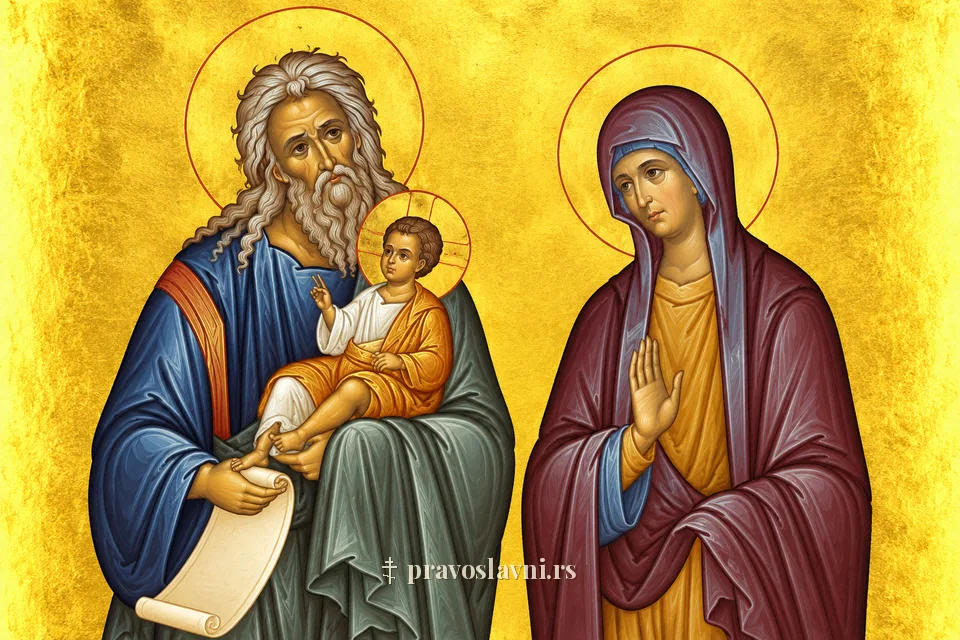
Sts Simeon the God-receiver and Anna the Prophetess
What happenedAs his Life tells, Simeon doubted the prophecy about the Virgin, but an angel promised him that he would not die until he had seen Christ.
Read the LifeOrthodox Calendar · 3 February according to the Julian calendar
Monday, 16 February 20263 February (according to the Julian calendar)Save your slava — you'll get a reminder a week and a day before.
Send a greeting card →What happenedAs his Life tells, Simeon doubted the prophecy about the Virgin, but an angel promised him that he would not die until he had seen Christ.
Read the Life
No meat — eggs, milk, dairy products and fish may be eaten (Cheesefare Week).
This is a recommendation — for your own fast, consult your priest or spiritual father.More about the fast →
Many families celebrate their Krsna slava (family patron saint's day) today
More about the feast →
“And behold, there was a man in Jerusalem whose name was Simeon, and this man was just and devout, waiting for the Consolation of Israel, and the Holy Spirit was upon him.”
— Lk 2:25Sung at the Slava (family patron saint's feast) and on the saint's feast day.
The elder Simeon rejoiceth today, having received into his arms the Infant, the pre-eternal God; he asketh to be loosed from the bonds of the flesh and crieth: Mine eyes have seen Thy salvation unto the world.
Translation: pravoslavni.rs
On the day after the Meeting of the Lord the Church remembers two old people who welcomed the Infant Christ in the Temple in Jerusalem: the righteous Simeon and the prophetess Anna. Both had waited a long time for that meeting.
Simeon's waiting began, according to the Life, with a doubt. The ancient historians to whom the Life refers tell that he was among the Seventy learned Jews who, in the time of King Ptolemy, translated the Old Testament into Greek. Isaiah's prophecy about a virgin who would bear a son seemed unbelievable to him, and he wanted to correct it. A heavenly messenger did not allow him to do so: the prophecy, he said, is true, and Simeon himself will live to see the Messiah whom the Virgin will bear. Simeon believed and gave thanks to God. In prayer at the Temple he spent, according to the Life, a long and righteous life — the records mention three hundred and sixty years — until the day of the promise came.
The fulfilment came on the fortieth day after the birth of Christ. The Spirit brought him to the Temple, and the light around the mother and the Child showed him whom he was seeking. Thus was fulfilled the promise that the angel had given him long before, over the verse of Isaiah. The Life records that at one and the same moment he felt both fear and joy. He blessed God, and to Mary he foretold pain: a sword would pierce through her soul. The Life understands this as a prophecy of the crucifixion of Christ and of His Mother's sorrow beneath the cross. Simeon soon died in peace, and the Prologue calls him the protector of little children.
Anna, the daughter of Phanuel, of the tribe of Asher, was left a widow after only seven years of marriage. The Gospel says that she was about eighty-four years old and that she lived in the Temple, in fasting and prayer. She too needed no explanation of who this Child was; by God's inspiration she carried the news to all in Jerusalem who were waiting for salvation that the awaited Redeemer had come.
Simeon doubted, but he believed and waited patiently; Anna waited in fasting and prayer. Both were found worthy to meet the Saviour and to proclaim Him to others.
Simeon has been remembered as a man to whom God gave a promise at the very moment when he doubted. The Life introduces this story by referring to ancient historians, and that is how it ought to be read. The Egyptian king Ptolemy — in the Prologue, Ptolemy Philadelphus — wished to have the Old Testament in the Greek language. The work was entrusted to the Seventy, the most learned men of Israel, and among them, according to the Life, on account of his wisdom and his knowledge of Scripture, was Simeon.
The Prophet Isaiah says that a virgin shall conceive and bear a son (Is 7:14). Over that verse Simeon was seized by doubt. The Prologue says that in the translation he wanted to put “young woman”, and the Life that he had already reached for a knife, to scrape out what was written. At that point an angel of God stepped in and, according to the Life, stopped him at the last moment. The message was clear: the words of the prophet are true and are written down just as they should be. Along with the admonition came a gift as well: Simeon's earthly journey would not end before his meeting with Christ, the Child of the Virgin of whom the prophet had spoken. The elder believed, did not touch the text, and gave thanks to God.
How long did he wait? The records which the Life cites give him as many as three hundred and sixty years. The Life explains so long a span by God's purpose that the elder should live to see the eternal Son of God born of the Virgin. All that time, according to the Life, he lived purely and righteously, close by the temple, praying to God to set the world free from the devil. The Prologue points to his great old age. The Gospel calls him a just and devout man who was waiting for the Consolation of Israel, upon whom the Holy Spirit rested and to whom it had been revealed that he would not die before he had seen the Lord's Christ (Lk 2:25–26).
When the day came, the Spirit showed him that the Child was being brought into the temple, and Simeon went there (Lk 2:27). The Prologue and the Life say that he did not have to look for the mother and the Child: they were made known by the light that shone around them. The Life says that he approached them frightened and overjoyed at the same time. When he had received Him in his arms, he glorified God (Lk 2:28): the promise was fulfilled, and now he could depart in peace.
To the Mother, however, he also spoke hard words. The Child, he said, would be for the fall and rising of many in Israel, a sign which would be spoken against (Lk 2:34). And to her he addressed a prophecy: “Yes, a sword will pierce through your own soul also” (Lk 2:35). The Life sees in that sword what Mary was to live through beneath the cross of her Son; according to the Life, Simeon was by this speaking in advance of Christ's suffering and crucifixion.
Not long afterwards, according to both sources, Simeon departed to God; the Life says that he died peacefully, old and thankful. According to the Prologue, little children have in the righteous Simeon their protector.
Anna too was counted worthy of the same meeting — a prophetess, the daughter of Phanuel, of the tribe of Asher. She had married as a young maiden and after seven years of marriage was left alone (Lk 2:36). She was a widow of about eighty-four years, and the temple was her home: fasting and prayer filled both her days and her nights (Lk 2:37). The Life remembers her as a holy old woman to whom it was given to behold the Lord at His Meeting.
When she saw the Child, she knew who He was. Inspired by God, she carried the news to those in Jerusalem who were hoping for redemption (Lk 2:38).
Simeon doubted the prophecy about the Virgin, but he believed the angel and waited his whole long life to see its fulfilment; Anna waited in fasting and prayer. Both were counted worthy to meet the Saviour and to proclaim Him to others. Their example teaches that patient faith is not in vain.
St Jacob was Archbishop of Serbia from 1286 to 1292. Peć became the seat of the archbishopric instead of Žiča, in all likelihood by his decision; his Life places this at around the year 1290, but without complete certainty. He restored and built churches. He took particular care of the Monastery of Studenica, for which he obtained service books and church vessels. The Serbian ascetics had in him an unusually caring shepherd. He is remembered as a meek and humble hierarch who gladly did good. According to his Life, what made him a saint was pure faith joined with Christian love.


