Saint of the day
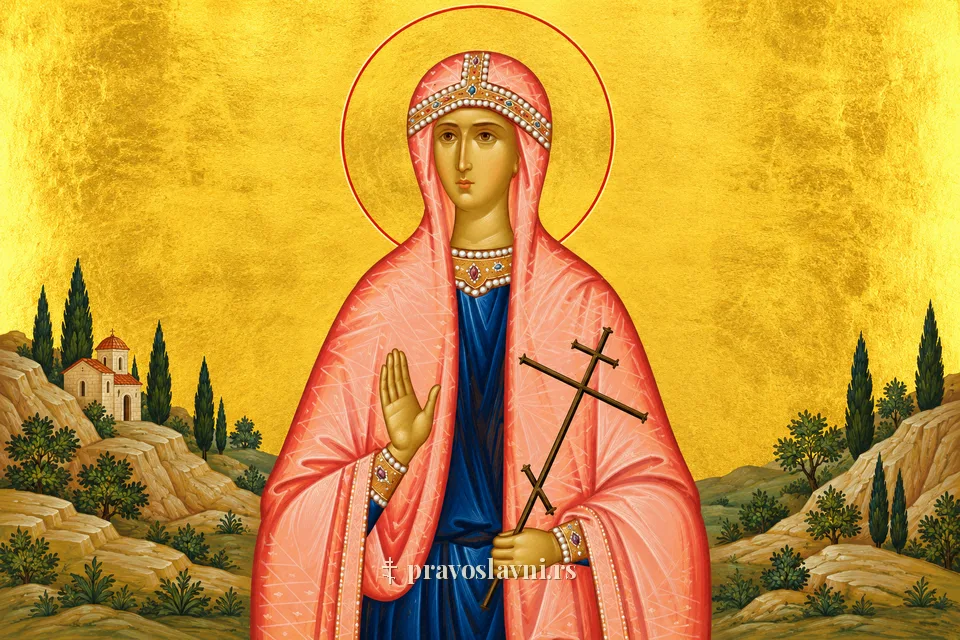
Holy Martyr Agatha
What happenedSt Agatha refused to become the bride of a powerful governor, for she was already the bride of Christ, and she gave her life for it.
Read the LifeOrthodox Calendar · 5 February according to the Julian calendar
Wednesday, 18 February 20265 February (according to the Julian calendar)What happenedSt Agatha refused to become the bride of a powerful governor, for she was already the bride of Christ, and she gave her life for it.
Read the Life
No meat — eggs, milk, dairy products and fish may be eaten (Cheesefare Week).
This is a recommendation — for your own fast, consult your priest or spiritual father.More about the fast →
Today the Church keeps the commemoration of a saint · Cheesefare Week – dairy allowed (no meat).
More about the feast →
“Therefore we do not lose heart. Even though our outward man is perishing, yet the inward man is being renewed day by day.”
— 2 Cor 4:16“These torments are of great benefit to me,” said St Agatha, according to the Prologue, to the judge who was torturing her. According to the Prologue, for her the suffering of the body was the way to Paradise.
She was a beautiful girl from a noble and wealthy family in Palermo in Sicily. In the time of Emperor Decius, when Christians were being killed, the governor of Sicily, Quintian, desired to take her as his wife and to seize her estate. Agatha answered him that she was the handmaid of Christ and His bride, and that she would not marry. She called the pagan gods demons. The Life also mentions a wild olive tree which, in answer to her prayer, sprang up on the road to Catania, as well as the house of the rich Aphrodisia, where neither flattery, nor gifts, nor amusements could make her waver.
For her faithfulness to Christ she was cruelly tortured and thrown into prison. The Prologue and the Life record that the holy Apostle Peter appeared to her there and restored her to full health. Escape was within her reach, but she, according to the Life, stayed, so as not to renounce martyrdom and not to put the guards in danger. When the judge asked her who had healed her, she answered that it was Jesus Christ.
New tortures were cut short, as the Life records, by an earthquake in Catania, and the frightened citizens demanded that the judge stop. Agatha gave thanks to God in the prison, gave up her soul to Him and reposed in the year 251.
Quintian soon perished on the road, as he was going to seize her estate; the Prologue and the Life describe his death differently. After that her relatives were no longer troubled, and a church rose over her relics. The Life also ascribes to her the deliverance of the whole of Catania from an eruption of Etna, which was stopped by her garment.
St Agatha reminds us that faithfulness to Christ is stronger than every threat and every promise of this world. Neither gifts nor tortures made her waver, and God sent her consolation and healing even in prison.
She lived in the time of Emperor Decius, who ordered that Christians be put to death. In Sicily at that time the governor and judge was Quintian. He wished to marry Agatha, and he also wished to have her estate. Her Life says that he sent soldiers to bring her to Catania. Agatha prayed in her home and set out with them. Her Life records that on that journey, when she prayed for a sign, a wild olive tree sprang up before her.
She refused to offer sacrifice to the idols, and so she was thrown into a dark prison, and then cruelly tortured. The Prologue records that she then said to the judge: “These torments are very useful to me.” She believed that the suffering of the body was leading her to Paradise.
Her Life says that the guards left the prison in fear; even so, Agatha did not want to flee, because by doing so she would have renounced martyrdom and exposed her keepers to punishment. On the fifth day Quintian asked her who had healed her, and she answered that Jesus Christ had done it.
The judge ordered new tortures. Then, as her Life records, an earthquake shook Catania, and the earth swallowed up Vulteius and Theophilus, his friends who had advised him to torture her. The frightened citizens demanded that he stop, and Agatha was returned to the prison. There she prayed, gave thanks to God and asked Him to receive her soul. She reposed in the prison in Catania in the year 251, in the time of Emperor Decius.
Quintian set out to seize her estate, but he perished on the way. According to the Prologue, death came to him from his own escort: horses that had gone wild and soldiers rushed upon him and killed him. Her Life records that by the river Psimiph a horse threw him off and trampled him, that he drowned, and that his body was never found. After that the authorities did not dare to touch her relatives. Later a church rose over her relics, and her garment remained on the tomb.
When, a year after her death, Etna erupted, salvation, according to her Life, came precisely from that garment: the inhabitants of Catania, regardless of their faith, set it against the river of fire and it stopped — on the very day of Agatha's suffering.
St Agatha chose to be the bride of Christ, and not of the governor, and she accepted the torments as a cleansing before entering Paradise. Her torturer did not escape the judgement of God, and her garment, according to her Life, protected the city from the fire of Etna. She teaches us that the one who belongs to Christ need not fear anything.
When the Russian princess Olga, in the time of the Emperor Constantine Porphyrogenitus, arrived in Constantinople, it was Patriarch Polyeuctus who baptised her in the year 957, and her godfather was the Emperor himself. To the newly baptised princess the Patriarch addressed words which the Prologue preserves: “Blessed are you among the women of Russia”. He explained this praise by her choice of the faith. And he foretold that the Russian people would never cease to bless her name. Who was this patriarch? He did not come to the throne from high office, but from the ranks of the simple monks; the Prologue and his Life give different years for that election. People linked his name with the name of St John Chrysostom, because like him he was wise, zealous and eloquent. He led the Church of Constantinople right up to his death, in the year 970. He has remained in memory as the shepherd who brought Princess Olga to baptism.


