Saint of the day
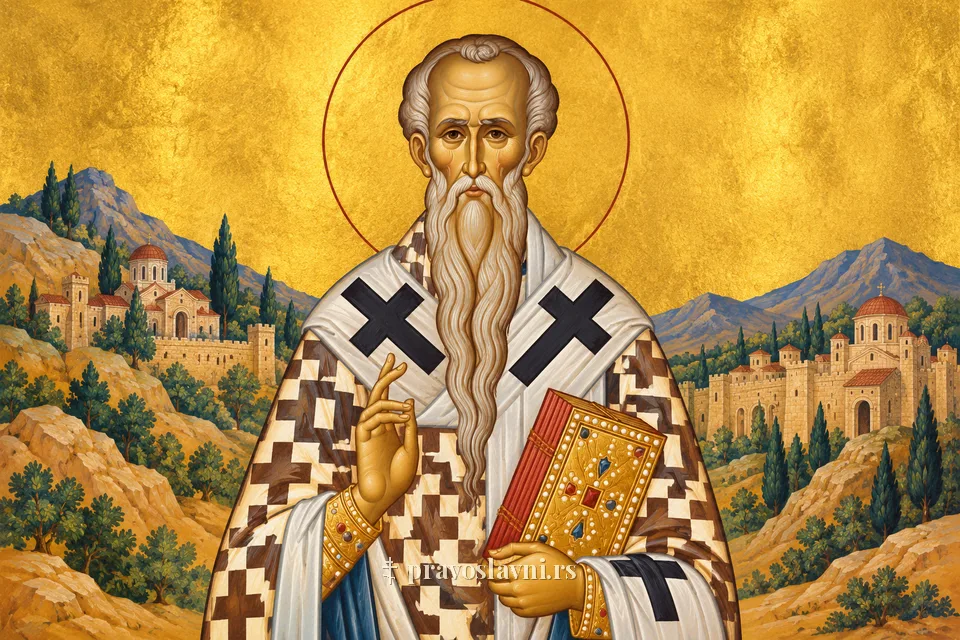
St Leo, Bishop of Catania
What happenedSt Leo of Catania led the sorcerer Heliodorus into the fire with him: the sorcerer was burned up, and the bishop came out unharmed.
Read the LifeOrthodox Calendar · 20 February according to the Julian calendar
Thursday, 5 March 202620 February (according to the Julian calendar)What happenedSt Leo of Catania led the sorcerer Heliodorus into the fire with him: the sorcerer was burned up, and the bishop came out unharmed.
Read the Life
No meat, dairy products, eggs, fish or oil — food cooked in water.
This is a recommendation — for your own fast, consult your priest or spiritual father.Prayer of St Ephraim the Syrian →More about the fast →
Today the Church keeps the commemoration of a saint · Second week of Great Lent.
More about the feast →
“You are of God, little children, and have overcome them, because He who is in you is greater than he who is in the world.”
— 1 Jn 4:4When the funeral bell in Catania announced that Bishop Leo had passed away, a sick woman from Syracuse, who had come to the city to be healed, touched his bier and recovered. In this way the Life records one of the miracles by which God glorified this shepherd after his death as well.
Leo, according to the Life, was from the region of Ravenna and was distinguished by the purity of his life, and he became Bishop of Catania in Sicily, the city beneath Etna, after Sabinus. The Prologue says that he was equally merciful and zealous in the faith. He cared for the poor and the sick, and he did not tolerate deceit.
The greatest deceit was brought by the sorcerer Heliodorus, who lured the city with his tricks. The Life says that, although baptised, he secretly denied Christ, and that he even twice escaped the death to which the Emperor had condemned him. Leo, according to the Life, called him to repentance, while Heliodorus boasted that he would make the clergy dance. The end came on a feast day, when the sorcerer began his spells in the church itself. The bishop prayed, overpowered him and led him to the square, into a fire which he had ordered to be lit — and he went into it with him. The fire, according to both sources, carried off the sorcerer, while it did the bishop no harm; the Life ascribes this to the protection of the Holy Spirit. The Prologue says that in this way the adoration which the sorcerer had enjoyed was put to shame.
Word of Leo reached the emperors too, who, according to the Life, respected him and asked for his prayers. The Prologue places him in the eighth century, and the Life says that he died in deep old age and that he was buried in the church of St Lucy, which he himself had built. His relics, according to both sources, became a source of healing myrrh.
St Leo bears witness that God's grace overcomes every deception, and that true zeal for the faith goes hand in hand with mercy.
In Catania in Sicily, a city at the foot of the volcano Etna, there lived at the same time Bishop Leo and the sorcerer Heliodorus. The first is remembered by the Prologue as a shepherd equally merciful and zealous in the faith. The second deceived people with illusions and corrupted the young.
Heliodorus, according to the Life, was not a pagan by birth: his parents were Christians and he had been baptised, but he secretly renounced Christ and gave himself over to the demons. Before people he behaved as a Christian, but in his heart he served the idols, like Simon the sorcerer of old, who was overcome by the Apostles Peter and Paul. The Life describes his delusions — illusions of water on dry land, stones that for a short while become gold, confusion in the marketplace — and says that he led astray girls from respected houses.
The matter, according to the Life, reached even Emperor Leo and his son Constantine, but they too could do nothing to Heliodorus: he arrived in Constantinople by ship in a single hour, and both times when he was condemned to death he slipped away and returned to Catania.
His Life says that Leo came from the region of Ravenna, from a respected and devout family. He received the sacred ministries one after another, as the order of the Church requires, and his pure and prudent life brought him esteem. Before he became a bishop he was the steward, in charge of the Church's property. When, after the death of Bishop Sabinus, a new Bishop of Catania had to be chosen, the choice fell on him. In his hands the property of the Church served the poor and the sick, and according to his Life he healed many by prayer. His Life also says that he pulled down a pagan temple and built the church of the Holy Martyr Lucy.
The last meeting of the shepherd and the sorcerer ended in the city square, in flames. The occasion was given by the pride of Heliodorus: according to the Life, he refused every call of Leo's to repentance and promised that he would make the clergy dance in the middle of the service. On a certain feast day, in a full church, he really did begin his spells, and among the people, according to the Life, a senseless uproar broke out.
The bishop prayed before the altar and bound the sorcerer with his omophorion. He did not go round the pyre which he then ordered to be lit: he went into it together with Heliodorus. The Prologue and the Life say that the sorcerer was burned up, while the bishop remained untouched; according to the Life, the flames did not damage even his vestments, because the Holy Spirit guarded him, and after that he went on with the interrupted service. The Prologue adds that by this everyone who had honoured the sorcerer as a god was put to shame.
The fame of the wonderworker of Catania spread through the empire. According to his Life, the emperors too honoured him and asked him to pray for them; on one visit to the court he carried live coals in his clothing, and the clothing did not burn. His Life remembers many other healings as well, and idols also fell at his prayer and his word.
The Prologue places him in the eighth century, and his Life says that he lived to a great age. Even his body itself, according to his Life, brought healing: a sick woman from a senatorial house in Syracuse came to Catania for help, learned of the bishop's death from the funeral bell, and recovered as soon as she touched the bier. His relics, as both sources say, gave forth healing myrrh; according to his Life, he was buried in the church of St Lucy, which he himself had built.
Neither sorcery nor the lies of the demons can overcome the grace of God and holiness. In St Leo zeal for the faith and mercy towards the poor went together, and God glorified him with miracles both while he was alive and after his death.


