Saint of the day
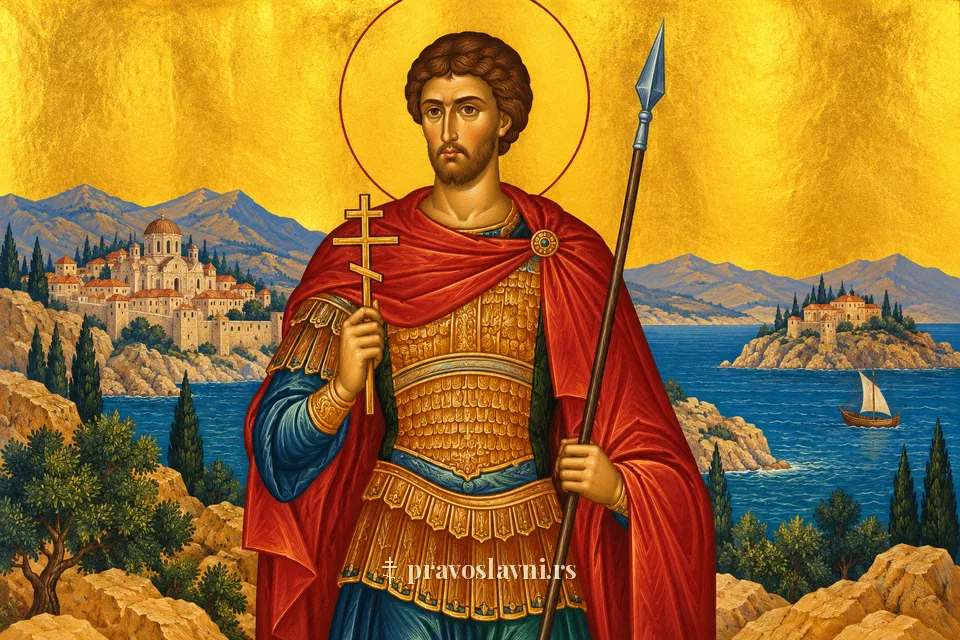
Holy Martyr Isidore of Chios
What happenedSt Isidore, a soldier from Chios, went on confessing Christ even after his tongue was cut out, and the commander who judged him was struck dumb.
Read the LifeOrthodox Calendar · 14 May according to the Julian calendar
Wednesday, 27 May 202614 May (according to the Julian calendar)What happenedSt Isidore, a soldier from Chios, went on confessing Christ even after his tongue was cut out, and the commander who judged him was struck dumb.
Read the Life
No meat, dairy products, eggs or fish — oil and wine are allowed.
This is a recommendation — for your own fast, consult your priest or spiritual father.More about the fast →
Today the Church keeps the commemoration of a saint · not a Red Letter day.
More about the feast →
“For it is not you who speak, but the Spirit of your Father who speaks in you.”
— Mt 10:20“Even if you kill my body, you have no power over my soul.” That is how St Isidore answered the commander who demanded that he renounce Christ.
He was born, according to his Life, in Alexandria, and was brought up in a Christian spirit: from his early years he was used to fasting, praying and doing good. Under the Emperor Decius he was taken by force into the army from the island of Chios. When it became known that he was a Christian, he stood before the commander. He would not offer sacrifice to the idols; he confessed the living God, Jesus Christ, and, as his Life says, called the idols deaf and blind.
They beat him with ox sinews and then deprived him of his tongue. The Prologue and his Life say that even then he did not fall silent, because the Holy Spirit gave him words to bear witness to Christ. It was the commander, according to the same books, who was left dumb, because God's punishment overtook him. The Prologue says that even then, by signs, he ordered Isidore to be put to death. The martyr received the sentence with joy, glorified God and was beheaded in the year 251.
His body was buried by his friend Ammonius, who himself also suffered for Christ. According to the Life, the relics were later cared for by Myrope, a woman of Ephesus, who anointed them with fragrant oils; they healed the sick, and a church was built over them.
Isidore was a soldier who did not betray the heavenly King. He was left without a tongue, and yet he remained a witness of Christ to the end.
St Isidore grew up in the Christian faith and from childhood loved fasting, prayer and good works. His Life says that he was born in Alexandria and lived on the island of Chios, and it remembers him as a strong, brave and chaste young man, far from worldly pleasures.
Under the Emperor Decius he was taken into the army against his will. According to his Life, this was in the first year of Decius, when the ships of the commander Numerius came to Chios for young men. At that time there also arrived an order that everyone, especially the soldiers, should bow down to the Roman gods, and the centurion Julius, as his Life says, reported that Isidore was a Christian.
The commander tried to bring him to renounce Christ and bow down to the idols. When, according to his Life, they asked him his name, he said: “My name is Isidore.” He confessed the living God, Jesus Christ, and according to his Life he called the idols deaf and blind. To the commander he replied: “Even if you kill my body, you have no power over my soul.”
Blows with ox sinews followed. His Life says that four soldiers beat him, that those present urged him to give way, and that threats and flattery came by turns. Then they deprived him of his tongue. Yet he did not fall silent: according to the Prologue and his Life, the Holy Spirit granted him to go on bearing witness to Christ.
As the Prologue and his Life record, it was the commander himself who was left mute, for God's punishment overtook him; his Life adds that he collapsed from fear. The Prologue says that he gave the death sentence by signs, and his Life that he wrote it down. Isidore met the sentence with joy, glorified God and was beheaded in the year 251.
His friend Ammonius buried his body. His Life says that the body had been left to the dogs and that Ammonius, who was secretly a Christian, took it away by stealth; he himself afterwards suffered as a martyr, according to his Life in Cyzicus.
His Life says that Myrope, a devout woman of Ephesus, later took care of the relics: she anointed them with fragrant oils and kept them with reverence. From them the sick received healing, and when the persecution had passed, a church was built over them.
Isidore did not betray the heavenly King. Even without a tongue he confessed Christ and showed that the torturer has no power over the soul. The Prologue warns that it is a double sin when someone leads another into sin by his own example, and that we should fear lest even the least one be made to stumble.
The holy martyr Maximus, according to his Life, burned with zeal for Christ, and it pained him that idolaters were forcing others to worship idols, so he prayed to God to shorten the time of the persecution. He brought many unbelievers to baptism. When the pagans began to offer human sacrifices as well, he publicly denounced them, reminding them that an object made of wood or stone cannot help even itself. He was seized, cruelly tortured and stoned to death in the year 250, in the time of the Emperor Decius. Maximus did not keep silent in the face of injustice, but publicly bore witness to the truth and laid down his life for it.


