Saints of the day
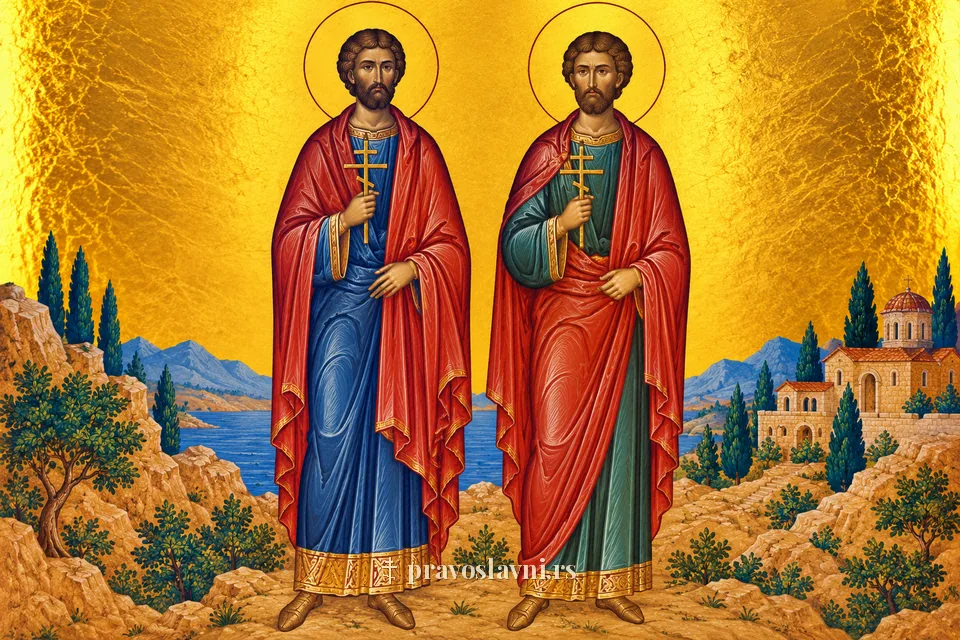
Holy Martyrs Trophimus, Theophilus and those with them
What happenedThe Holy Martyrs Trophimus, Theophilus and the thirteen with them did not deny Christ, and the power of God preserved them in the fire.
Read the LifeOrthodox Calendar · 23 July according to the Julian calendar
Wednesday, 5 August 202623 July (according to the Julian calendar)What happenedThe Holy Martyrs Trophimus, Theophilus and the thirteen with them did not deny Christ, and the power of God preserved them in the fire.
Read the Life
No meat, dairy products, eggs, fish or oil — food cooked in water.
This is a recommendation — for your own fast, consult your priest or spiritual father.More about the fast →
Today the Church keeps the commemoration of a saint · not a Red Letter day.
More about the feast →
“And let us not grow weary while doing good, for in due season we shall reap if we do not lose heart.”
— Gal 6:9Sts Trophimus and Theophilus suffered together with thirteen other faithful servants of Christ, in the time of the Emperor Diocletian; the Prologue says that this was in Lycia in the year 308.
It was demanded of them that they offer sacrifice to the idols and deny Christ, and they refused to do so. For this they were tortured and, half dead, thrown into the fire. The flames did them no harm, for the power of God was guarding them, and so, according to their Life, they came out of the fire alive. At last they were beheaded; their Life remarks that they laid down their heads for the glory of Him who is the Head of the whole Church.
The Prologue, at their commemoration, cites a teaching of Abba Isaiah: without labour in this life there is no reward from God either, just as no wheat is left for the ploughman who has not reaped.
Sts Trophimus and Theophilus suffered together with thirteen others, so that there were fifteen martyrs in all. Their Life does not give the names of the rest, but calls them faithful servants of Christ. The Prologue says that they suffered in Lycia in the year 308. Both sources say that this was in the time of Emperor Diocletian.
They were required to renounce Christ and offer sacrifice to the idols, which their Life calls lifeless. All of them refused.
For this they were tortured, and then, half dead, they were thrown into a fire. Yet the fire did them no harm, for the power of God was guarding them, and so, according to their Life, they came out of the flames alive. In the end they were beheaded. Their Life observes that they laid down their heads for the glory of Him who is the Head of the whole Church.
On their commemoration the Prologue gives a teaching of Abba Isaiah. A reward from God, he taught his disciples, does not come without labour in this life, just as no wheat is left to the farmer who has not reaped.
The martyrs Trophimus, Theophilus and their companions were faithful to Christ to the end. Their labour was not in the fields but in confessing the faith, and they received their reward from the One whom they would not renounce.