Saint of the day
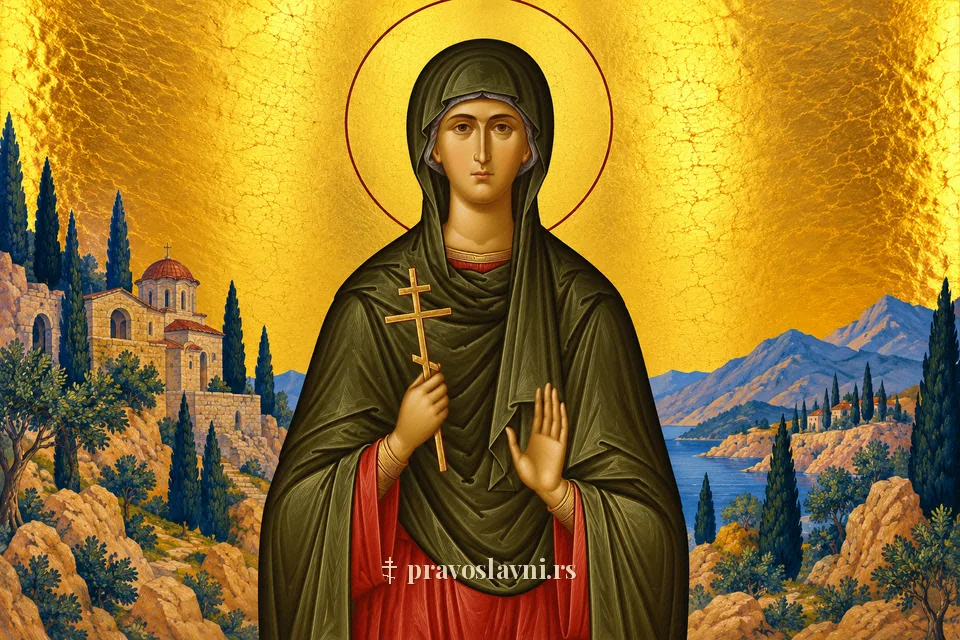
Venerable Martyr Paraskeva
What happenedThe holy Venerable Martyr Paraskeva, a nun from Rome, preached Christ in many cities and after many torments suffered death by the sword.
Read the LifeOrthodox Calendar · 26 July according to the Julian calendar
Saturday, 8 August 202626 July (according to the Julian calendar)What happenedThe holy Venerable Martyr Paraskeva, a nun from Rome, preached Christ in many cities and after many torments suffered death by the sword.
Read the Life
You may eat meat, eggs, milk and dairy products, as well as any other food — but try to be moderate.
More about the fast →
Today the Church keeps the commemoration of a saint · not a Red Letter day.
More about the feast →
“But the LORD is the true God; He is the living God and the everlasting King. At His wrath the earth will tremble, And the nations will not be able to endure His indignation.”
— Jer 10:10When the Emperor Antoninus offered her riches if she would offer sacrifice to the gods, Paraskeva, according to her Life, answered: “May it never be that I should ever deny Christ my God!”
She was born in Rome, of Christian parents, and was taught the faith from childhood. The Prologue says that she zealously kept God's commandments and brought others to the true faith. After the death of her parents she gave away her property to the poor and became a nun. Christians were being persecuted at that time, and she preached Christ publicly, and so she was accused and brought before the Emperor. They tortured her, but God kept her unharmed. According to her Life, many who saw this came to believe, and the Emperor himself was baptised.
Even after that she did not cease to preach. She left Rome and converted pagans in other places, where they brought her to trial again. The wounds from her tortures healed by the power of God, while the pagans attributed this to sorcery or to their own gods. To one prince she answered: “it was not your gods, O prince, who healed me, but my Christ, the true God”. According to her Life, in one city they threw her to a serpent in a cave, but she made the sign of the Cross over the beast and the serpent burst; in another an angel of the Lord preserved her in her tortures. She ended her life under the sword, by order of Prince Tarasius. The Prologue says that she suffered in the 2nd century and that her relics were later translated to Constantinople.
St Paraskeva remained steadfast in the faith, and by her patient endurance she brought many to Christ, even her own persecutors.
Paraskeva was born in Rome, of Christian parents. According to her Life, her father was called Agathon; her parents were long without children and prayed to God for a child. Her Life also says that at baptism she received the name Paraskeva. From childhood she was taught the faith: her Life says that her mother taught her, that she read the Holy Scriptures and spent much time in church at prayer. The Prologue adds that she zealously kept God's commandments and led others to the true faith and a devout life.
When her parents died, she gave away her property to the poor and received the monastic tonsure. Christians were then being persecuted by the Roman authorities, but Paraskeva did not keep silent: she preached Christ publicly, and her Life says that she brought many pagans to the faith. For this she was accused of preaching a forbidden faith and was brought before Emperor Antoninus.
According to her Life, the emperor offered her riches if she would offer sacrifice to the gods, and threatened her with tortures if she refused. She answered: “God forbid that I should ever renounce Christ my God!” She appealed, as her Life says, to the prophet Jeremiah, who speaks of the powerlessness of false gods.
Then they tortured her, but God kept her unharmed. Her Life says that many pagans, seeing this, believed at once. According to her Life, the emperor himself asked Paraskeva to sprinkle him with the oil and pitch in which she was standing unharmed, and from this he went blind. At his entreaty she prayed and his sight returned, and the emperor and his bodyguards believed and were baptised.
Since the Lord had delivered her, Paraskeva left Rome and went on preaching in other places, converting the pagans.
According to the Prologue, her suffering was not over even then: in two other cities as well she had to answer before the authorities. There too she endured tortures, but her wounds healed by the power of God, and she worked great miracles. The pagans ascribed this to sorcery or to their own gods, but she said to one governor: “it was not your gods, O governor, who healed me, but my Christ, the true God”.
According to her Life, in one city the governor Asclepius threw her to a serpent in a cave. She made the sign of the cross over the beast and breathed on it, and the serpent burst asunder. Her Life records her words: “The wrath of God has come upon you, O beast!” Seeing this, the governor and his attendants believed. In another city the governor Tarasius handed her over to new tortures, but, according to her Life, an angel of the Lord preserved her.
At last the governor Tarasius put her to death by the sword. The Prologue says that she suffered for Christ in the second century and that her relics were later translated to Constantinople.
St Paraskeva did not let herself be shaken by flattery, by riches or by tortures. She ascribed her deliverances not to idols but to Christ, and by her endurance she brought many, even her persecutors, to the faith.
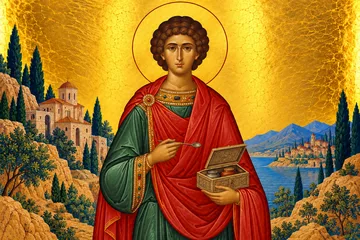
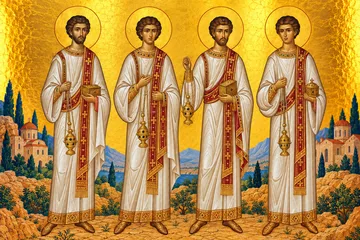
St Hermolaus was, according to the Prologue, a priest in Nicomedia. Under Emperor Maximian about two thousand Christians were burned together with their church, and Hermolaus escaped that death with the priests Hermippus and Hermocrates. It is to him that St Panteleimon owes his baptism; later both of them were brought before the court, and after being tortured Hermolaus was beheaded; Hermippus and Hermocrates also suffered with him. The Prologue says of them: “They suffered honourably about the year 304.”
Separate page: Hieromartyr Hermolaus →
Before he became Bishop of Prizren, St Sava the Third was abbot of Hilandar. Under his supervision the church of the Mother of God of Ljeviš was built in Prizren. He was Archbishop of Serbia from 1309 to 1316. As his successor, Archbishop Nikodim, bears witness, he fulfilled St Sava's commandment about the help which the Serbian archbishops owe to Hilandar.