Thursday27August 202614 August (according to the Julian calendar)‹›
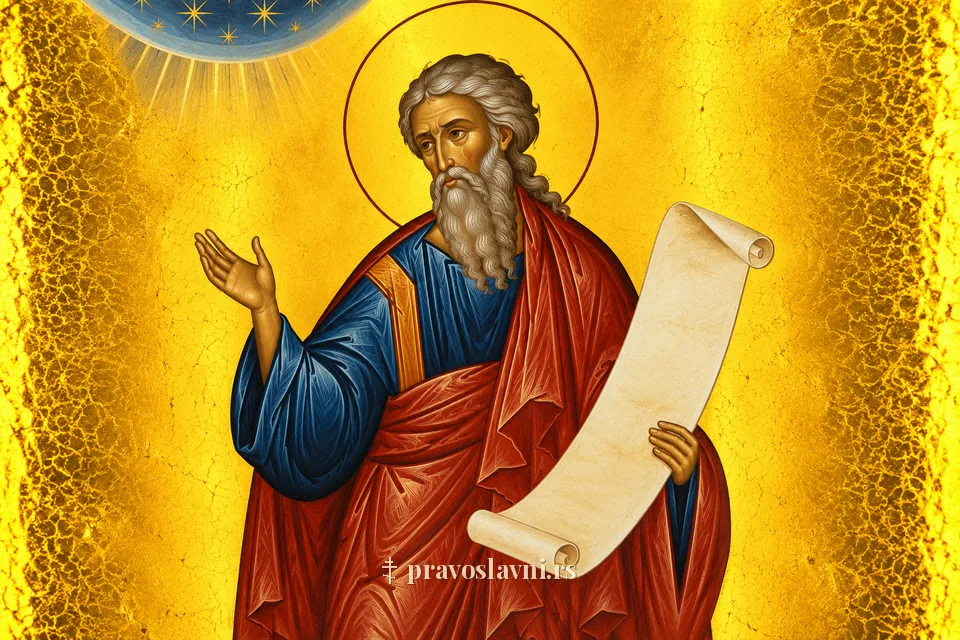
Illustration
Saint of the day
Holy Prophet Micah the Second (one of the Twelve Minor Prophets)
What happenedThe Holy Prophet Micah, a contemporary of the Prophet Isaiah, denounced the injustice of his people and foretold that the Messiah would be born in Bethlehem.
“But you, Bethlehem Ephrathah, Though you are little among the thousands of Judah, Yet out of you shall come forth to Me The One to be Ruler in Israel, Whose goings forth are from of old, From everlasting.”
The Holy Prophet Micah the Second was of the tribe of Judah and a contemporary of the Prophet Isaiah. The Life notes that he lived a hundred and fifty or more years after the first Prophet Micah, of the time of the Prophet Elijah, and that these are two different persons. He prophesied in the days of the kings of Judah Jotham, Ahaz and Hezekiah.
He denounced the sins of his people: idolatry, pagan customs and falling away from God. He rose up against the rulers and judges who let themselves be bribed and who oppress the poor, against the priests who teach only for money, and against the false prophets. According to the Life, through him God reminded the people of their deliverance from Egypt. He foretold the fall of Samaria and of Jerusalem.
His most important prophecy concerns the Messiah: Micah named Bethlehem as the place of His birth (Mic 5:2). In the Prophet Jeremiah it is recorded that the elders remembered Micah's prophecy against Jerusalem: King Hezekiah then feared the Lord, and God turned away the punishment (Jer 26:18–19).
How the prophet ended his life is not certain; from Jeremiah's words the Life concludes that he reposed peacefully in old age. He was buried in his own village, and his relics were found together with the relics of the Prophet Habakkuk in the time of Emperor Theodosius the Great.
Micah spoke God's truth even when it was not welcome: injustice brings judgement, but repentance turns away the wrath of God.
Full Life
A prophet from the tribe of Judah
Micah the Second was of the tribe of Judah, a native of a village which the Life places near the city of Eleutheropolis. The Life notes that he lived a hundred and fifty years or more after the first Prophet Micah, the contemporary of the Prophet Elijah and of King Ahab, and that these are two different persons.
Micah the Second, one of the minor prophets, was a contemporary of the Prophet Isaiah, and according to the Prologue of Amos and Hosea as well. He prophesied — according to the Life, in Jerusalem — in the time of the kings of Judah Jotham, Ahaz and Hezekiah.
A word against injustice
Micah denounced the sins of his people: idolatry, pagan customs and falling away from God. According to the Life, God through him reminded the people of their deliverance from Egypt. He rose up against the rulers and judges who let themselves be bribed and who oppress the poor, against the priests who teach only for money and against the false prophets who prophesy for money — according to the Prologue, for wine and strong drink. The Life says that the prophet lamented that not a single righteous man was left in the land.
He foretold the fall of Samaria, according to the Life at the hands of the Assyrians, and the fall of Jerusalem, according to the Life at the hands of the Chaldeans.
The prophecy about Bethlehem
The most important prophecy of Micah concerns the Messiah: he named Bethlehem as the place of His birth (Mic 5:2). That is why the Church honours him especially — among the prophets it was he who named in advance the place where Christ would be born.
Repentance and the end of the prophet's life
In the Prophet Jeremiah it is recorded that the elders remembered Micah's prophecy against Jerusalem: in the time of Hezekiah the king feared the Lord, and God turned away the punishment which He had intended for the city (Jer 26:18–19).
How Micah ended his life is not certain. The Prologue, referring to the same passage in Jeremiah, leaves it open whether he was killed or died in peace, while the Life concludes from Jeremiah's words that he reposed peacefully in old age. He was buried in his own village. His relics were found together with the relics of the Prophet Habakkuk in the time of Emperor Theodosius the Great, through a revelation to the Bishop of Eleutheropolis.
Micah spoke God's truth both to rulers and to the people, even when it was not welcome. His word bears witness that injustice and idolatry bring judgement, while repentance, as in the case of Hezekiah, turns away the wrath of God.