Saint of the day
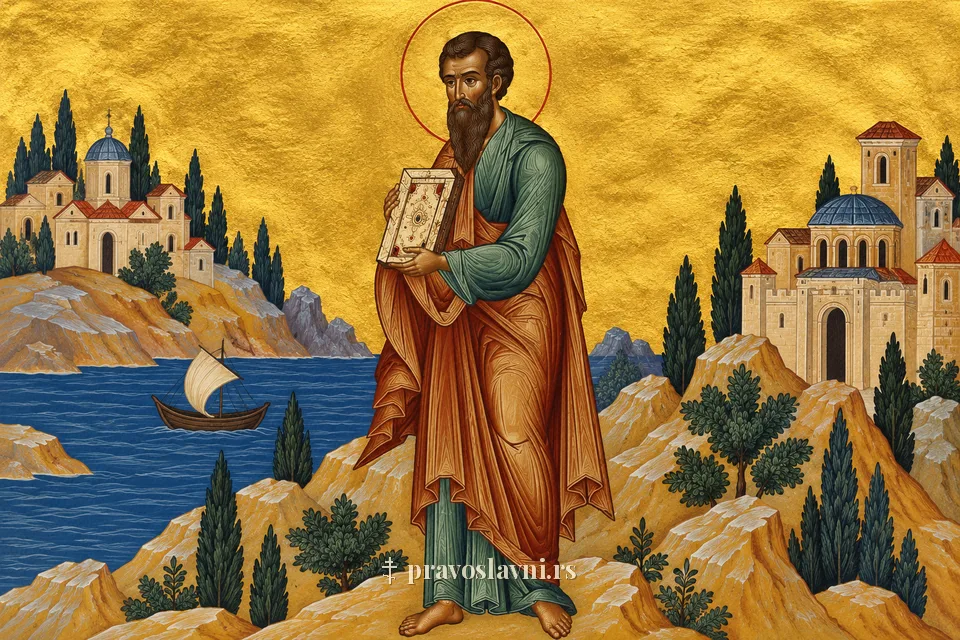
Holy Apostle James, son of Alphaeus
What happenedA quiet Apostle of the Twelve who carried the Gospel as far as Egypt and there, like his Teacher, was crucified on a cross.
Read the LifeOrthodox Calendar · 9 October according to the Julian calendar
Thursday, 22 October 20269 October (according to the Julian calendar)What happenedA quiet Apostle of the Twelve who carried the Gospel as far as Egypt and there, like his Teacher, was crucified on a cross.
Read the Life
You may eat meat, eggs, milk and dairy products, as well as any other food — but try to be moderate.
More about the fast →
Today the Church keeps the commemoration of a saint · not a Red Letter day.
More about the feast →
“And lo, I am with you always, even to the end of the age.”
— Mt 28:20The disciple whom fear drove to flight in Gethsemane ended his life on a cross, far from his homeland. Between those two events stands the story of James, son of Alphaeus, about whom the Gospel says less than about almost all the other apostles.
The Prologue reveals his family tie: Matthew, the tax collector whom Mark calls Levi the son of Alphaeus (Mk 2:14), was his own brother. From the same house, then, two men set out after Christ. His Life also links him with Mary, the mother of James the Less, one of the women who watched the crucifixion from afar (Mk 15:40).
Together with the rest of the Twelve, James received from the Lord power over unclean spirits and the gift of healing (Mt 10:1). He heard that the Teacher was sending them out “as sheep in the midst of wolves” (Mt 10:16), that they would be hated for His name's sake, but also that he who endures to the end will be saved (Mt 10:22). Everything the Gospel tells, from the first miracles to the Ascension, he saw, the Prologue stresses, with his own eyes. And yet, when Christ was arrested, he too fled like the others (Mt 26:56). The Gospel does not pass over even that in silence, for the story of the apostles is not a story of people without faults.
Fear did not remain the last word. James was with the apostles at prayer in the upper room (Acts 1:13–14) and at Pentecost he received the Holy Spirit. He accepted the commandment to make disciples of all the nations (Mt 28:19) as his own. The one who had once fled now had a boldness that no one could take away from him.
The Prologue mentions two regions of his mission: Eleutheropolis with its surroundings, and Egypt. The name of Christ healed the sick, many renounced idols, and the apostle left behind him communities of the faithful and shepherds to lead them. In Ostracine, an Egyptian city, the pagans crucified him. The cross became for him the door of the Kingdom of Heaven.
A fall is not a verdict. God knows how to make of a frightened disciple a witness faithful to the end. If He could do it with James, He can do it with us too.
When the apostles are mentioned, the first who come to our minds are Peter, John or Paul. James, the son of Alphaeus, remains in the shadows. The Gospels name him almost exclusively in the list of the Twelve, without a single discourse, question or epistle of his. The Life too remarks on how rarely he is spoken of. Perhaps one of his messages lies precisely in this: God has no need of our fame, but of our faithfulness.
But the silence of Scripture does not mean that his life was a small one. Many of God's servants worked quietly, and their work lived on in the people whom they brought to the faith. The Prologue reveals that he and Matthew, the apostle and evangelist, were brothers by birth. That is the tax collector whom Mark calls Levi the son of Alphaeus and whom Christ called straight from the tax office (Mk 2:14). Two sons of one house, then, set out after the same Lord. The Life also connects him with Mary, the mother of James the Less, one of the women who watched Golgotha from afar (Mk 15:40).
James had no need for anyone to retell the Gospel to him. The Prologue stresses that his knowledge was first-hand: everything that took place, from the first miracles to the Ascension, he saw with his own eyes. That is why his testimony carried weight.
With the rest of the Twelve he received from the Lord authority over unclean spirits and the gift of healing (Mt 10:1). He also heard the sobering words that they were going “as sheep in the midst of wolves” (Mt 10:16) and that for Christ's sake they would be dragged through the courts. But along with the warning he was given hope as well: he who endures to the end will be saved (Mt 10:22). Mark records that the disciples were sent out two by two and that, travelling with nothing except a staff, they healed and cast out demons (Mk 6:7–13).
And yet, on that night in Gethsemane James too, like all the others, forsook the Teacher and fled (Mt 26:56). The Gospel does not hide this, and it is good that it does not. The apostles were not born heroes. They became heroes later, when grace had strengthened them.
What happened next shows how God changes a person. James met the Risen One and beheld His Ascension. Before they parted, Christ promised them the Holy Spirit and said that they would be His witnesses, beginning from Jerusalem, through Judea and Samaria, and to the end of the earth (Acts 1:8). The Acts of the Apostles name James among those who after that prayed steadfastly in Jerusalem, in the upper room (Acts 1:13–14). At Pentecost the Spirit descended upon the apostles and they preached in such a way that everyone who happened to be there understood them, from whatever nation he came (Acts 2:1–11). Pentecost was a new beginning for James, as it was for all the other apostles.
The disciple who had fled in Gethsemane now, by the power of the Spirit, had a courage that no one could take away from him. Christ's commandment to make disciples of all the nations (Mt 28:19) James received as his own personal task.
The Prologue names two regions in which he preached: Eleutheropolis with its surroundings and, later, Egypt. He was not led by a desire for glory, but by the commandment he had received. There, among the pagans, miracles accompanied his word. Healings in the name of Christ and people set free from demons bore witness that his preaching was not empty. Wherever he passed, baptised people remained behind, and with them the Church with her shepherds, priests and bishops.
The last stop was the Egyptian city of Ostracine. According to the Prologue, the pagans crucified him there. He died, then, just as his Teacher did — on a cross, and the cross opened the Kingdom of Heaven to him.
The life of James comforts everyone who has ever fallen short. Not even the flight from Gethsemane was the end, for out of a frightened disciple God made an apostle faithful unto death.
His father was Despot Đurađ Branković, his mother Despotess Jerina, and his Life remembers him as a gifted and devout young man. His sister Mara was married to Sultan Murad II, and the Prologue says that for a time he lived at the sultan's court — according to his Life, as a hostage. There the heaviest misfortune overtook him: in Adrianople (Edirne), by the sultan's order, he and his brother Grgur were deprived of their sight. According to his Life, this happened on Vaskrs (Pascha) in 1441, because the sultan feared that the brothers might one day take over Serbia. Some years later, according to his Life, the brothers returned to their father. According to the Prologue, Stefan became despot in 1458, but his rule did not last long and he soon became an exile. He took refuge in Albania and there took Angelina as his wife — the Prologue calls her Skanderbeg's daughter, while according to his Life she was the daughter of Arianit Komnen and the sister of Skanderbeg's wife. Exile led them into poverty, and in the end to Italy, where, according to his Life, they remained faithful to Orthodoxy. The Prologue gave him a brief and exact appraisal: “blind and unfortunate, yet always devoted to God”. He died in Italy, in 1468 according to the Prologue, and in 1476 according to his Life. His Life writes that his body was later found incorrupt, and the Prologue that his relics are kept at Krušedol, the monastery built by Stefan's son, St Maximus. A man may be left without sight, power and homeland, and yet not lose God.


