Saint of the day
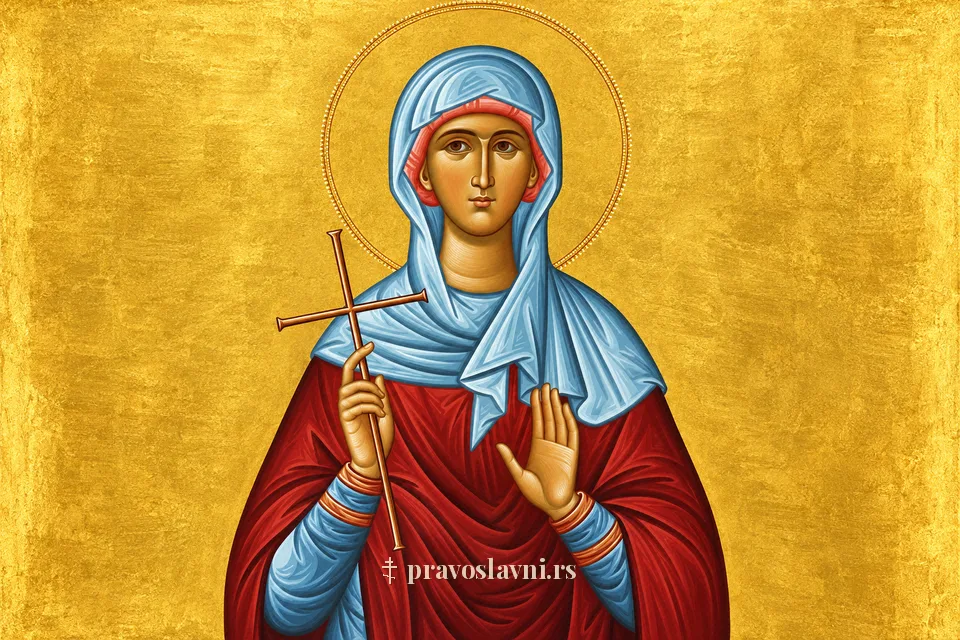
Holy Martyr Anysia
What happenedSt Anysia gave away all her wealth to the poor, and when a soldier stopped her on her way to church, she meekly confessed that she was a handmaid of Christ.
Read the LifeOrthodox Calendar · 30 December according to the Julian calendar
Tuesday, 12 January 202730 December (according to the Julian calendar)What happenedSt Anysia gave away all her wealth to the poor, and when a soldier stopped her on her way to church, she meekly confessed that she was a handmaid of Christ.
Read the Life
You may eat meat, eggs, milk and dairy products, as well as any other food — but try to be moderate.
More about the fast →
Today the Church keeps the commemoration of a saint · not a Red Letter day.
More about the feast →
“Be sober, be vigilant; because your adversary the devil walks about like a roaring lion, seeking whom he may devour.”
— 1 Pet 5:8The Holy Martyr Anysia was killed in Thessalonica while she was on her way to church; the Prologue gives the year as 298. The Emperor Maximian had at that time placed the Christians outside all protection, and so the killer did not even need a sentence.
She grew up in Thessalonica, in a household of Christians who lacked neither money nor honour, and from her childhood she lived according to the faith. She rarely went out of the house and she prayed a great deal, often weeping. According to the Prologue, she lost her parents early. The inheritance was large — gold, silver, estates, flocks — but Anysia saw nothing lasting in it: her Life says she knew that at the Dread Judgement all of it would be worthless. She sold off her property and distributed the money to the poor. According to her Life, she passed by neither the sick on the rubbish heaps nor the wounded prisoners — she bound up their wounds herself, and she comforted those who were sorrowful. When she had spent the money, she supported herself by her own work. A strict fast, a short sleep on the bare ground, as her Life says, and prayer by night in tears — that was her way of life. She would rouse herself with words which the Prologue records: “It is dangerous to sleep while my enemy keeps watch.”
Her way to church fell on the day of a pagan festival in honour of the sun. A soldier stopped her and began to question her. Her answer was meek: “I am a handmaid of Christ, and I am going to church.” According to her Life, the festival of the sun was his pretext for forcing her into idolatry, and he also reached for the veil on her head. She resisted the violence, however: she pushed him away from her and spat in his face. The enraged soldier drew his sword, and she died from that blow, surrendering her soul to Christ.
The Christians buried the martyr's body with honours, and that place later received a church of its own. The Prologue adds that God granted her the glory of His Kingdom.
Anysia gave away all that she had to those in need, lived in prayer and labour, and kept her faith and purity to the end. Her example teaches us that Christ is the greatest treasure, more precious than anything we can have on earth.
St Anysia suffered in Thessalonica, in the time of the pagan Emperor Maximian; the Prologue gives 298 as the year of her suffering. A soldier killed her as she was on her way to church.
Faith and the fear of God were the first thing Anysia received from her father and mother, Christians who had both wealth and a good name in Thessalonica. Her Life stresses her quick mind, her ease in learning and her great beauty, and above all her virtue, which ripened early. She left the house only when she had to, and she gave most of her time to prayer, often with tears. Being orphaned early, of which the Prologue speaks, only turned her still more towards God: she spent her days in the quiet of her home, in thinking about Him and in prayer. Out of love for Christ she did not trust even her own youth; the Prologue attributes to her the thought that the years of youth are deceptive, years in which a person either leads another into sin or falls into it himself.
She was left alone with great riches. Her Life lists everything that came to her — from gold and silver, through estates and herds, to numerous slaves, costly clothing and household goods. But she, according to her Life, was aware that at the Dread Judgement none of this would have any value, and she resolved to rid herself of it all. She sold everything, and the money went to the poor. Her Life adds that she did not ask the full price, but explained to the buyers that what she was selling in fact belonged to the poor and the needy.
Her help did not come down to money alone. Her Life lists all those to whom she stretched out her hand: the sick who lay on the rubbish heaps, the sorrowful, the captives, and for the wounded in the prisons she even dressed their wounds with her own hands. When nothing was left of the inheritance, she supported herself by her work — and in this her Life refers to the Second Epistle of the Apostle Paul to the Thessalonians.
She fasted without relaxing, and her night belonged to prayer and tears more than to rest. She slept, according to her Life, on the bare ground, with a rush mat under her head and rags upon her. The Prologue records the sentence with which she would rouse herself: “It is dangerous to sleep when my enemy is keeping watch.” That enemy, according to her Life, did not remain unseen: the devil tried to bring down the room in which she lived, and Anysia drove him away with the sign of the cross.
Maximian then issued an order which made every Christian a prey: to kill one, neither a court nor a sentence was needed. Her Life sees the devil behind that law: the martyrs were meant to perish without any record, so that every memory of them would be lost. Christians were then, according to her Life, being killed on all sides, day after day.
Anysia set out for church on the very day when the pagans were celebrating the sun; according to her Life, her way led her through the Cassandreotic Gate. There a certain soldier stopped her, and the sources say different things about what he wanted of her. According to the Prologue, it was the girl's beauty and an impure desire, and the first thing he wanted to know was her name. Her Life describes the questioning differently: to his questions she at first answered only with silence and the sign of the cross, and so the soldier seized her roughly and demanded that she tell him who she was. The answer, which both sources record, was meek: “I am a handmaid of Christ, and I am going to church.”
Her Life continues the story: the pagan feast of the sun was a pretext for the soldier — he wanted to force her into idolatry and to drag her to the altar for that purpose. He also reached for the veil on her head, wishing to uncover her face. She resisted the violence, however — both sources say that she pushed him away from her and spat in his face. Her Life also attributes these words to her: “May my Lord Jesus Christ rebuke you, devil!” The soldier, in a rage, drew his sword and ran her through.
Her soul, according to her Life, went to Christ, Whom she loved. The witnesses of that murder did not remain indifferent: her Life records tears over her, but also voices of condemnation directed at the Emperor because of the unjust law. The Christians buried her with honours, and her Life records exactly where: two stadia outside the Cassandreotic Gate, beside the public road. In time that grave received its own shrine, which the Prologue calls a church and her Life a house of prayer. And the martyr herself, according to the Prologue, has been glorified by God in the Kingdom of heaven.
St Anysia gave her riches to the poor and the captives, lived in prayer and work, and kept her faith and purity until death. That is why God glorified her. Her life teaches us that what we give to those in need, and the faith that we keep, are worth more than any earthly treasure.
Venerable Theodora lived in Constantinople as a nun. Her spiritual father was St Basil the New, and she was obedient to him and ready for every sacrifice. Her Life calls her one who longed for Christ. She reposed on 30 December in the year 940. Her path after death is known thanks to St Gregory, another disciple of Basil, to whom she came in a vision. From her account he learned of all twenty toll-houses, and that she had found rest thanks to the prayers of St Basil, her spiritual father. The bond between the spiritual father and his disciple was therefore not broken even by death. Her testimony reminds us to think about the path of the soul after death. It also teaches us how much the prayers of the saints are worth for those whom they love.


