Saint of the day
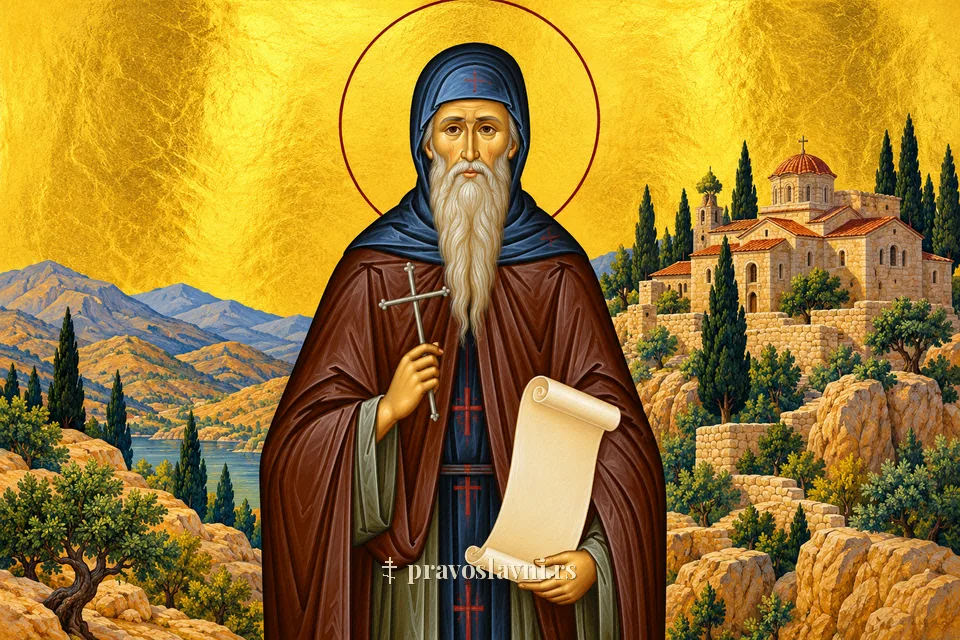
Venerable Titus the Wonderworker
What happenedThe monk Titus, renowned for his humility and purity, did not waver in the time of iconoclasm, and God endowed him with the gift of miracles.
Read the LifeOrthodox Calendar · 2 April according to the Julian calendar
Thursday, 15 April 20272 April (according to the Julian calendar)What happenedThe monk Titus, renowned for his humility and purity, did not waver in the time of iconoclasm, and God endowed him with the gift of miracles.
Read the Life
No meat, dairy products, eggs or fish — oil and wine are allowed.
This is a recommendation — for your own fast, consult your priest or spiritual father.Prayer of St Ephraim the Syrian →More about the fast →
Today the Church keeps the commemoration of a saint · Fifth week of Great Lent.
More about the feast →
“Remember now your Creator in the days of your youth, Before the difficult days come, And the years draw near when you say, ”I have no pleasure in them.”“
— Eccl 12:1When St Titus reposed in peace in the ninth century, he left behind him many disciples. Their teacher was a man whom not even the iconoclast heresy could shake.
His path began early, with love for Christ and the rejection of worldly vanity. In the monastery he became a monk and did not spare himself any labour. Years of patient labour made him more humble and more obedient than the others, and from his youth he remained pure in both soul and body. As abbot, according to his Life, he was gentle and merciful towards everyone.
The reward for his meekness and purity was the gift of miracles. The sources do not name a single miracle, nor the place, nor the monastery.
Titus teaches us that humility and purity open the way to the gifts of God.
When the iconoclast heresy took hold of the Church, Titus did not waver; both sources remember him as a support of the Church in that time. Nothing else about the outward course of his life has been preserved: the sources do not tell us where he was born, nor in which monastery he lived, nor under which ruler. What has remained is a testimony to what kind of man he was.
He came to love Christ early, and early he turned his back on the empty glitter of the world. He went to a monastery and became a monk. He took that life seriously: for God's sake he did not spare himself, and for years he patiently learned to obey and to humble himself. In this, according to both sources, he surpassed the others; the Life says — the whole brotherhood and all people. From his youth until the end he remained pure in both soul and body.
The Life adds that he became abbot. Towards every person he was, according to the Life, gentle, merciful and full of love, and in this he stood out among his contemporaries.
With the gift of miracles God, according to both sources, answered his humility and purity. The Prologue says that miracles took place both while he was alive and after his death, but not one of them is described. He died in peace, in the ninth century, and he left behind him many disciples, and according to the Life also fellow strugglers in the ascetic life.
Titus shows that the way to God's gifts begins with love for Christ and the renunciation of vanity, and continues with humility, obedience and purity. Such a life lives on in the disciples even after the death of the teacher.


