Saint of the day
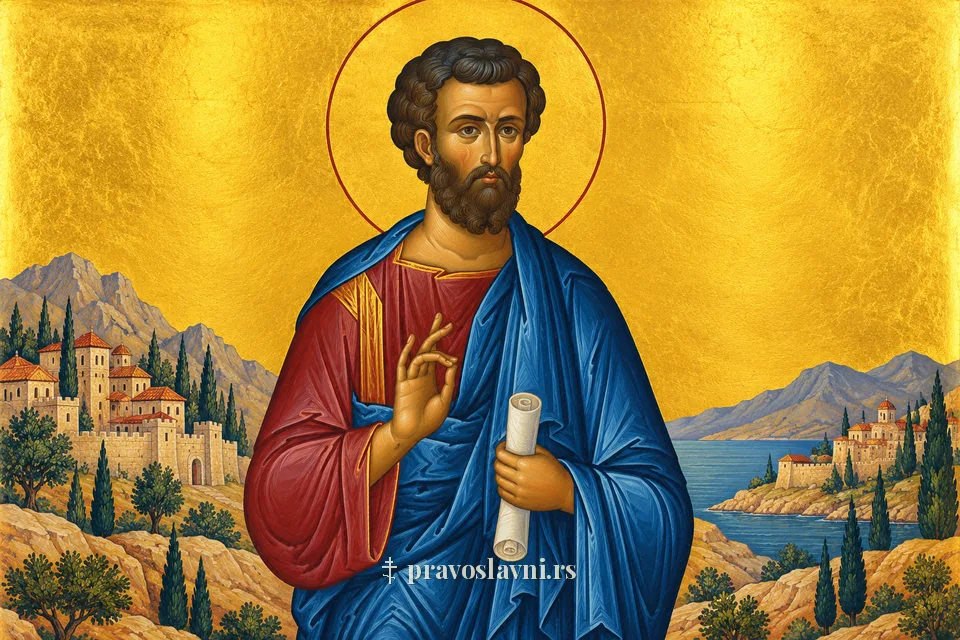
Holy Apostle Jude
What happenedThe Apostle Jude, the brother of James, who at first did not believe in Christ, preached the Gospel to many peoples and suffered in the region of Ararat.
Read the LifeOrthodox Calendar · 19 June according to the Julian calendar
Friday, 2 July 202719 June (according to the Julian calendar)What happenedThe Apostle Jude, the brother of James, who at first did not believe in Christ, preached the Gospel to many peoples and suffered in the region of Ararat.
Read the Life
Fish, oil and wine are allowed — no meat, dairy products or eggs.
This is a recommendation — for your own fast, consult your priest or spiritual father.More about the fast →
Today the Church keeps the commemoration of a saint · not a Red Letter day.
More about the feast →
“Keep yourselves in the love of God, looking for the mercy of our Lord Jesus Christ unto eternal life.”
— Jude 1:21In his epistle the Apostle Jude does not call himself the brother of the Lord, but only: “Jude, a bondservant of Jesus Christ, and brother of James.” The Prologue and the Life explain that he was ashamed, because at first he had not believed in Christ.
He was the son of Joseph the carpenter and Salome, and the brother of James, the Brother of the Lord. When Joseph wished to leave a share of the land to Jesus as well, Jude together with the other brothers was against it, while James, alone among them, gave Jesus a portion from his own share.
He was one of the Twelve. He is also called Lebbaeus and Thaddeus, but he is distinct from Thaddeus of the Seventy. According to the Life, at the Mystical Supper he asked the Lord why He would manifest Himself to them and not to the world.
He preached in Judea, Samaria, Galilee, Idumea, Syria, Arabia and Mesopotamia, and according to the Prologue in Armenia as well. He was also in Edessa, the city of the ruler Abgar, where he brought to completion the preaching of Thaddeus of the Seventy. He wrote his epistle, according to the Life, in Greek, to all the faithful. In the region of Ararat he turned many away from idols, and the pagans seized him, crucified him and shot him with arrows.
The one who had once doubted became a preacher to many nations and a martyr for Christ.
Jude was one of the Twelve. His father was Joseph the carpenter, his mother was Salome, and his brother was James, the Brother of the Lord. Joseph had four sons: James, Joses, Simon and Jude. Salome was the daughter of Haggai, the son of Barachiah; his Life adds that Barachiah was the brother of Zacharias, the father of John the Baptist. According to the Life, Jude was born in Nazareth of Galilee and traced his descent from David and Solomon.
He is also called Lebbaeus and Thaddaeus, and sometimes Judas of James. He should not be confused with Thaddeus of the Seventy, whose commemoration is on 21 August (according to the Julian calendar).
When Joseph was dividing his land and wished one portion to go to Jesus, Jude, like the other brothers, was against it; James alone of his own free will gave Jesus something of what had fallen to him. Here the Life recalls the words of the Gospel: “For even His brothers did not believe in Him.” That is why, say the Prologue and the Life, in his epistle he did not call himself the brother of the Lord, but the servant of Christ and the brother of James: “Jude, a bondservant of Jesus Christ, and brother of James.” He did not put forward his kinship with the Lord: he was humble, and also ashamed that at the beginning he had not believed in Him.
The Life records that it was he, Judas, not Iscariot, who at the Mystical Supper asked the Lord: “Lord, how is it that You will manifest Yourself to us, and not to the world?” (Jn 14:22).
He preached the Gospel in Judea, Samaria, Galilee, Idumea, Syria, Arabia and Mesopotamia; the Prologue also mentions Armenia, and the Life, as a possibility, Persia too. The work which Thaddeus of the Seventy had begun in Abgar's Edessa, Jude brought to completion there. According to the Life, he wrote his catholic epistle in the Greek language and addressed it to all the faithful.
In the region of Ararat he turned many away from idols. There the pagans — according to the Life, the priests of the idols — seized him, crucified him and shot him through with arrows.
He who had once doubted became a preacher to many lands and a martyr for Christ. He did not boast of his kinship with the Lord, but called himself His servant.
Venerable Paisius the Great was an Egyptian by birth and by language. According to his Life, he was the youngest of seven children, and his father died early; after a vision — according to his Life, of an angel — his mother dedicated him to God. As a young man he became a disciple of Abba Pambo, and his fellow monk was John the Dwarf, who later wrote his Life. According to his Life, an angel told Paisius and John to part, so Paisius dug a cave in the western desert, and Christ promised him that the desert would be filled with ascetics. The Prophet Jeremiah, angels and the Lord Himself appeared to him, and the Lord, according to the Prologue, greeted him with the words: “Peace be to you, My beloved servant!” He was able to fast for a long time: sometimes fifteen days without bread, and once seventy — according to his Life, after Holy Communion. Demons came to him in the form of bright angels, but he recognised them. According to his Life, he taught that the virtue dearest to God is the one “which is done in secret and of which no one knows”. To one elder who did not acknowledge the divinity of the Holy Spirit he explained the Holy Trinity with the help of a basket that had three handles on each side, and the elder repented. His gift of clairvoyance and of working miracles made him known throughout all Egypt. He reposed, according to the Prologue, in the year 400. St Isidore of Pelusium laid his relics with honour in his own monastery.
Separate page: Venerable Paisius the Great →
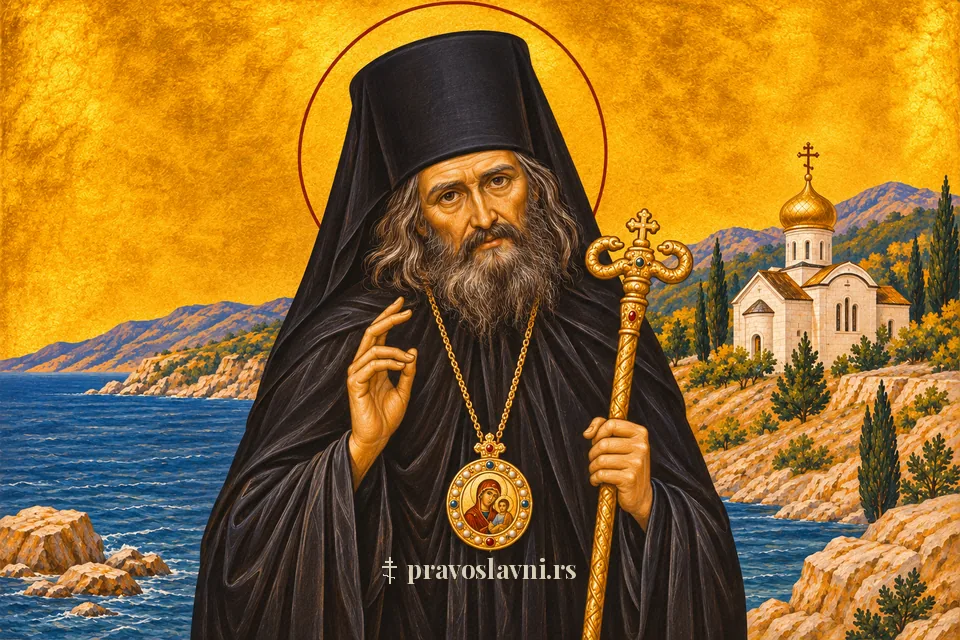
St John of Shanghai was born on 4 June 1896 in the Kharkov province, into a noble family; his ancestors on his father's side were of Serbian origin and in the eighteenth century had fled from the Turks to Russia. At baptism he was given the name Michael, and at his monastic tonsure the name John, after his ancestor St John of Tobolsk. He came to Serbia with his family as a refugee; in Belgrade he sold newspapers and was known for going about barefoot. He graduated from the Faculty of Theology in Belgrade and was tonsured a monk at the Miljkov Monastery near Svilajnac. From 1929 he taught at the seminary in Bitola, in the diocese governed by St Nikolaj (Velimirović); his pupils remembered his way of life: food only once a day, no anger at all, and instead of a bed — prayer on his knees. He venerated St Naum and went round the hospitals with his icon, praying for the sick. In 1934 he became a bishop and was sent to Shanghai, where he founded the orphanage of St Tikhon of Zadonsk and gathered abandoned children from the streets. He left China with the Russian refugees, and from 1951 he was Archbishop of Western Europe with his seat in Paris, where he served in several languages and where they called him John the Barefoot. For the last four decades of his life he did not sleep in a bed. In the autumn of 1962 he came to San Francisco to help complete the cathedral of the Mother of God. He reposed on 2 July 1966 (19 June, Julian calendar) in Seattle: he served the Divine Liturgy, remained for three more hours in the altar and reposed before the Kursk Root Icon of the Mother of God. The Russian Church Abroad glorified him as a saint on 2 July 1994 in San Francisco.


