Saint of the day
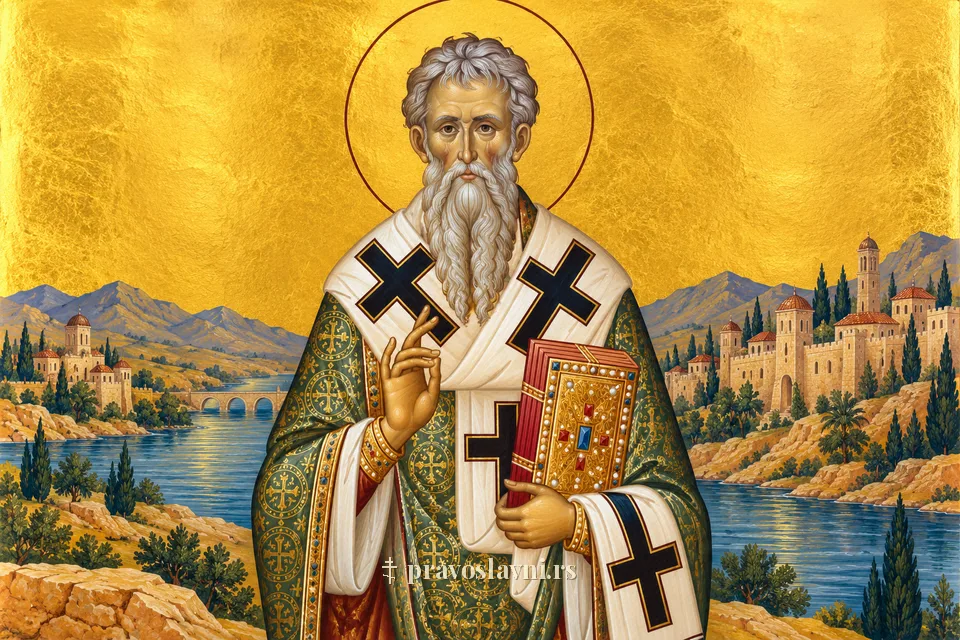
Hieromartyr Eusebius, Bishop of Samosata
What happenedSt Eusebius, Bishop of Samosata, fearlessly defended Orthodoxy against the Arians, and on his deathbed made his companions swear not to avenge his death.
Read the LifeOrthodox Calendar · 22 June according to the Julian calendar
Monday, 5 July 202722 June (according to the Julian calendar)What happenedSt Eusebius, Bishop of Samosata, fearlessly defended Orthodoxy against the Arians, and on his deathbed made his companions swear not to avenge his death.
Read the Life
No meat, dairy products, eggs, fish or oil — food cooked in water.
This is a recommendation — for your own fast, consult your priest or spiritual father.More about the fast →
Today the Church keeps the commemoration of a saint · not a Red Letter day.
More about the feast →
“Bless those who persecute you; bless and do not curse.”
— Rom 12:14When Eusebius, Bishop of Samosata, was threatened that his right hand would be cut off unless he gave back the decision on the election of Meletius as Patriarch of Antioch, he held out both: “Cut off not only my right hand, but my left as well.” This is how the Life records his courage, which even Emperor Constantius admired. Eusebius was a great opponent of Arianism, and Meletius had been elected on his advice.
Under Julian the Apostate he went about disguised in a soldier's uniform from place to place through Syria, Phoenicia and Palestine, strengthening the faithful and appointing priests and bishops. Under Emperor Valens he was exiled to Thrace. The people, according to the Life, followed him weeping, but he did not turn back, out of obedience to the authorities.
When Emperor Gratian allowed the exiles to return, Eusebius began to appoint bishops where there were none. In Doliche, where the Arians were strong, he was struck by a roof tile which, according to the Prologue, was thrown by a heretic, and according to the Life by an Arian woman. The wound was mortal. According to the Life, before his death he made his companions swear that they would not repay that woman with evil; his example was Christ, Who on the Cross prayed to the Father for His tormentors. The Prologue states that he reposed in the year 379, and it honours him as a bishop and martyr.
Eusebius was a great opponent of Arianism. It was on his advice that Meletius was chosen as Patriarch of Antioch. His Life tells that the Arian bishops signed the decision on the election of Meletius and entrusted it to Eusebius, and when, through the Emperor, they wanted it back, he refused to return it until all those who had signed it were gathered together. When he was threatened that his right hand would be cut off, he held out both: “Cut off not only the right hand, but the left as well.” The Emperor Constantius, according to the Life, was amazed at his courage. Later the Arians banished Meletius all the same.
When Julian the Apostate raised a persecution, Eusebius exchanged his priestly clothing for that of a soldier, and thus disguised he travelled through Syria, Phoenicia and Palestine. He strengthened the faithful and ordained priests, deacons and bishops. After the death of Julian, under the Emperor Jovian, a council of twenty-seven bishops was held in Antioch — according to the Prologue, at the prompting of Eusebius — and it confirmed the faith of the First Ecumenical Council. Pelagius of Laodicea also took part in it.
Under the Emperor Valens the persecution was renewed: Meletius was banished to Armenia, Eusebius to Thrace, and Pelagius to Arabia. According to the Life, the order reached Samosata at dusk. Eusebius said to the messenger: “Keep silent today and tell no one why you have come,” and by night he left in secret with one servant, along the Euphrates. The people caught up with him, weeping, but he did not turn back; he appealed to the obedience owed to the authorities, of which the Apostle Paul writes to the Romans, and he did not accept their gifts. According to the Life, the people of Samosata shunned the Arian bishops who were sent to take his place.
The Emperor Gratian allowed the exiled bishops to return, and Eusebius came back to Samosata. Many churches were without shepherds, and so he began to appoint bishops in the towns. In Doliche, where the Arians were strong, he was installing the chosen bishop, Marinus, in his ministry. It was then that he was struck on the head by a roof tile, which, according to the Prologue, was thrown by a heretic, and according to the Life by an Arian woman. The wound was mortal. According to the Life, before he breathed his last he bound all who were with him by an oath not to take vengeance on that woman for his death. In this he followed the example of St Stephen and of Christ Himself, Who even on the Cross prayed for His tormentors. His body was taken to Samosata and buried amid great weeping, and his nephew Antiochus became Bishop of Samosata. The Prologue gives 379 as the year of his death and honours him as a bishop and a martyr.
The Prologue, referring to Chrysostom and Isaac the Syrian, teaches that God allows the true faith to be attacked so that its strength may be shown.


