Saint of the day
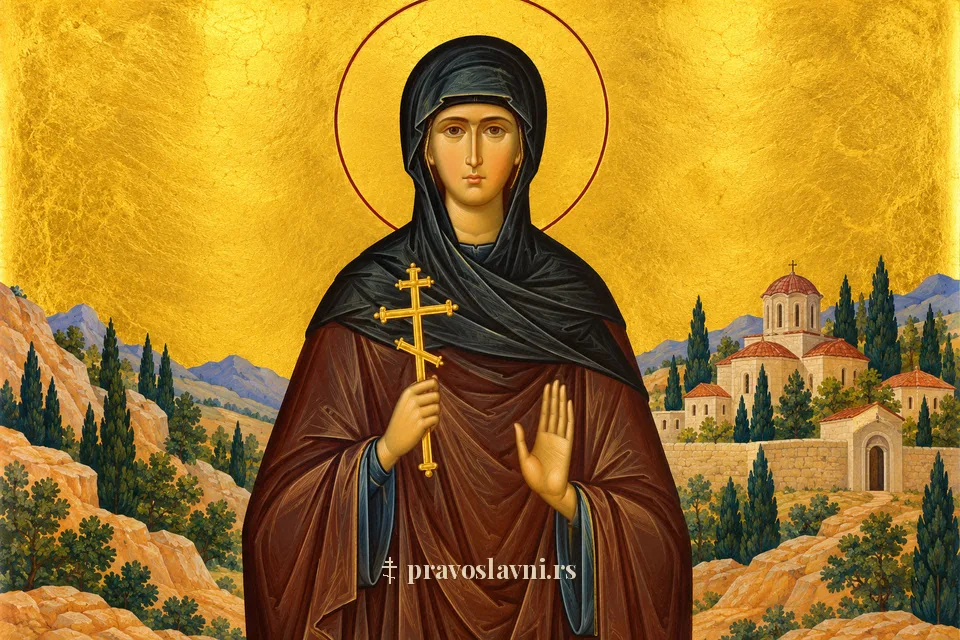
Venerable Martyr Febronia
What happenedSt Febronia, a young nun of Sibapolis, stayed in her monastery when the persecutors came and suffered for Christ in the time of Emperor Diocletian.
Read the LifeOrthodox Calendar · 25 June according to the Julian calendar
Thursday, 8 July 202725 June (according to the Julian calendar)What happenedSt Febronia, a young nun of Sibapolis, stayed in her monastery when the persecutors came and suffered for Christ in the time of Emperor Diocletian.
Read the Life
No meat, dairy products, eggs or fish — oil and wine are allowed.
This is a recommendation — for your own fast, consult your priest or spiritual father.More about the fast →
Today the Church keeps the commemoration of a saint · not a Red Letter day.
More about the feast →
“Finally, there is laid up for me the crown of righteousness, which the Lord, the righteous Judge, will give to me on that Day, and not to me only but also to all who have loved His appearing.”
— 2 Tim 4:8Febronia did not leave her monastery even in the face of death. She lived in the time of Emperor Diocletian in Sibapolis, in a community of fifty sisters governed by her aunt Bryaena; according to her Life, she was brought to the monastery as a two-year-old child.
The sisterhood lived by the rule of Platonida, which set Friday aside solely for prayer and the holy books. The twenty-year-old Febronia was renowned for her gentleness and good sense. According to the Life, she fasted strictly, slept on a bare board and spent her nights in prayer. When she read the holy books, Bryaena hid her behind a curtain because of her beauty. According to the Life, her teaching led to the baptism of the young widow Hieria with her whole household; Hieria later gave her estate to the monastery and became a nun.
The persecution was brought to Sibapolis by Selenus, whom the emperor sent to the East together with his nephew Lysimachus. While Selenus was merciless, Lysimachus, who according to the Life had been taught about Christ by his Christian mother, protected the Christians as far as he could. According to the Life, when the persecutors arrived most of the nuns fled; Bryaena stayed with the sick Febronia, and Febronia begged that she be put to death first and that the abbess be spared in this way. Before Selenus she consented neither to marriage nor to riches at the price of renouncing Christ. After torture she was beheaded with the sword — according to the Prologue, in the year 310.
Selenus died that very same day, overcome by fear. Lysimachus saw to it that the martyr was buried with honour in the monastery, and both he and many soldiers were baptised; according to the Life, they became monks. At her relics people were healed, and on the day of her commemoration the sisters saw her in her place among them. The Life records that a certain bishop built a church in her name, and according to the Prologue her relics were translated to Constantinople in the year 363. The Life is attributed to Thomais, who saw the events with her own eyes.
On this day the Prologue cites Mark the Ascetic: whoever accepts present troubles with joy is delivered from those that are yet to come.
Febronia lived in the time of the Emperor Diocletian. According to the Prologue, so as not to marry a mortal man, she dedicated herself to Christ and became a nun in the land of Assyria. The Life says that she was the niece of the abbess Bryaena and that she was brought to the convent at the age of two.
The convent in Sibapolis had fifty nuns, and the abbess was Bryaena. The sisters lived by the rule of the blessed Platonis — according to the Life, a deaconess — under which no work at all was done on Fridays: that day belonged to prayer and to the holy books. She was twenty years old, and the sisters valued her as meek and wise. According to the Life, she fasted strictly, slept on a bare board and spent her nights in prayer.
She read the holy books to the sisters from behind a curtain: Bryaena had arranged it so, lest her beauty should distract their attention. According to the Life, laywomen also came to the reading on Fridays. Among them was Hieria, a young widow from a senatorial house, still a pagan, who came dressed in monastic clothing. Taught by Febronia's words, she converted her parents and was baptised with her whole household.
Diocletian sent Lysimachus to the East, together with his uncle Selenus, to wipe out the Christians. According to the Life, Lysimachus was about twenty years old, and his Christian mother had taught him about Christ. Lysimachus protected Christians wherever he could; the Life says that he agreed with his kinsman, the comes Primus, that they would warn them and make it possible for those who were captured to escape. Selenus, on the contrary, persecuted the Christians cruelly, first in Palmyra, and then he came to Sibapolis.
When the persecutors drew near, according to the Life, the bishop, the clergy and most of the nuns fled. Bryaena stayed beside the sick Febronia, and with them the nun Thomais as well. The Life says that Febronia begged that she be killed first, so that they would spare the abbess.
Selenus summoned her before him and offered her marriage to Lysimachus and riches if she would renounce Christ. Febronia refused this and remained faithful to Christ, to Whom she had promised herself. She was tortured and then beheaded; according to the Prologue, she suffered in the year 310.
In the terror that seized him that same day, Selenus struck himself against a marble pillar and died. Lysimachus ordered that Febronia's body be carried to the convent and buried with honour. He and many soldiers were baptised; according to the Life, Primus was baptised too, and they became monks under the abbot Marcellus. Hieria, according to the Life, gave her estate to the convent and received the monastic tonsure.
Healings took place at her relics. On the day of her commemoration the sisters saw her standing in her usual place among them — according to the Life, during the night service, at about three o'clock.
The Life says that a certain bishop built a church in her name. When the relics were to be translated, thunder and an earthquake prevented it, and so Bryaena gave the bishop one of Febronia's teeth, which was placed in a small golden reliquary. Bryaena lived for another two years, appointed Thomais as abbess and reposed. According to the Prologue, Febronia's relics were translated to Constantinople in the year 363.
The Life is attributed to Thomais, who saw the events with her own eyes, and what concerned Lysimachus she heard from the man himself.
Febronia preferred Christ to marriage, to riches and to life, and she stayed when others fled. On this day the Prologue quotes Mark the Ascetic: whoever accepts present troubles with joy is delivered from those that are still to come.


